


Page 44 - Demo
P. 44
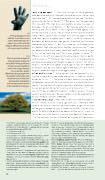
12:9 In the synagogue, on the sabbath, Jesus heals a man with a withered hand. This begins the con ict with the religious o cials that will end in his arrest and cruci xion.
12:16 When Jesus heals people, he often tells them to keep the secret. Why? Perhaps because he does not want people to come to him simply because he is a wonder-worker. Matthew cites a passage from the prophet Isaiah about the chosen servant of God, who works quietly and secretly until the time comes for him to be revealed to all nations.
MATTHEW
Jesus and Beelzebul.* 22k Then they brought to him a demoniac who was blind and mute. He cured the mute person so that he could speak and see. 23* l All the crowd was astounded, and said, “Could this perhaps be the Son of David?” 24* m But when the Pharisees heard this, they said, “This man drives out demons only by the power of Beelzebul, the prince of demons.” 25n But he knew what they were thinking and said to them,* “Every kingdom divided against itself will be laid waste, and no town or house divided against itself will stand. 26And if Satan drives out Satan, he is divided against himself; how, then, will his kingdom stand? 27And if I drive out demons by Beelzebul, by whom do your own people* drive them out? Therefore they will be your judges. 28* o But if it is by the Spirit of God that I drive out demons, then the kingdom of God has come upon you. 29* How can anyone enter a strong man’s house and steal his property, unless he first ties up the strong man? Then he can plunder his house. 30* p Whoever is not with me is against me, and whoever does not gather with me scatters. 31q Therefore, I say to you, every sin and blasphemy will be forgiven people, but blasphemy against the Spirit* will not be forgiven. 32And whoever speaks a word against the Son of Man will be forgiven; but whoever speaks against the holy Spirit will not be forgiven, either in this age or in the age to come.
A Tree and Its Fruits. 33r “Either declare* the tree good and its fruit is good, or declare the tree rotten and its fruit is rotten, for a tree is known by its fruit. 34* s You brood of vipers, how can you say good things when you are evil? For from the fullness of the heart the mouth speaks. 35A good person brings forth good out of a store of goodness, but an evil person brings forth evil out of a store of evil. 36* t I tell you, on the day of judgment people will render an account for every careless word they speak. 37By your words you will be acquitted, and by your words you will be condemned.”
The Demand for a Sign.* 38Then some of the scribes and Pharisees said to him, “Teacher,* we wish to see a sign from you.”u 39He said to them in reply, “An evil and unfaithful* generation seeks a sign, but no sign will be given it except the sign of Jonah the prophet. 40Just as Jonah was in the belly of the whale three days and three nights,* so will the Son of Man be in the heart of the earth three days and three nights. 41* At the judgment, the men of Nineveh will arise with this generation
* [12:22–32] For the exorcism, see note on Mt 9:32–34. The long discussion combines Marcan and Q material (Mk 3:22–30; Lk 11:19–20, 23; 12:10). Mk 3:20–21 is omitted, with a consequent lessening of the sharpness of Mt 12:48.
* [12:23] See note on Mt 9:27.
* [12:24] See note on Mt 10:25.
* [12:25–26] Jesus’ rst response to the Pharisees’ charge is that if it
were true, Satan would be destroying his own kingdom.
* [12:27] Besides pointing out the absurdity of the charge, Jesus asks how the work of Jewish exorcists (your own people) is to be interpreted. Are they, too, to be charged with collusion with Beelzebul? For an example of Jewish exorcism see Josephus,
Antiquities 8:42–49.
* [12:28] The Q parallel (Lk 11:20) speaks of the “ nger” rather than
of the “spirit” of God. While the di erence is probably due to Matthew’s editing, he retains the kingdom of God rather than changing it to his usual “kingdom of heaven.” Has come upon you: see Mt 4:17.
* [12:29] A short parable illustrates what Jesus is doing. The strong man is Satan, whom Jesus has tied up and whose house he is plundering. Jewish expectation was that Satan would be chained up in the last days (Rev 20:2); Jesus’ exorcisms indicate that those days have begun.
* [12:30] This saying, already attached to the preceding verses in Q (see Lk 11:23), warns that there can be no neutrality where Jesus is concerned. Its pertinence in a context where Jesus is addressing not the neutral but the bitterly opposed is not clear. The accusation of scattering, however, does t the situation. Jesus is the shepherd of God’s people (Mt 2:6), his mission is to the lost sheep of Israel (Mt 15:24); the Pharisees, who oppose him, are guilty of scattering the sheep.
* [12:31] Blasphemy against the Spirit: the sin of attributing to Satan (Mt 12:24) what is the work of the Spirit of God (Mt 12:28). * [12:33] Declare: literally, “make.” The meaning of this verse is obscure. Possibly it is a challenge to the Pharisees either to declare Jesus and his exorcisms good or both of them bad. A tree is known by its fruit; if the fruit is good, so must the tree be. If the
driving out of demons is good, so must its source be.
* [12:34] The admission of Jesus’ goodness cannot be made by the Pharisees, for they are evil, and the words that proceed from their
evil hearts cannot be good.
*[12:36–37] If on the day of judgment people will be held
accountable for even their careless words, the vicious accusations
of the Pharisees will surely lead to their condemnation.
* [12:38–42] This section is mainly from Q (see Lk 11:29–32). Mk 8:11–12, which Matthew has followed in Mt 16:1–4, has a
32


