


Page 51 - Demo
P. 51
MATTHEW -
The Walking on the Water.* 22h Then he made the disciples get into
the boat and precede him to the other side, while he dismissed the 23i
crowds. After doing so, he went up on the mountain by himself to pray. When it was evening he was there alone. 24Meanwhile the boat, already a few miles offshore, was being tossed about by the waves, for the wind was against it. 25During the fourth watch of the night,* he came toward them, walking on the sea. 26When the disciples saw him walking on the sea they were terrified. “It is a ghost,” they said, and they cried out in fear. 27At once [Jesus] spoke to them, “Take courage, it is I;* do not be afraid.” 28Peter said to him in reply, “Lord, if it is you, command me to come to you on the water.” 29He said, “Come.” Peter got out of the boat and began to walk on the water toward Jesus. 30j But when he saw how [strong] the wind was he became frightened; and, beginning to sink, he cried out, “Lord, save me!” 31Immediately Jesus stretched out his hand and caught him, and said to him, “O you of little faith,* why did you doubt?” 32After they got into the boat, the wind died down. 33* k Those who were in the boat did him homage, saying, “Truly, you are the Son of God.”
The Healings at Gennesaret. 34l After making the crossing, they came to land at Gennesaret. 35When the men of that place recognized him, they sent word to all the surrounding country. People brought to him all those who were sick 36m and begged him that they might touch only the tassel on his cloak, and as many as touched it were healed.
The Tradition of the Elders.*
1a Then Pharisees and scribes came to Jesus from Jerusalem and
15
They do not wash [their] hands when they eat a meal.” 3He said to them in reply, “And why do you break the commandment of God* for the sake of your tradition? 4c For God said, ‘Honor your father and your mother,’ and ‘Whoever curses father or mother shall die.’ 5* But you say,
2b * said, “Why do your disciples break the tradition of the elders?
14:22
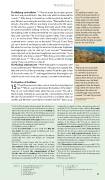
The walking on water is one
of the best-known miracles of Jesus. The incident reveals his divine power over the created world and the imperfect faith
of the disciples. Peter expresses
a leap of faith in Jesus when he steps out of the boat onto the water, but after a few steps fear and doubt take over, and he begins to sink. Jesus calms the wind, and the disciples recognize him as “the Son of God.”
14:35
“Men are more accustomed
to shrink from wounds than
to cure them. God cleanses human wounds; He does not despise them. He does not shrink from human sores, but heals them. Nor does He detest the suppurations from the human body; rather, He cleanses them. God cannot, He cannot, be soiled through contact with his creature” (St. John Chrysostom).1
1 The Golden Chain.
* [14:22–33] The disciples, laboring against the turbulent sea, are saved by Jesus. For his power over the waters, see note on Mt 8:26. Here that power is expressed also by his walking on the sea (Mt 14:25; cf. Ps 77:20; Jb 9:8). Matthew has inserted into the Marcan story (Mk 6:45–52) material that belongs to his special traditions on Peter (Mt 14:28–31).
* [14:25] The fourth watch of the night: between 3 a.m. and 6 a.m. The Romans divided the twelve hours between 6 p.m. and 6 a.m. into four equal parts called “watches.”
* [14:27] It is I: see note on Mk 6:50.
* [14:31] You of little faith: see note on Mt 6:30. Why did
you doubt?: the verb is peculiar to Matthew and occurs
elsewhere only in Mt 28:17.
* [14:33] This confession is in striking contrast to the Marcan
parallel (Mk 6:51) where the disciples are “completely
astounded.”
* [15:1–20] This dispute begins with the question of the
Pharisees and scribes why Jesus’ disciples are breaking the tradition of the elders about washing one’s hands before eating (Mt 15:2). Jesus’ counterquestion accuses his opponents of breaking the commandment of God for the sake of their tradition (Mt 15:3) and illustrates this by their interpretation of the commandment of the Decalogue concerning parents (Mt 15:4–6). Denouncing them
as hypocrites, he applies to them a derogatory prophecy of Isaiah (Mt 15:7–8). Then with a wider audience (the crowd, Mt 15:10) he goes beyond the violation of tradition with which the dispute has started. The parable (Mt 15:11) is an attack on the Mosaic law concerning clean and unclean foods, similar to those antitheses that abrogate the law (Mt 5:31–32, 33–34, 38–39). After a warning to his disciples not to follow the moral guidance of the Pharisees (Mt 15:13–14), he explains the parable (Mt 15:15) to them, saying that de lement comes not from what enters the mouth (Mt 15:17) but from the evil thoughts and deeds that rise from within, from the heart (Mt 15:18–20). The last verse returns to the starting point of the dispute (eating with unwashed hands). Because of Matthew’s omission of Mk 7:19b, some scholars think that Matthew has weakened the Marcan repudiation of the Mosaic food laws. But that half verse is ambiguous in the Greek, which may be the reason for its omission here.
* [15:2] The tradition of the elders: see note on Mk 7:5. The purpose of the handwashing was to remove de lement caused by contact with what was ritually unclean.
* [15:3–4] For the commandment see Ex 20:12 (// Dt 5:16); 21:17. The honoring of one’s parents had to do with supporting them in their needs.
Chapter 14
h. [14:22–33] Mk 6:45–52; Jn 6:16–21. i. [14:23] Mk 1:35; Lk 5:16; 6:12.
j. [14:30–31] 8:25–26.
k. [14:33] 16:16.
l. [14:34–36] Mk 6:53–56. m. [14:36] 9:20–22.
Chapter 15
a. [15:1–20] Mk 7:1–23.
b. [15:2] Lk 11:38.
c. [15:4] Ex 20:12; 21:17; Lv 20:9; Dt 5:16; Prv 20:20.
* [15:5] See note on Mk 7:11.
39


