


Page 555 - Demo
P. 555
REVELATION
are not, and discovered that they are impostors.* 3Moreover, you have endurance and have su ered for my name, and you have not grown weary. 4Yet I hold this against you: you have lost the love you had at rst. 5Realize how far you have fallen. Repent, and do the works you did at rst. Otherwise, I will come to you and remove your lampstand from its place, unless you repent. 6But you have this in your favor: you hate the works of the Nicolaitans,* which I also hate.
7“‘“Whoever has ears ought to hear what the Spirit says to the churches. To the victor* I will give the right to eat from the tree of life that is in the garden of God.”’a
To Smyrna.* 8“To the angel of the church in Smyrna,* write this:
“‘The rst and the last, who once died but came to life, says this: 9“I know your tribulation and poverty, but you are rich.* I know the slander of those who claim to be Jews and are not, but rather are members of the assembly of Satan.b 10Do not be afraid of anything that you are going to su er. Indeed, the devil will throw some of you into prison, that you may be tested, and you will face an ordeal for ten days. Remain faithful until death, and I will give you the crown of life.
11“‘“Whoever has ears ought to hear what the Spirit says to the churches.c The victor shall not be harmed by the second death.”’*
To Pergamum.* 12“To the angel of the church in Pergamum,* write this:
“‘The one with the sharp two-edged sword says this: 13“I know that you live where Satan’s throne* is, and yet you hold fast to my name and have not denied your faith in me, not even in the days of Antipas, my faithful witness, who was martyred among you, where Satan lives. 14* Yet I have a few things against you. You have some people there who hold to the teaching of Balaam, who instructed Balak to put a stumbling block before the Israelites: to eat food sacri ced to idols and to play the harlot.d
1:2
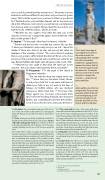
Christ sends a message of encouragement to each of the seven churches. He acknowledges their strengths but calls to mind their weaknesses, urging them to renewed constancy. Each of the seven messages includes the injunction, “Let anyone who has an ear listen to what the Spirit is saying to the churches”—wisdom for all places and times.
1:7
Adam and Eve ate of the tree and perished. For those who persevere in faith, there will be a new beginning, a new entry into paradise. To eat from the tree of life is to live forever, and to be like God.
* [2:6] Nicolaitans: these are perhaps the impostors of Rev 2:2; see note on Rev 2:14–15. There is little evidence for connecting this group with Nicolaus, the proselyte from Antioch, mentioned in Acts 6:5.
* [2:7] Victor: referring to any Christian individual who holds fast to the faith and does God’s will in the face of persecution. The tree of life that is in the garden of God: this is a reference to the tree in the primeval paradise (Gn 2:9); cf. Rev 22:2, 14, 19. The decree excluding humanity from the tree of life has been revoked by Christ.
* [2:8–11] The letter to Smyrna encourages the Christians in this important commercial center by telling them that although they are impoverished, they are nevertheless rich, and calls those Jews who are slandering them members of the assembly of Satan (Rev 2:9). There is no admonition; rather, the Christians are told that they will su er much, even death, but the time of tribulation will be short compared to their eternal reward (Rev 2:10), and they will thus escape nal damnation (Rev 2:11).
* [2:8] Smyrna: modern Izmir, ca. thirty miles north of Ephesus, and the chief city of Lydia, with a temple to the goddess Roma. It was renowned for its loyalty to Rome, and it also had a large Jewish community very hostile toward Christians.
* [2:9–10] The church in Smyrna was materially poor but spiritually rich. Accusations made by Jewish brethren there occasioned the persecution of Christians; cf. Acts 14:2, 19; 17:5, 13.
* [2:11] The second death: this refers to the eternal death, when sinners will receive their nal punishment; cf. Rev 20:6, 14–15; 21:8. * [2:12–17] The letter to Pergamum praises the members of the church for persevering in their faith in Christ even in the midst of a pagan setting and in face of persecution and martyrdom (Rev 2:13). But it admonishes them about members who advocate an unprincipled morality (Rev 2:14; cf. 2 Pt 2:15; Jude 11) and others who follow the teaching of the Nicolaitans (Rev 2:15; see note there). It urges them to repent (Rev 2:16) and promises them
the hidden manna and Christ’s amulet (Rev 2:17).
* [2:12] Pergamum: modern Bergama, ca. forty- ve miles northeast
of Smyrna, a center for various kinds of pagan worship. It also had an outstanding library (the word parchment is derived from its name).
* [2:13] Satan’s throne: the reference is to emperor worship and other pagan practices that ourished in Pergamum, perhaps speci cally to the white marble altar erected and dedicated to Zeus by Eumenes II (197–160 B.C.).
* [2:14–15] Like Balaam, the biblical prototype of the religious compromiser (cf. Nm 25:1–3; 31:16; 2 Pt 2:15; Jude 11), the Nicolaitans in Pergamum and Ephesus (Rev 2:6) accommodated their Christian faith to paganism. They abused the principle of liberty enunciated by Paul (1 Cor 9:19–23).
a. [2:7] 11, 17, 29; 3:6, 13, 22; 13:9; Mt 11:15.
b. [2:9] Jas 2:5.
c. [2:11] 20:6, 14; 21:8.
d. [2:14] Nm 22–24; 25:1–3; 31:16; 2 Pt 2:15; Jude 11.
543


