


Page 56 - Demo
P. 56
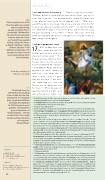
16:22 Peter recognizes Jesus as the Christ, but when Jesus speaks about his approaching passion and death, Peter is scandalized. The Messiah is the one who is to save Israel. How can he do that if he is put to death? Jesus speaks harshly, calling him “Satan,” a diabolic “adversary,” calling Peter an “obstacle” in the ful llment of God’s plan. The disciples must learn to think not as human beings think, but as God does.
From the workshop of Ludovico Carrache
17:1 The disciples have just learned that Jesus is going to be cruci ed, but now they glimpse him in his heavenly glory. He speaks with Moses and Elijah, who represent the Old Testament law and prophets. “He revealed his glory in the presence of chosen witnesses...that the scandal of the Cross / might be removed from the hearts of his disciples” (Roman Missal).
Chapter 16
q. [16:24] Lk 14:27.
r. [16:25] Lk 17:33; Jn 12:25.
s. [16:27] 25:31–33; Jb 34:11; Ps 62:13;
Jer 17:10; 2 Thes 1:7–8. Chapter 17
a. [17:1–8] Mk 9:2–8; Lk 9:28–36.
b. [17:2] 28:3; Dn 7:9; 10:6; Rev 4:4; 7:9; 19:14. c. [17:5] 3:17; Dt 18:15; 2 Pt 1:17.
44
MATTHEW -
The Conditions of Discipleship.* 24q Then Jesus said to his disciples, “Whoever wishes to come after me must deny himself,* take up his cross, and follow me. 25r For whoever wishes to save his life will lose it, but whoever loses his life for my sake will find it.* 26What profit would there be for one to gain the whole world and forfeit his life? Or what can one give in exchange for his life? 27* s For the Son of Man will come with his angels in his Father’s glory, and then he will repay everyone according to his conduct. 28* Amen, I say to you, there are some standing here who will not taste death until they see the Son of Man coming in his kingdom.”
The Transfiguration of Jesus.* 171a After six days Jesus took Peter, James, and John his brother, and led them up a high mountain by themselves.* 2* b And he was transfigured before them; his face shone like the sun and his clothes became white as light. 3* And behold, Moses and Elijah appeared to them, conversing with him. 4Then Peter said to Jesus in reply, “Lord, it is good that we are here. If you wish, I will make three tents* here, one for you, one for Moses, and one for Elijah.” 5c While he was still speaking, behold, a bright cloud cast a shadow over them,* then
* [16:24–28] A readiness to follow Jesus even to giving up one’s life for him is the condition for true discipleship; this will be repaid by him at the nal judgment.
* [16:24] Deny himself: to deny someone is to disown him (see Mt 10:33; 26:34–35) and to deny oneself is to disown oneself as the center of one’s existence.
* [16:25] See notes on Mt 10:38, 39.
* [16:27] The parousia and nal judgment are described in Mt 25:31 in terms almost identical with these.
* [16:28] Coming in his kingdom: since the kingdom of the Son of Man has been described as “the
world” and Jesus’ sovereignty precedes his nal coming in glory (Mt 13:38, 41), the coming in this verse is not the parousia as in the preceding but the manifestation of Jesus’ rule after his resurrection; see notes on Mt 13:38, 41.
* [17:1–8] The account of the trans guration con rms that Jesus is the Son of God (Mt 17:5) and points to ful llment of the prediction that he will come in his Father’s glory at the end of the age (Mt 16:27). It has been explained by some as a resurrection appearance retrojected into the time of Jesus’ ministry, but that is not probable since the account lacks many of the usual elements of the resurrection-appearance narratives. It draws upon motifs from the Old Testament and noncanonical Jewish apocalyptic literature that express the presence of the heavenly and the divine, e.g., brilliant light, white garments, and the overshadowing cloud.
* [17:1] These three disciples are also taken apart from the others by Jesus in Gethsemane (Mt 26:37). A high mountain: this has been identi ed with Tabor or Hermon, but probably no speci c mountain was intended by the evangelist or by his Marcan source (Mk 9:2). Its meaning is theological rather than geographical, possibly recalling the revelation to Moses on Mount Sinai (Ex 24:12–18) and to Elijah at the same place (1 Kgs 19:8–18; Horeb = Sinai).
* [17:2] His face shone like the sun: this is a Matthean addition; cf. Dn 10:6. His clothes became white as light: cf. Dn 7:9, where the clothing of God appears “snow bright.” For the white garments of other heavenly beings, see Rev 4:4; 7:9; 19:14.
* [17:3] See note on Mk 9:5.
* [17:4] Three tents: the booths in which the Israelites lived during the feast of Tabernacles (cf. Jn 7:2)
were meant to recall their ancestors’ dwelling in booths during the journey from Egypt to the promised land (Lv 23:39–42). The same Greek word, skēnē, here translated tents, is used in the LXX for the booths of that feast, and some scholars have suggested that there is an allusion here to that liturgical custom.
* [17:5] Cloud cast a shadow over them: see note on Mk 9:7. This is my beloved Son... listen to him: cf. Mt 3:17. The voice repeats the baptismal proclamation about Jesus, with the addition of the command listen to him. The latter is a reference to Dt 18:15 in which the Israelites are commanded to listen to the prophet like Moses whom God will raise up for them. The command to listen to Jesus is general, but in this context it probably applies particularly to the preceding predictions of his passion and resurrection (Mt 16:21) and of his coming (Mt 16:27, 28).


