


Page 57 - Demo
P. 57
MATTHEW
from the cloud came a voice that said, “This is my beloved Son, with whom I am well pleased; listen to him.” 6* When the disciples heard this, they fell prostrate and were very much afraid. 7But Jesus came and touched them, saying, “Rise, and do not be afraid.” 8And when the disciples raised their eyes, they saw no one else but Jesus alone.
The Coming of Elijah.* 9d As they were coming down from the mountain, Jesus charged them, “Do not tell the vision* to anyone until the Son of Man has been raised from the dead.” 10* e Then the disciples asked him, “Why do the scribes say that Elijah must come first?” 11f He said in reply,* “Elijah will indeed come and restore all things; 12g but I tell you that Elijah has already come, and they did not recognize him but did to him whatever they pleased. So also will the Son of Man suffer at their hands.” 13* Then the disciples understood that he was speaking to them of John the Baptist.
The Healing of a Boy with a Demon.* 14h When they came to the crowd a man approached, knelt down before him, 15and said, “Lord, have pity on my son, for he is a lunatic* and suffers severely; often he falls into fire, and often into water. 16I brought him to your disciples, but they could not cure him.” 17i Jesus said in reply, “O faithless and perverse* generation, how long will I be with you? How long will I endure you? Bring him here to me.” 18Jesus rebuked him and the demon came out of him,* and from that hour the boy was cured. 19Then the disciples approached Jesus in private and said, “Why could we not drive it out?” 20* j He said to them, “Because of your little faith. Amen, I say to you, if you have faith the size of a mustard seed, you will say to this mountain, ‘Move from here to there,’ and it will move. Nothing will be impossible for you.” [21]*
17:10
It was a common belief among the Jews that Elijah, who had been taken up in a whirlwind, would return to earth before the judgment: “Now I am sending to you / Elijah the prophet, / Before the day of the LORD comes, / the great and terrible day” (Malachi 3:23). Jesus tells his disciples that Elijah has already come—John the Baptist. With the coming of Christ, this great and awesome day has begun.
17:20
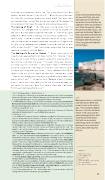
Moving mountains is something only God can do: When God came to Israel, as the psalmist says, “The mountains skipped like rams; / the hills, like lambs” (Psalm 114:4). Jesus uses this memorable hyperbole to drive home the point that even a
little faith can accomplish
great things. Faith is not about learning to move mountains. Faith is about believing that God can.
Chapter 17
d. [17:9–13] Mk 9:9–13. e. [17:10] Mal 3:23–24. f. [17:11] Lk 1:17.
g. [17:12–13] 11:14.
h. [17:14–21] Mk 9:14–29; Lk 9:37–43. i. [17:17] Dt 32:5 LXX.
j. [17:20] 21:21; Lk 17:6; 1 Cor 13:2.
45
* [17:6–7] A Matthean addition; cf. Dn 10:9–10, 18–19.
* [17:9–13] In response to the disciples’ question about the expected return of Elijah, Jesus interprets
the mission of the Baptist as the ful llment of that expectation. But that was not suspected by those
who opposed and nally killed him, and Jesus predicts a similar fate for himself.
* [17:9] The vision: Matthew alone uses this word to describe the trans guration. Until the Son of Man has been raised from the dead: only in the light of Jesus’ resurrection can the meaning of his life and mission be truly understood; until then no testimony to the vision will lead people to faith.
* [17:10] See notes on Mt 3:4; 16:14.
* [17:11–12] The preceding question and this answer may re ect later controversy with Jews who
objected to the Christian claims for Jesus that Elijah had not yet come.
* [17:13] See Mt 11:14.
* [17:14–20] Matthew has greatly shortened the Marcan story (Mk 9:14–29). Leaving aside several
details of the boy’s illness, he concentrates on the need for faith, not so much on the part of the boy’s father (as does Mark, for Matthew omits Mk 9:22b–24) but on that of his own disciples whose inability to drive out the demon is ascribed to their little faith (Mt 17:20).
* [17:15] A lunatic: this description of the boy is peculiar to Matthew. The word occurs in the New Testament only here and in Mt 4:24 and means one a ected or struck by the moon. The symptoms of the boy’s illness point to epilepsy, and attacks of this were thought to be caused by phases of the moon.
* [17:17] Faithless and perverse: so Matthew and Luke (Lk 9:41) against Mark’s faithless (Mk 9:19). The Greek word here translated perverse is the same as that in Dt 32:5 LXX, where Moses speaks to his people. There is a problem in knowing to whom the reproach is addressed. Since the Matthean Jesus normally chides his disciples for their little faith (as in Mt 17:20), it would appear that the charge of lack of faith could not be made against them and that the reproach is addressed to unbelievers among the Jews. However in Mt 17:20b (if you have faith the size of a mustard seed), which is certainly addressed to the disciples, they appear to have not even the smallest faith; if they had, they would have been able to cure the boy. In the light of Mt 17:20b the reproach of Mt 17:17 could have applied to the disciples. There seems to be an inconsistency between the charge of little faith in Mt 17:20a and that of not even a little in Mt 17:20b.
* [17:18] The demon came out of him: not until this verse does Matthew indicate that the boy’s illness is a case of demoniacal possession.
* [17:20] The entire verse is an addition of Matthew who (according to the better attested text) omits the reason given for the disciples’ inability in Mk 9:29. Little faith: see note on Mt 6:30. Faith the size of a mustard seed. . .and it will move: a combination of a Q saying (cf. Lk 17:6) with a Marcan saying (cf. Mk 11:23).
* [17:21] Some manuscripts add, “But this kind does not come out except by prayer and fasting”; this is a variant of the better reading of Mk 9:29.


