


Page 36 - Allegacy 2019 Benefit Guide Part Time
P. 36
Glossary of Health Coverage and Medical Terms


             Copayment A fixed amount (for example, $15) you pay for a covered health care service, usually when you receive the
             service. The amount can vary by the type of covered health care service.

             Cost Sharing Your share of costs for services that a plan covers that you must pay out of your own pocket (sometimes called
             “out-of-pocket costs”). Some examples of cost sharing are the copayments, deductibles, and coinsurance. Family cost sharing
             is the share of the cost for deductibles and out-of-pocket costs you and your spouse and/or child(ren) must pay out of your
             own pocket. Other costs, including your premiums, penalties you may have to pay, or the cost of care a plan doesn’t cover
             usually aren’t considered cost sharing.

             Cost-sharing Reductions Discounts that reduce the amount you pay for certain services covered by an individual plan you buy
             through the Marketplace. You may get a discount if your income is below a certain level, and you choose a Silver level health
             plan or if you’re a member of a federally-recognized tribe, which includes being a shareholder in an Alaska Native Claims
             Settlement Act corporation.

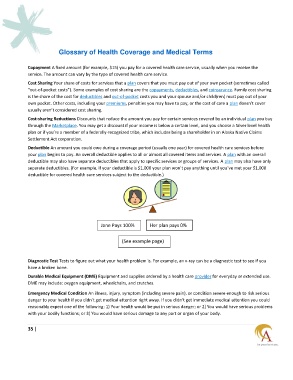
             Deductible An amount you could owe during a coverage period (usually one year) for covered health care services before
             your plan begins to pay. An overall deductible applies to all or almost all covered items and services. A plan with an overall
             deductible may also have separate deductibles that apply to specific services or groups of services. A plan may also have only
             separate deductibles. (For example, if your deductible is $1,000 your plan won’t pay anything until you’ve met your $1,000
             deductible for covered health care services subject to the deductible.)


                                           Jane Pays 100%       Her plan pays 0%


                                                    (See example page)


             Diagnostic Test Tests to figure out what your health problem is. For example, an x-ray can be a diagnostic test to see if you
             have a broken bone.

             Durable Medical Equipment (DME) Equipment and supplies ordered by a health care provider for everyday or extended use.
             DME may include: oxygen equipment, wheelchairs, and crutches.

             Emergency Medical Condition An illness, injury, symptom (including severe pain), or condition severe enough to risk serious
             danger to your health if you didn’t get medical attention right away. If you didn’t get immediate medical attention you could
             reasonably expect one of the following: 1) Your health would be put in serious danger; or 2) You would have serious problems
             with your bodily functions; or 3) You would have serious damage to any part or organ of your body.


             35 |

