


Page 87 - teachers.PDF
P. 87
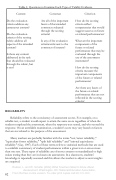
Table 1: Questions to Examine Each Type of Validity Evidence
Content
Do the evaluation criteria address any extraneous content?
Do the evaluation criteria of the scoring rubric address all aspects of the intended content?
Is there any content addressed in the task that should be evaluated through the rubric, but is not?
Construct
Are all of the important facets of the intended construct evaluated through the scoring criteria?
Is any of the evaluation criteria irrelevant to the construct of interest?
Criterion
How do the scoring criteria reflect competencies that would suggest success on future or related performances?
What are the important components of the future or related performance that may be evaluated through the use of the assessment instrument?
How do the scoring criteria measure the important components of the future or related performance?
Are there any facets of the future or related performance that are not reflected in the scoring criteria?
RELIABILITY
Reliability refers to the consistency of assessment scores. For example, on a reliable test, a student would expect to attain the same score regardless of when the student completed the assessment, when the response was scored, and who scored the response. On an unreliable examination, a student's score may vary based on factors that are not related to the purpose of the assessment.
Many teachers are probably familiar with the terms "test/retest reliability," "equivalent-forms reliability," "split half reliability" and "rational equivalence reliability" (Gay, 1987). Each of these terms refers to statistical methods that are used to establish consistency of student performances within a given test or across more than one test. These types of reliability are of more concern on standardized or high stakes testing than they are in classroom assessment. In a classroom, students' knowledge is repeatedly assessed and this allows the teacher to adjust as new insights are acquired.
Rudner, L. and W. Schafer (2002) What Teachers Need to Know About Assessment. Washington, DC: National Education Association.
From the free on-line version. To order print copies call 800 229-4200
82


