


Page 18 - Demo-1
P. 18
Dynamic Kinetic Resolution
kS
SS PS SS PS
Classic Resolution Dynamic Resolution kR kR
SR PR SR PR kinv
kS
E = kfast/kslow = 10
% ee
100
50
00 50 100
kS
kinv
SS
SR
kR
∆∆G
ee P DKR
ee S ee P
PR
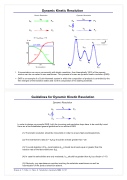
mixture can be converted to one enantiomer. This process is known as dynamic kinetic resolution (DKR).
DKR is an example of a Curtin-Hammett system in which the composition of products is controlled by the free energies of the transition states and not the composition of the starting materials.
% conversion PS
If racemization can occur concurrently with kinetic resolution, then theoretically 100% of the racemic
Guidelines for Dynamic Kinetic Resolution
Dynamic Resolution
S kR P
RR kinv
S kS P SS
In order to design a successful DKR, both the inversion and resolution steps have to be carefully tuned. Here are a few established general guidelines for an efficient DKR:
(1) The kinetic resolution should be irreversible in order to ensure high enantioselectivity. (2) The enantiomeric ratio (E = kR/kS) should be at least greater than ~20.
(3) To avoid depletion of SR, racemization (kinv) should be at least equal or greater than the reaction rate of the fast enantiomer (kR).
(4) In case the selectivities are only moderate, kinv should be greater than kR by a factor of ~10. (5) Obviously, any spontaneous reaction involving the substrate enantiomers as well as
racemization of the product should be absent. Strauss, U. T.; Felfer, U.; Faber, K. Tetrahedron: Asymmetry 1999, 10, 107


