


Page 40 - Demo samer flip book
P. 40
Investopedia.com – the resource for investing and personal finance education.
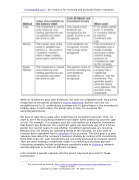
When an investment pays cash dividends, the rules are straightforward: they will be recognized on the parent company's income statement. But the rules are not straightforward for (i) undistributed earnings and (ii) gains/losses in the investment's holding value. In both cases, the parent may or may not recognize the earnings/gains/losses.
We have at least three goals when examining the investment accounts. First, we want to see if the accounting treatment has hidden some underlying economic gain or loss. For example, if a company uses the cost method on a superior investment that doesn't pay dividends, the investment gains will eventually pay off in a future period. Our second goal is to ask whether investment gains/losses are recurring. Because they are usually not operating assets of the business, we may want to consider them separately from a valuation of the business. The third goal is to gain valuable clues about the company's business strategy by looking at its investments. More often than not, such investments are not solely motivated by financial returns. They are often strategic investments made in current/future business partners. Interesting examples include investments essentially made to outsource research and development or to tap into different markets.
Let's consider a specific example with the recent long-lived accounts for Texas Instruments:
This tutorial can be found at: http://www.investopedia.com/university/financialstatements/ (Page 40 of 66)
Copyright © 2004, Investopedia.com - All rights reserved.


