


Page 31 - phytotherapy_ EBOOK_2025
P. 31
Feverfew

Definition
It consists of the dried leaves, or dried aerial parts of Tanacetum parthenium (L.) Schultz
Bip. (Asteraceae).
Major chemical constituents
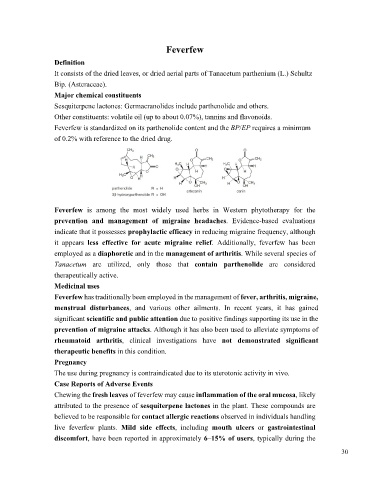
Sesquiterpene lactones: Germacranolides include parthenolide and others.
Other constituents: volatile oil (up to about 0.07%), tannins and flavonoids.
Feverfew is standardized on its parthenolide content and the BP/EP requires a minimum
of 0.2% with reference to the dried drug.

Feverfew is among the most widely used herbs in Western phytotherapy for the
prevention and management of migraine headaches. Evidence-based evaluations
indicate that it possesses prophylactic efficacy in reducing migraine frequency, although
it appears less effective for acute migraine relief. Additionally, feverfew has been
employed as a diaphoretic and in the management of arthritis. While several species of
Tanacetum are utilized, only those that contain parthenolide are considered
therapeutically active.
Medicinal uses
Feverfew has traditionally been employed in the management of fever, arthritis, migraine,
menstrual disturbances, and various other ailments. In recent years, it has gained
significant scientific and public attention due to positive findings supporting its use in the
prevention of migraine attacks. Although it has also been used to alleviate symptoms of
rheumatoid arthritis, clinical investigations have not demonstrated significant
therapeutic benefits in this condition.
Pregnancy
The use during pregnancy is contraindicated due to its uterotonic activity in vivo.
Case Reports of Adverse Events
Chewing the fresh leaves of feverfew may cause inflammation of the oral mucosa, likely
attributed to the presence of sesquiterpene lactones in the plant. These compounds are
believed to be responsible for contact allergic reactions observed in individuals handling
live feverfew plants. Mild side effects, including mouth ulcers or gastrointestinal
discomfort, have been reported in approximately 6–15% of users, typically during the

                                                                                                30

