


Page 267 - Atlas Sea Birds Ver1
P. 267
Great White Pelican                    or too high and thought that pelican numbers may rather
                      4 000                                         be indicative of  food availability. At  Lake St  Lucia, Great
                                                                    White Pelicans nest on islands or protected shores. Should
                      3 000                                         these be flooded (Berruti 1980), or joined to the mainland
                                                                    through falling water levels or deposits of silt, suitable habi-
                      2 000                                         tat  for breeding  will  be  lost (Bowker  and  Downs  2008c).
                                                                    For example, no breeding  occurred in 1995 because all
                      1 000                                         islands  were  flooded,  and  flooding  caused  pelicans  to
                                                                    abandon  breeding  in  1997  (Bowker  and  Downs  2008a).
                                                                    Human activities such as firing missiles or building towers
                                   2 000    4 000     6 000         also caused Great  White Pelicans to  abandon  breeding
                             White-breasted Cormorant               attempts (Berruti 1980, Bowker and Downs 2008a).
                                                                      Counts of  White-breasted Cormorants at  Lake
                       300                                          St  Lucia were made in 43 of the years between 1976 and
                                                                    2021  (Table  1).  Reported  maxima  ranged  from  six  birds
                       200                                          in 1983 to 1,710 birds in 2014. The average of all annual
                                                                    maxima was 260 birds (sd ± 380). Maxima were usually
                                                                    lower from 1975–2006 than subsequently; the ten highest
                       100                                          counts  were  recorded  from 2007–2021.The  maximum
                    Number of pairs  Grey-headed Gull  1 000  1 500  breeding  in  the  Lake  St Lucia  system was of about
                                                                    estimate of numbers  of  White-breasted  Cormorants
                                   500
                                                                    300  pairs  in  1964  (Berruti  1980).  In  four  recent  years
                                                                    >  200  pairs  bred  there  (2007,  2008,  2014,  2021;
                       600
                                                                    Table 2). In north and central Zululand, it is likely that White-
                                                                    breasted  Cormorants  move  between  different  breeding
                                                                    localities (Crawford et al. 2013).
                       400                                            Counts of Grey-headed  Gulls at Lake St Lucia  were
                                                                    made  in 44 of the years between 1976  and  2021
                       200                                          (Table 1). Annual maxima showed no discernible trend and
                                                                    fluctuated  around  a  mean  of  984  birds  (sd  ±  741).  The
                                                                    highest count of 3,650 birds was in 1987 and the lowest
                                                                    annual  maximum of 37 birds was in 2006.  The largest
                                   400       800      1 200         number  of  Grey-headed  Gulls recorded  breeding  at
                             Caspian Tern                           Lake  St  Lucia  was  c. 1,500 pairs in 1992  (Bowker and
                       400                                          Downs 2012). Maxima between  400  and  750  pairs  were
                                                                    recorded in the 1970s, 1980s, 1990s and 2010s (Table 2).
                       300                                          Colonies are easily overlooked and difficult to count so low
                                                                    values should be interpreted with caution.
                       200                                            Counts of Caspian Terns were made in 44 of the years
                                                                    between 1976 and 2021 (Table 1). Annual maxima showed
                       100                                          no  obvious  trend.  They  fluctuated  around  a  mean  of
                                                                    373 birds  (sd  ±  246).  The  highest  count  of  965  birds  in
                                                                    2015  was  followed  by the lowest annual  maximum  of
                                 250     500     750     1 000      one bird in 2016. About 750 pairs of Caspian Tern bred at
                                  Maximum count of individuals      Lake St Lucia in 1972 (500–1,000, Berruti 1980). A further
                                                                    23 annual  estimates were between  100 and 400 pairs
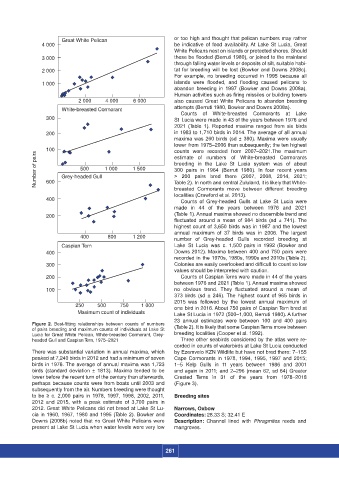
                  Figure  2.  Best-fitting  relationships  between  counts  of  numbers
                  of pairs breeding and maximum counts of individuals at Lake St   (Table 2). It is likely that some Caspian Terns move between
                  Lucia for Great White Pelican, White-breasted Cormorant, Grey-   breeding localities (Cooper et al. 1992).
                  headed Gull and Caspian Tern, 1975–2021             Three other seabirds considered by the atlas were re-
                                                                    corded in counts of waterbirds at Lake St Lucia conducted
                  There was substantial variation in annual maxima, which   by Ezemvelo KZN Wildlife but have not bred there: 7–155
                  peaked at 7,240 birds in 2012 and had a minimum of seven   Cape Cormorants in 1978, 1994, 1995, 1997 and 2015;
                  birds in 1976. The average of annual maxima was 1,723   1–5 Kelp  Gulls  in 11  years between 1986 and 2001
                  birds  (standard  deviation  ±  1813).  Maxima  tended  to  be   and again in 2011; and 2–296 (mean 62, sd 64) Greater
                  lower before the recent turn of the century than afterwards,   Crested  Terns in  31 of  the years from  1978–2018
                  perhaps because counts were from boats until 2003 and   (Figure 3).
                  subsequently from the air. Numbers breeding were thought
                  to  be  ≥  c.  2,000  pairs  in  1978,  1997,  1998,  2002,  2011,   Breeding sites
                  2012 and 2015, with a peak estimate of 3,700 pairs in
                  2012. Great White Pelicans did not breed at Lake St Lu-   Narrows, Oxbow
                  cia in 1960, 1967, 1980 and 1995 (Table 2). Bowker and   Coordinates: 28.33 S; 32.41 E
                  Downs (2008b) noted that no Great White Pelicans were   Description:  Channel  lined  with  Phragmites reeds and
                  present at Lake St Lucia when water levels were very low   mangroves.


                                                                 261

