Page 3 - 2011 February
P. 3
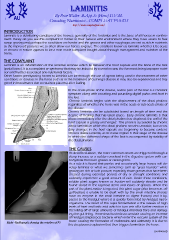
LAMINITIS By Peter Waller B.App.Sc (Hons) D.V.M. Consulting Nutritionist - COMPLEAT FEEDS http://www.compleatfeed.com/ INTRODUCTIONNTRODUCTION I INTRODUCTIONINTRODUCTION Laminitis is a debilitating condition of the hooves, generally of the forelimbs and is the bane of all horses in confine- ment. Rarely do you see this complaint in horses in their natural wild environment where they have access to free range grazing and perhaps the conditions are harder and the grasses and other roughages are not as rich in nutrients as the improved pastures we so often allow our horses to graze. The condition known as laminitis whether it be acute or chronic in nature appears to be a man made complaint bought about through management and nutrition of the horse. THE COMPLAINTHE COMPLAINT THE COMPLAINTTHE COMPLAINT T Laminitis is an inflammation of the sensitive laminae which lie between the hoof capsule and the bone of the foot (pedal bone). It is a complaint or syndrome that may be induced by several means; the foremost being improper nutri- tion and further associated anti-nutritional factors. Other factors predisposing horses to laminitis can be through the use of agents being used in the treatment of other conditions or diseases in the horse such as in the treatment of Cushing’s disease. It may also be experienced and trig- gered in broodmares due to retained placenta after foaling. In the acute phase of the disease, severe pain of the feet is a constant symptom along with sweating and pounding digital pulses and heat in the feet. Chronic laminitis begins with the displacement of the distal phalanx regardless of whether the horse was in the acute or sub-acute phase of the disease. Chronic laminitis can be subdivided based on length of time and the degree of healing that has taken place. Early chronic laminitis is that phase immediately after the distal phalanx has displaced; the wall of the hoof capsule is grossly unchanged. This phase is succeeded by chronic active laminitis in which the distal phalanx remains unstable, but secon- dary changes in the hoof capsule are beginning to become evident. Chronic stable laminitis, as its name implies is that stage of the disease in which the deformed shape of the foot is accompanied by stability of the distal phalanx. T THE CAUSESHE CAUSES THE CAUSESTHE CAUSES As described above, the more common onsets are triggered through a sharp increase or a sudden overload in the digestive system with car- bohydrate from lush grasses or cereal grains. As a rule it is found that ponies and occasionally large horses will de- velop laminitis or what we sometimes term as “grass founder” while grazing on rich or lush pasture, especially those grasses that have been stressed during extended periods of dry or drought conditions and suddenly experience a good amount of rain. Under these conditions, soluble plant sugars known as fructan will suddenly elevate and be found stored in the topmost stems and leaves of grasses. When this part of the plant matter is ingested, this plant sugar (also known as oli- gofructose) is unable to be dealt with by the small intestine (horses have no enzyme in the small intestine to digest fructan) and it by- passes to the hindgut where it is quickly fermented by hindgut micro- organisms. The result of this rapid fermentation is the release of high levels of heat and lactic acid which in turn sets off a further reaction in the killing off of large amounts of hindgut microbial flora and damag- ing the gut lining. These dead bacteria accumulate causing an increase of hindgut streptococci bacteria which enter the vascular system of the horse causing the formation of endotoxins and ultimately it is due to Right -Radiograph showing the rotation of P3 this streptococci explosion that then triggers laminitis in the horse. (continued)