Page 4 - 2011 February
P. 4
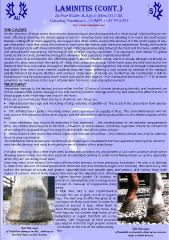
LAMINITIS (CONT.) By Peter Waller B.App.Sc (Hons) D.V.M. Consulting Nutritionist - COMPLEAT FEEDS http://www.compleatfeed.com/ T THE CAUSES THE CAUSES THE CAUSES HE CAUSES It is the presence of these toxins that elevates blood pressure and development of a ‘short-circuit’ of blood flow to the hoof, effectively shunting the blood supply across the coronary band and not allowing it to reach the hoof proper thereby cutting off or short supplying vital oxygen and other amino acids to the laminae. It is this short supply of oxy- gen and amino acids that cause the laminae to react with the intense pain the horse experiences. Finally, the laminae begin to degenerate with blood and other serum collecting and pooling between the hoof and the bone, adding fur- ther pressure and expounding the tearing of the laminae causing separation. This separation then allows P3 (pedal bone) to sink or rotate; sometimes enough to allow the hoof capsule to separate and fall off. In most cases of grain founder, the offending grain is almost certainly wheat, and it is usually through accidental in- gestion of a large amount (in the vicinity of ~6kg) that causes the damage. Other lesser cases are often the fault of the feeder of the horse who either through an intentional increase of cereal grains in the ration or through implementing bad advice from other horse owners suddenly finds the horse suffering a colic caused by acidosis of the hindgut; quickly followed by watery diarrhea and elevated temperature. If bloods are worked by the veterinarian it will be found the pH will be substantially lower (more acid and in the range of ~4 or 5 instead of the normal 7 – 7.5) all these symptoms are indications of the onset of laminitis in the horse caused by grain overload. T TREATMENTTREATMENT TREATMENTREATMENT Irreparable damage to the laminae is done within the first 12 hours of a horse developing laminitis, and treatment can not be implemented quickly enough to try and avoid any further damage and to try and reduce the effect the loss of blood supply to the hoof may have had on the horse. There are several methods that have been shown to aid – these are: • Administration through oral drenching of large volumes of paraffin oil. This assists in the prevention from absorp- tion of endotoxins. • The administration (under veterinary advice and supervision or supply) of Bute. This anti-inflammatory will not only assist in the reduction of the level of pain, but will also assist in allowing blood flow to the affected aspects of the hoof. • Some veterinary care should be exercised in this treatment – the administration of the sedative acepromazine (Ace). Ace dilates blood vessels in the foot – however, as stated above, veterinary regulation should be considered when using this preparation as there may be undesirable side-effects when using it. • Nerve blocks in the lower foot fetlock region will increase blood flow – this method should also only be adminis- tered by your veterinarian. Immobilize the horse as best you can through locking it up in a stable/box that has supportive flooring that will mini- mize lamella damage and assist in the prevention of rotation of the pedal bone. The best method by far is rather than need to treat this condition, try and prevent it. Use some common sense when allowing obese horses out into lush pastures on unlimited grazing or when hard feeing horses on grains, especially when they are not doing much work. Diets may need to be revised for horses suffering from laminitis or have previously foundered. The idea is to attempt to reduce the amount of carbohydrate both structural and non-structural (sugars and starches). We need to try and reduce the amount of cereals and grasses, especially lush new growth grass and pasture, and replace them with higher oil content. The oil slows digesta flow through the digestive tract, offering a higher nutrient uptake. Oil contains no protein or carbohydrate but is energy dense through its make-up of triglycerides (fatty acids). A high fibre diet is also recommended through the use of grass, cereal or legume hays. The best way to offer the grass or ce- real hays is to firstly soak them in water for a period of around ½ hour, allow them to drain thoroughly and feed the horse. Leg- ume hays do not contain high levels of car- bohydrates or sugars therefore are a rea- sonably ‘safe’ roughage to feed provided you keep in mind the high protein content in relation to the rest of the ration being Tell Tale signs Tell Tale signs of Nutrition changes in diet, show up as fed. of laminitis or founder, show up as concave inverted rings on their hooves. rings on their hooves.