


Page 40 - UNI 101 Computer Science Handout.
P. 40
Faculty of Nursing
                                                                  Adult care Nursing Department


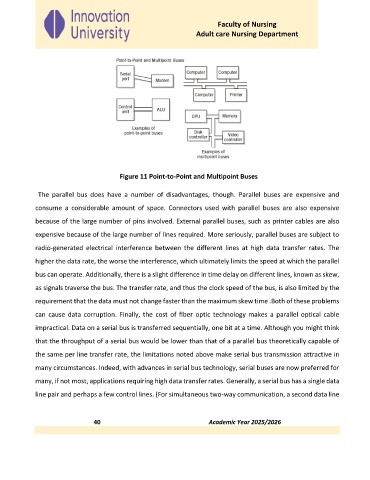
                                         Figure 11 Point-to-Point and Multipoint Buses


              The  parallel  bus  does  have  a  number  of  disadvantages,  though.  Parallel  buses  are  expensive  and
             consume  a  considerable  amount  of  space.  Connectors  used  with  parallel  buses  are  also  expensive

             because of the large number of pins involved. External parallel buses, such as printer cables are also

             expensive because of the large number of lines required. More seriously, parallel buses are subject to
             radio-generated  electrical  interference  between  the  different  lines  at  high  data  transfer  rates.  The

             higher the data rate, the worse the interference, which ultimately limits the speed at which the parallel

             bus can operate. Additionally, there is a slight difference in time delay on different lines, known as skew,

             as signals traverse the bus. The transfer rate, and thus the clock speed of the bus, is also limited by the
             requirement that the data must not change faster than the maximum skew time .Both of these problems

             can  cause data  corruption.  Finally, the  cost of fiber  optic technology makes  a parallel optical  cable

             impractical. Data on a serial bus is transferred sequentially, one bit at a time. Although you might think

             that the throughput of a serial bus would be lower than that of a parallel bus theoretically capable of
             the same per line transfer rate, the limitations noted above make serial bus transmission attractive in

             many circumstances. Indeed, with advances in serial bus technology, serial buses are now preferred for

             many, if not most, applications requiring high data transfer rates. Generally, a serial bus has a single data

             line pair and perhaps a few control lines. (For simultaneous two-way communication, a second data line


                                40                                                                        Academic Year 2025/2026

