


Page 41 - The Visual Suite Vol2.6
P. 41
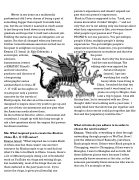
Never in my years as a multimedia professional did I ever dream of being a part of something bigger than myself. It sounds bad, yes, but life as I knew it seemed so much easier to just keep my head down in my studies, graduate and hope that I could nail a decent job. Fufilling the status quo was an obligation, not an option. But that all changed when my fraternal brother turned-business-associate invited me on his quest to enlighten our people.
Kwame J.T. Ismail (b. Kyle Edwards), a sociologist, scholar,
educator,
businessman (owner
of KMATiKC Films©)
and now executive
producer and director of
a burgeoning
ethnographic series
entitled Black in China 黑
人 在 中国, set his sights on
creating not only a positive
narrative for the travels of
Black people, but also an active resource designed to inspire inner city youth to get up and get out of their circumstances and see past what the American media shows them.
As the technical director, editor, cameraman and consultant, I caught up with him long enough to ask a few questions about the engine that powers his dream machine.
Me: What inspired you to create the Black in China 黑人 在 中国 series?
Kwame Ismail: “What inspired me to make Black in China was that there wasn’t one succinct resource for Black people to go to and find out what it’s like to be Black in China. I mean, there’s a lot of different people doing a lot of wonderful work on YouTube via vlogs and writing blogs, but realistically, most of the blogs that are out there surfaced in the past years or so. If you notice the vlogs, it gives you [literally] one
person’s experience and doesn’t expand out past that one person’s experience.
Black in China is supposed to be, “Look, you wanna know what it’s like? Alright...” and not only that, we’re not asking only one human about what their experience is like, you wanna know what people’s pet peeves are? You get PEOPLE’S, not one person’s. You get multiple people’s likes, multiple people’s dating experiences. You get multiple people’s experiences in the classroom, you get multiple people’s experiences as students and that was
the point.
I mean, that’s why the first season had the cuts and things. The
editing style was inspired by
Samurai Shampoo
[anime]. I got into
watching that really heavy while I was living in
China. I watched the first two seasons [and it was funny] on a
plane on a trip to Ningbo, then
later a trip to Japan. I was still filming then, but it resonated with me. Even
though I didn’t start editing until a year later, I really liked how that show was put together and thought a docu-series could put together just like that and that [expletive] could be fire.”
What criteria do you adhere to in order to choose the next location?
Kwame: “Basically, everything is done through networking through people or WeChat. How I pick the different cities? Basically, just where Black people were. If there were Black people in Chongqing, went to Chongqing, if they were in Shanghai, I went to Shanghai and so forth. All these different places were because I either personally knew someone in that city, or that someone personally knew someone who was in that city. It’s as simple as that.


