


Page 32 - ARUBA TODAY
P. 32
A32 FEATURE
Monday 7 May 2018
'It's ruthless out there': Quilts honor dead migrants to US
By MARK PRATT movements and, more re-
Associated Press cently, in response to gun
BOSTON (AP) — A power- violence.
ful exhibition of quilts me- "There is a long tradition
morializing migrants from of using the quilt-making
Mexico and Central Amer- process to bring attention
ica who have died in the to social causes because
southern Arizona desert in women didn't have any
the past 20 years is on dis- other outlet to express their
play amid intense national concerns, outrage, and
debate over immigration opinions," Burchfield said.
policy. "They could say on a quilt
Seventeen quilts from the all the things they weren't
Migrant Quilt Project are given a platform to say."
currently hanging in the Lowell is an appropriate
New England Quilt Museum place for the exhibit be-
in Lowell, Massachusetts, in cause the modern-day
a display that runs until July city of more than 110,000
15. residents was built on immi-
The goal is to move the im- grant power, from the Irish
migration debate beyond who dug the city's famed
statistics and political snip- canals, to the French-
ing and put the plight of Canadians, Greeks, Por-
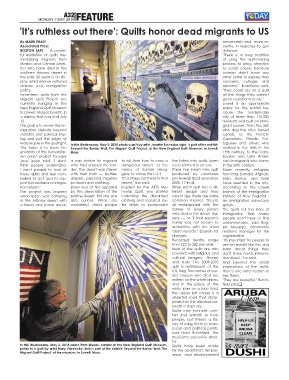
real people in the spotlight. In this Wednesday, May 2, 2018 photo a quilt by artist Jennifer Eschedor, right, is part of the exhibit: tuguese and others who
"My hope is to show the Beyond the Border Wall, The Migrant Quilt Project, at the New England Quilt Museum, in Lowell, worked in the mills in the
enormity of this humanitar- Mass. 19th century, to the Cam-
ian crisis," project founder bodian and Latin Ameri-
Jody Ipsen said. "I don't a way station for migrants to risk their lives to cross a the fabric into quilts. Ipsen can immigrants who came
think people understand. who had crossed the bor- dangerous desert, at the even pitched in on one. in the 20th century.
I want people to look at der. The desert was strewn mercy of human smug- There has been one quilt More recently, refugees
these quilts and feel com- with their trash — bottles, glers, to come the U.S.? produced by volunteers from Iraq, Somalia, Afghan-
pelled to act and to sup- diapers, personal hygiene "It's ruthless out there in that per federal fiscal year since istan, Burma, and Syria
port humanitarian immigra- products and clothing. desert," she said. 2000, 17 in all. have resettled in the city,
tion reform." Ipsen was at first appalled Inspired by the AIDS Me- While each quilt has a dif- according to the Lowell
The project was inspired by the desecration of the morial Quilt, she started ferent design and they branch of the Immigration
when Ipsen was camping pristine desert. But she was collecting the discarded vary in size, there are some Institute of New England ,
in the Arizona desert with also curious. What, she clothing and recruited tex- common themes. They're an immigration advocacy
a friend and came across wondered, drives people tile artists to incorporate all emblazoned with the group.
names of every person The quilts tell the story of
who died in the desert that immigration that many
year — or, if that person's people don't hear or find
name was not known to uncomfortable, said Rog-
authorities, with the word ers Muyanja, community
"desconocido," Spanish for relations manager for the
stranger. organization.
Recorded deaths range "It's important for people to
from 122 to 282 per year. see an exhibit like this and
Most of the quilts are also learn about things they
covered with religious and don't have much informa-
cultural imagery, flowers tion about," he said.
and skulls. The 2009-2010 And beyond the social
quilt is reminiscent of the implications of the quilts,
U.S. flag. The names of bor- there's one other reason to
der crossers who died are see them.
written on the white stripes, "They are beautiful," Burch-
and in the place of the field said.q
white stars on a blue field,
the upper left corner is a
deserted road that disap-
pears into the distance be-
neath a starry sky.
Quilts may connote com-
fort and warmth to most
people, but there's a his-
tory of using them to make
social and political points,
said Nora Burchfield, the
museum's executive direc-
tor.
In this Wednesday, May 2, 2018 photo Pam Weeks, curator at the New England Quilt Museum, Quilts have been made
points to a quilt by artist Mary Vaneecke, that is part of the exhibit: Beyond the Border Wall, The for the abolitionist, temper-
Migrant Quilt Project, at the museum, in Lowell, Mass.
ance, and environmental

