


Page 913 - Basic Electrical Engineering
P. 913
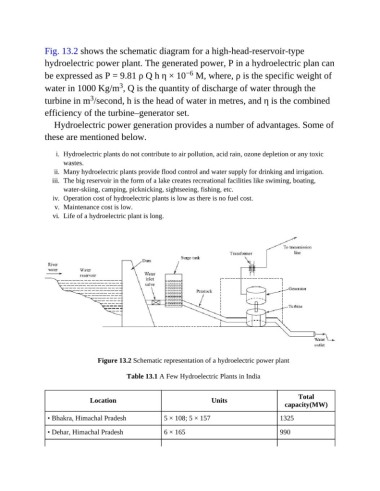
Fig. 13.2 shows the schematic diagram for a high-head-reservoir-type
               hydroelectric power plant. The generated power, P in a hydroelectric plan can
                                                             −6
               be expressed as P = 9.81 ρ Q h η × 10  M, where, ρ is the specific weight of
                                       3
               water in 1000 Kg/m , Q is the quantity of discharge of water through the
                              3
               turbine in m /second, h is the head of water in metres, and η is the combined
               efficiency of the turbine–generator set.
                  Hydroelectric power generation provides a number of advantages. Some of

               these are mentioned below.

                   i.  Hydroelectric plants do not contribute to air pollution, acid rain, ozone depletion or any toxic
                     wastes.
                  ii.  Many hydroelectric plants provide flood control and water supply for drinking and irrigation.
                  iii.  The big reservoir in the form of a lake creates recreational facilities like swiming, boating,
                     water-skiing, camping, picknicking, sightseeing, fishing, etc.
                  iv.  Operation cost of hydroelectric plants is low as there is no fuel cost.
                   v.  Maintenance cost is low.
                  vi.  Life of a hydroelectric plant is long.


                                Figure 13.2 Schematic representation of a hydroelectric power plant

                                          Table 13.1 A Few Hydroelectric Plants in India


                                                                                                 Total
                              Location                               Units
                                                                                             capacity(MW)
                • Bhakra, Himachal Pradesh            5 × 10⁸; 5 × 157                     1325

                • Dehar, Himachal Pradesh             6 × 165                              990

