


Page 49 - Caribbean Reef Life Demo
P. 49
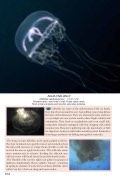
(Olindias sambaquiensis) < 5 cm / 2 in Rounded dome, wider than it is tall. Purple radial canals. Short primary tentacles and long thin secondary tentacles.
 elly sh are some of the oldest forms of life on Earth; they have been around for over  50 million years, long before the time of the dinosaurs. They are about 95  water and have a very simple nervous system used to detect light, salinity and orientation. They feed on zooplankton and even small  sh, using their tentacles e uipped with tiny stinging cells called nematocysts. The prey is pulled up into the main body, or bell, for digestion. Some juvenile  shes actually protect themselves from larger predators by hiding among these tentacles.
The sting of some jelly sh can be  uite painful to divers. The best treatment is to gently remove any tentacles from the skin with tweezers or scrape them off with a card. Do not rub the area or apply fresh water. This will only cause more nematocysts to activate. Soaking the affected area with hot water will break down the protein-based toxins.
The Thimble  elly  on the right  can gather in groups of millions of individuals. This is called a  bloom , occurring in spring to summer. It is the larvae of these jelly sh, often called  sea lice , that can sting and cause rashes.
104


