


Page 145 - Demo
P. 145
LUKE
5The Call of Simon the Fisherman.*
a 1b While the crowd was pressing in on Jesus and listening to the
word of God, he was standing by the Lake of Gennesaret. He saw two boats there alongside the lake; the fishermen had disembarked and were washing their nets. 3Getting into one of the boats, the one belonging to Simon, he asked him to put out a short
distance from the shore. Then he sat down and taught
the crowds from the boat. 4c After he had finished
speaking, he said to Simon, “Put out into deep water
and lower your nets for a catch.” 5Simon said in reply,
“Master, we have worked hard all night and have
caught nothing, but at your command I will lower
the nets.” 6When they had done this, they caught a great number of fish and their nets were tearing. 7They signaled to their partners in the other boat to come to help them. They came and filled both boats so that they were in danger of sinking. 8When Simon Peter saw this, he fell at the knees of Jesus and said, “Depart from me, Lord, for I am a sinful man.” 9For astonishment at the catch of fish they had made seized him and all those with him, 10and likewise James and John, the sons of Zebedee, who were partners of Simon. Jesus said to Simon, “Do not be afraid; from now on you will be catching men.”d 11When they brought their boats to the shore, they left everything* and followed him.e
The Cleansing of a Leper.f 12Now there was a man full of leprosy* in one of the towns where he was; and when he saw Jesus, he fell prostrate, pleaded with him, and said, “Lord, if you wish, you can make me clean.” 13Jesus stretched out his hand, touched him, and said, “I do will it. Be made clean.” And the leprosy left him immediately. 14Then he ordered him not to tell anyone, but “Go, show yourself to the priest and offer for your cleansing what Moses prescribed;* that will be proof for them.”g 15The report about him spread all the more, and great crowds assembled to listen to him and to be cured of their ailments, 16but he would withdraw to deserted places to pray.h
The Healing of a Paralytic.i 17* One day as Jesus was teaching, Pharisees* and teachers of the law were sitting there who had come from every village of Galilee and Judea and Jerusalem, and the power of the Lord was with him for healing. 18And some men brought on a
2
5:3
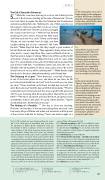
As the crowds grow, Jesus can no longer simply go the synagogue to teach. He borrows a boat and preaches to the people gathered on the shore, which forms a kind of natural amphitheater.
5:8
Simon Peter’s response to the miraculous catch of sh is to
fall down before Jesus and to acknowledge his sinfulness.
As he recognizes the presence
of God, he also becomes more aware of his own sinfulness, his humanity. Jesus responds by reassuring Simon Peter, and, most amazing of all, calling him to be a coworker in his ministry.
5:12
In the ancient world, the term “leprosy” was used to describe any of a number of skin ailments. Anyone diagnosed with leprosy was considered ritually unclean, and could no longer join the community for worship or even be near other people. The man with leprosy who approaches Jesus wants to be made “clean,” to be restored to the community. Jesus grants his prayer: Jesus wants all to “be made clean,” to be restored to wholeness and connection with others.
* [5:1–11] This incident has been transposed from his source, Mk 1:16–20, which places it immediately after Jesus makes his appearance in Galilee. By this transposition Luke uses this example of Simon’s acceptance of Jesus to counter the earlier rejection of him by his hometown people, and since several incidents dealing with Jesus’ power and authority have already been narrated, Luke creates a plausible context for the acceptance of Jesus by Simon and his partners. Many commentators have noted the similarity between the wondrous catch of sh reported here (Lk 4:4–9) and the post-resurrectional appearance of Jesus in Jn 21:1–11. There are traces in Luke’s story that the post-resurrectional context is the original one: in Lk 4:8 Simon addresses Jesus as Lord (a post-resurrectional title for Jesus—see Lk 24:34; Acts 2:36—that has been read back into the historical ministry of Jesus) and recognizes himself as a sinner (an appropriate recognition for one who has denied knowing Jesus—Lk 22:54–62). As used by Luke, the incident looks forward to Peter’s leadership in Luke-Acts (Lk 6:14; 9:20; 22:31–32; 24:34; Acts 1:15; 2:14–40; 10:11–18; 15:7–12) and symbolizes the future
a. [5:1–11] Mt 4:18–22; Mk 1:16–20.
b. [5:1–3] Mt 13:1–2; Mk 2:13; 3:9–10; 4:1–2. c. [5:4–9] Jn 21:1–11.
success of Peter as sherman (Acts 2:41).
* [5:11] They left everything: in Mk 1:16–20 and Mt 4:18–22 the
shermen who follow Jesus leave their nets and their father; in Luke, they leave everything (see also Lk 5:28; 12:33; 14:33; 18:22), an indication of Luke’s theme of complete detachment from material possessions.
* [5:12] Full of leprosy: see note on Mk 1:40.
* [5:14] Show yourself to the priest. . .what Moses prescribed:
this is a reference to Lv 14:2–9 that gives detailed instructions for the puri cation of one who had been a victim of leprosy and thereby excluded from contact with others (see Lv 13:45–46, 49; Nm 5:2–3). That will be proof for them: see note on Mt 8:4.
* [5:17–6:11] From his Marcan source, Luke now introduces a series of controversies with Pharisees: controversy over Jesus’ power to forgive sins (Lk 5:17–26); controversy over his eating and drinking with tax collectors and sinners (Lk 5:27–32); controversy over not fasting (Lk 5:33–36); and nally two episodes narrating controversies over observance of the sabbath (Lk 5:1–11).
* [5:17] Pharisees: see note on Mt 3:7.
g. [5:14] 8:56; Lv 14:2–32; Mk 7:36.
h. [5:16] Mk 1:35.
i. [5:17–26] Mt 9:1–8; Mk 2:1–12.
d. [5:10] Jer 16:16.
e. [5:11] Mt 19:27.
f. [5:12–16] Mt 8:2–4; Mk 1:40–45.
133


