


Page 147 - Demo
P. 147
LUKE
6Debates About the Sabbath.*
1a While he was going through a field of grain on a sabbath, his disciples were picking the heads of grain, rubbing them in their hands, and eating them.b 2Some Pharisees said, “Why are you doing what is unlawful on the sabbath?” 3c Jesus said to them in reply, “Have you not read what David did when he and those [who were] with him were hungry? 4[How] he went into the house of God, took the bread of offering,* which only the priests could lawfully eat, ate of it, and shared it with his companions.”d 5Then he said to them, “The Son of Man is lord of the sabbath.”
6e On another sabbath he went into the synagogue and taught, and there was a man there whose right hand was withered. 7The scribes and the Pharisees watched him closely to see if he would cure on the sabbath so that they might discover a reason to accuse him.f 8But he realized their intentions and said to the man with the withered hand, “Come up and stand before us.” And he rose and stood there.g 9Then Jesus said to them, “I ask you, is it lawful to do good on the sabbath rather than to do evil, to save life rather than to destroy it?” 10Looking around at them all, he then said to him, “Stretch out your hand.” He did so and his hand was restored. 11But they became enraged and discussed together what they might do to Jesus.
The Mission of the Twelve.* 12h In those days he departed to the mountain to pray, and he spent the night in prayer* to God. 13When day came, he called his disciples to himself, and from them he chose Twelve,* whom he also named apostles: 14i Simon, whom he named Peter,* and his brother Andrew, James, John, Philip, Bartholomew, 15Matthew, Thomas, James the son of Alphaeus, Simon who was called a Zealot,* 16and Judas the son of James, and Judas Iscariot,* who became a traitor.
Ministering to a Great Multitude.j 17* And he came down with them and stood on a stretch of level ground. A great crowd of his disciples and a large number of the people from all Judea and Jerusalem and the coastal region of Tyre and Sidon 18came to hear him and to be healed of their diseases; and even those who were tormented by unclean spirits were cured. 19Everyone in the crowd sought to touch him because power came forth from him and healed them all.
6:12
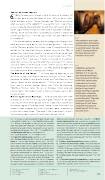
Jesus spends an entire night in prayer before calling twelve of his disciples to be apostles (a word that means “one who is sent”). Do we pray before the major decisions and transitions of our lives?
6:17
In Matthew, we have the Sermon on the Mount (Matthew 5-7). In Luke, the most extended teaching of Jesus is known as the Sermon on the Plain, because Jesus comes down to “a stretch
of level ground” and there teaches a huge crowd of people, including his apostles and disciples, and people from all over Judea and the surrounding areas. They seek his wisdom as well as his healing touch. And “power came forth from him and healed them all” (6:19): Jesus has come for all.
* [6:1–11] The two episodes recounted here deal with gathering grain and healing, both of which were forbidden on the sabbath. In his defense of his disciples’ conduct and his own charitable deed, Jesus argues that satisfying human needs such as hunger and performing works of mercy take precedence even over the sacred sabbath rest. See also notes on Mt 12:1–14 and Mk 2:25–26.
* [6:4] The bread of o ering: see note on Mt 12:5–6.
* [6:12–16] See notes on Mt 10:1–11:1 and Mk 3:14–15.
* [6:12] Spent the night in prayer: see note on Lk 3:21.
* [6:13] He chose Twelve: the identi cation of this group as the
Twelve is a part of early Christian tradition (see 1 Cor 15:5), and in Matthew and Luke, the Twelve are associated with the twelve tribes of Israel (Lk 22:29–30; Mt 19:28). After the fall of Judas from his position among the Twelve, the need is felt on the part of the early community to reconstitute this group before the Christian mission begins at Pentecost (Acts 1:15–26). From Luke’s perspective, they are an important group who because of their association with Jesus from the time of his baptism to his ascension (Acts 1:21–22) provide the continuity between the historical Jesus and the church of Luke’s day and who as the original eyewitnesses guarantee the delity of the church’s
beliefs and practices to the teachings of Jesus (Lk 1:1–4). Whom he also named apostles: only Luke among the gospel writers attributes to Jesus the bestowal of the name apostles upon the Twelve. See note on Mt 10:2–4. “Apostle” becomes a technical term in early Christianity for a missionary sent out to preach the word of God. Although Luke seems to want to restrict the title to the Twelve (only in Acts 4:4, 14 are Paul and Barnabas termed apostles), other places in the New Testament show an awareness that the term was more widely applied (1 Cor 15:5–7; Gal 1:19; 1 Cor 1:1; 9:1; Rom 16:7).
* [6:14] Simon, whom he named Peter: see note on Mk 3:16.
* [6:15] Simon who was called a Zealot: the Zealots were the instigators of the First Revolt of Palestinian Jews against Rome in A.D. 66–70. Because the existence of the Zealots as a distinct group during the lifetime of Jesus is the subject of debate, the
meaning of the identi cation of Simon as a Zealot is unclear.
* [6:16] Judas Iscariot: the name Iscariot may mean “man from
Kerioth.”
* [6:17] The coastal region of Tyre and Sidon: not only Jews from
Judea and Jerusalem, but even Gentiles from outside Palestine come to hear Jesus (see Lk 2:31–32; 3:6; 4:24–27).
a. [6:1–5] Mt 12:1–8; Mk 2:23–28. b. [6:1] Dt 23:26.
c. [6:3–4] 1 Sm 21:1–6.
d. [6:4] Lv 24:5–9.
e. [6:6–11] Mt 12:9–14; Mk 3:1–6.
f. [6:7] 14:1.
g. [6:8] 5:22; 9:47.
h. [6:12–16] Mt 10:1–4; Mk 3:13–19.
i. [6:14–16] Acts 1:13.
j. [6:17–19] Mt 4:23–25; Mk 3:7–10.
135


