


Page 146 - Demo
P. 146
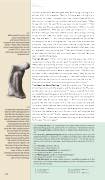
5:27 When people murmur that Jesus is spending time with sinners, like Levi, he responds with these memorable words: “Those who are healthy do not need a physician, but the sick do” (5:31). Jesus is the divine physician, the healer of body and soul.
5:34 In response to questions about why he and his disciples do not fast like John the Baptist, Jesus tells two short parables of new and old. It is useless to patch an old garment with new cloth, because the new cloth will shrink and the patch will pull away. Nor does it make sense to put new wine into old skins, which will burst during the fermentation process. And yet, being human, we often prefer the comfort of the old, even when the new is better. The Pharisees cling to the old ways and cannot adapt to the new ways of Jesus, in which traditional practices like fasting and the sabbath observance take on new meanings.
134
LUKE
stretcher a man who was paralyzed; they were trying to bring him in and set [him] in his presence. 19But not finding a way to bring him in because of the crowd, they went up on the roof and lowered him on the stretcher through the tiles* into the middle in front of Jesus. 20When he saw their faith, he said, “As for you, your sins are forgiven.”* 21Then the scribes* and Pharisees began to ask themselves, “Who is this who speaks blasphemies? Who but God alone can forgive sins?”j 22Jesus knew their thoughts and said to them in reply, “What are you thinking in your hearts?k 23Which is easier, to say, ‘Your sins are forgiven,’ or to say, ‘Rise and walk’? 24* l But that you may know that the Son of Man has authority on earth to forgive sins”—he said to the man who was paralyzed, “I say to you, rise, pick up your stretcher, and go home.” 25He stood up immediately before them, picked up what he had been lying on, and went home, glorifying God. 26Then astonishment seized them all and they glorified God, and, struck with awe, they said, “We have seen incredible things today.”
The Call of Levi.m 27After this he went out and saw a tax collector named Levi sitting at the customs post. He said to him, “Follow me.” 28And leaving everything behind,* he got up and followed him. 29n Then Levi gave a great banquet for him in his house, and a large crowd of tax collectors and others were at table with them. 30The Pharisees and their scribes complained to his disciples, saying, “Why do you eat and drink with tax collectors and sinners?” 31Jesus said to them in reply, “Those who are healthy do not need a physician, but the sick do. 32I have not come to call the righteous to repentance but sinners.”
The Question About Fasting.o 33And they said to him, “The disciples of John fast often and offer prayers, and the disciples of the Pharisees do the same; but yours eat and drink.” 34* Jesus answered them, “Can you make the wedding guests* fast while the bridegroom is with them? 35But the days will come, and when the bridegroom is taken away from them, then they will fast in those days.” 36* And he also told them a parable. “No one tears a piece from a new cloak to patch an old one. Otherwise, he will tear the new and the piece from it will not match the old cloak. 37Likewise, no one pours new wine into old wineskins. Otherwise, the new wine will burst the skins, and it will be spilled, and the skins will be ruined. 38Rather, new wine must be poured into fresh wineskins. 39[And] no one who has been drinking old wine desires new, for he says, ‘The old is good.’”*
* [5:19] Through the tiles: Luke has adapted the story found in Mark to his non-Palestinian audience by changing “opened up the roof” (Mk 2:4, a reference to Palestinian straw and clay roofs) to through the tiles, a detail that re ects the Hellenistic Greco-Roman house with tiled roof.
* [5:20] As for you, your sins are forgiven: literally, “O man, your sins are forgiven you.” The connection between the forgiveness of sins and the cure of the paralytic re ects the belief of rst-century Palestine (based on the Old Testament: Ex 20:5; Dt 5:9) that sickness and in rmity are the result of sin, one’s own or that of one’s ancestors (see also Lk 13:2; Jn 5:14; 9:2).
* [5:21] The scribes: see note on Mk 2:6.
* [5:24] See notes on Mt 9:6 and Mk 2:10.
* [5:28] Leaving everything behind: see note on Lk 5:11.
* [5:34–35] See notes on Mt 9:15 and Mk 2:19.
* [5:34] Wedding guests: literally, “sons of the bridal chamber.”
* [5:36–39] See notes on Mt 9:16–17 and Mk 2:19.
* [5:39] The old is good: this saying is meant to be ironic and o ers an explanation for the
rejection by some of the new wine that Jesus o ers: satisfaction with old forms will prevent one from sampling the new.
j. [5:21] 7:49; Is 43:25.
k. [5:22] 6:8; 9:47.
l. [5:24–25] Jn 5:8–9, 27.
m. [5:27–32] Mt 9:9–13; Mk 2:13–17. n. [5:29–30] 15:1–2.
o. [5:33–39] Mt 9:14–17; Mk 2:18–22.


