


Page 148 - Demo
P. 148
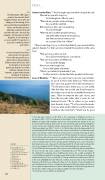
6:20 The Beatitudes (“Blessings”) point to the reversals God’s kingdom brings: those who are hungry or in mourning, those who are hated and excluded by others, are the blessed ones, while those whom the world considers blessed—the rich, the popular— nd no place in God’s kingdom. It is not wrong to possess wealth. The great sin is to possess it and not share it with others.
6:27 It is not enough to love those who love us, to be good to those who are good to us, to give to those who give back. Everyone does that. Jesus calls his disciples to a love and generosity that are out of the ordinary: they are to love enemies, to give without hope of reward. To truly be a Christian is to be extraordinary.
CHAPTER 6
k. [6:20–26] Mt 5:1–12.
l. [6:21] Ps 126:5–6; Is 61:3;
Jer 31:25; Rev 7:16–17.
m. [6:22] Jn 15:19; 16:2; 1 Pt 4:14.
n. [6:23] 11:47–48; 2 Chr 36:16;
Mt 23:30–31.
o. [6:24] Jas 5:1.
p. [6:25] Is 65:13–14.
q. [6:26] Jas 4:4.
r. [6:27–36] Mt 5:38–48.
s. [6:27] Prv 25:21; Rom 12:20–21.
t. [6:28] Rom 12:14; 1 Pt 3:9.
u. [6:31] Mt 7:12.
136
LUKE
Sermon on the Plain.k 20* And raising his eyes toward his disciples he said: “Blessed are you who are poor,*
for the kingdom of God is yours. 21Blessed are you who are now hungry,
for you will be satisfied.
Blessed are you who are now weeping,
for you will laugh.l
22Blessed are you when people hate you,
and when they exclude and insult you, and denounce your name as evil
on account of the Son of Man.m
23Rejoice and leap for joy on that day! Behold, your reward will be great in heaven. For their ancestors treated the prophets in the same way.n
24But woe to you who are rich,
for you have received your consolation.o
25But woe to you who are filled now, for you will be hungry.
Woe to you who laugh now,
for you will grieve and weep.p
26Woe to you when all speak well of you,
for their ancestors treated the false prophets in this way.q
Love of Enemies.* 27r “But to you who hear I say, love your enemies, do good to those who hate you,s 28bless those who curse you, pray for those who mistreat you.t 29To the person who strikes you on one cheek, offer the other one as well, and from the person who takes your cloak, do not withhold even your tunic. 30Give to everyone who asks of you, and from the one who takes what is yours do not demand it back. 31Do to others as you would have them do to you.u 32For if you love those who love you, what credit is that to you? Even sinners love those who love them. 33And if you do good
* [6:20–49] Luke’s “Sermon on the Plain” is the counterpart to Matthew’s “Sermon on the Mount” (Mt 5:1–7:27). It is addressed to the disciples of Jesus, and, like the sermon in Matthew, it begins with beatitudes (Lk 6:20–22) and ends with the parable of the two houses (Lk 6:46–49). Almost all the words of Jesus reported by Luke are found in Matthew’s version, but because Matthew includes sayings that were related to speci cally Jewish Christian problems (e.g., Mt 5:17–20; 6:1–8, 16–18) that Luke did not nd appropriate for his predominantly Gentile Christian audience, the“Sermon on the Mount”is considerably longer. Luke’s sermon may be outlined as follows: an introduction consisting of blessings and woes (Lk 6:20–26); the love of one’s enemies (Lk 6:27–36); the demands of loving one’s neighbor (Lk 6:37–42); good deeds as proof of one’s goodness (Lk 6:43–45); a parable illustrating the result of listening to and acting on the words of Jesus (Lk 6:46–49). At the core of the sermon is Jesus’ teaching on the love of one’s enemies (Lk 6:27–36) that has as its source of motivation God’s graciousness and compassion for all humanity (Lk 6:35–36) and Jesus’ teaching on the love of one’s neighbor (Lk 6:37–42) that is characterized by forgiveness and generosity.
* [6:20–26] The introductory portion of the sermon consists of blessings and woes that address the real economic and social conditions of humanity (the poor—the rich; the hungry— the satis ed; those grieving—those laughing; the outcast—the socially acceptable). By contrast, Matthew emphasizes the religious and spiritual values of disciples in the kingdom inaugurated by Jesus (“poor in spirit,” Mt 5:3; “hunger and thirst for righteousness,” Mt 5:6). In the sermon, blessed extols the fortunate condition of persons who are favored with the blessings of God; the woes, addressed as they are to the disciples of Jesus, threaten God’s profound displeasure on those so blinded by their present fortunate situation that they do not recognize and appreciate the real values of God’s kingdom. In all the blessings and woes, the present condition of the persons addressed will be reversed in the future.
* [6:27–36] See notes on Mt 5:43–48 and Mt 5:48.


