


Page 150 - Demo
P. 150
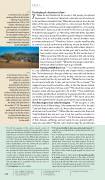
7:2 A centurion was a middle- ranking o cer in the Roman military, responsible for anywhere from 100 to 1000 soldiers. The Romans were known for their strict discipline and emphasis on obedience. The centurion’s words express his total faith in the power of Jesus over illness and su ering: he believes that Jesus has simply to give the command, and it will happen.
7:12 In the Israel of Jesus’ time— and throughout much of the ancient world—women’s status in society was determined by the men in their lives: by their fathers, husbands, and sons. The widow of Nain has already lost her husband, and now her only son has died. Jesus touches the co n and raises her son from the dead, and “gave him to his mother” (7:15). The miracle reveals Jesus’ power over death itself, and it also shows his compassion for the widow: in giving her back her son, he gives her back her place in the world.
LUKE
7The Healing of a Centurion’s Slave.a
1* When he had finished all his words to the people, he entered
*2*
Capernaum. A centurion there had a slave who was ill and about
to die, and he was valuable to him. 3When he heard about Jesus, he sent elders of the Jews to him, asking him to come and save the life of his slave. 4They approached Jesus and strongly urged him to come, saying, “He deserves to have you do this for him, 5for he loves our nation and he built the synagogue for us.” 6And Jesus went with them, but when he was only a short distance from the house, the centurion sent friends to tell him, “Lord, do not trouble yourself, for I am not worthy to have you enter under my roof.* 7Therefore, I did not consider myself worthy to come to you; but say the word and let my servant be healed. 8For I
too am a person subject to authority, with soldiers subject to me. And I say to one, ‘Go,’ and he goes; and to another, ‘Come here,’ and he comes; and to my slave, ‘Do this,’ and he does it.” 9When Jesus heard this he was amazed at him and, turning, said to the crowd following him, “I tell you, not even in Israel have I found such faith.” 10When the messengers returned to the house, they found the slave in good health. RaisingoftheWidow’sSon.* 11b Soonafterwardhejourneyed
to a city called Nain, and his disciples and a large crowd accompanied him. 12As he drew near to the gate of the city, a man who had died was being carried out, the only son of his mother, and she was a widow. A large crowd from the city was with her.c 13When the Lord saw her, he was moved with pity for her and said to her, “Do not weep.” 14He stepped forward and touched the coffin; at this the bearers halted, and he said, “Young man, I tell you, arise!” 15The dead man sat up and began to speak, and Jesus gave him to his mother.d 16Fear seized them all, and they glorified God, exclaiming, “A great prophet has arisen in our midst,” and “God has visited his people.”e 17This report about him spread through the whole of Judea and in all the surrounding region. The Messengers from John the Baptist.* 18f The disciples of John told him about all these things. John summoned two of his disciples 19and sent them to the Lord to ask, “Are you the one who is to come, or should we look for another?”g 20When the men came to him, they said, “John the Baptist has sent us to you to ask, ‘Are you the one who is to come, or should we look for another?’” 21At that time he cured many of their diseases, sufferings, and evil spirits; he also granted sight to many who were blind. 22And he said to them in reply, “Go and tell John
....* [7:1–8:3] The episodes in this section present a series of reactions to the Galilean ministry of Jesus and re ect some of Luke’s particular interests: the faith of a Gentile (Lk 7:1–10); the prophet Jesus’ concern for a widowed mother (Lk 7:11–17); the ministry of Jesus directed to the a icted and unfortunate of Is 61:1 (Lk 7:18–23); the relation between John and Jesus and their role in God’s plan for salvation (Lk 7:24–35); a forgiven sinner’s manifestation of love (Lk 7:36–50); the association of women with the ministry of Jesus (Lk 8:1–3).
* [7:1–10] This story about the faith of the centurion, a Gentile who cherishes the Jewish nation (Lk 7:5), prepares for the story in Acts of the conversion by Peter of the Roman centurion Cornelius who is similarly described as one who is generous to the Jewish nation (Acts 10:2). See also Acts 10:34–35 in the speech of Peter: “God shows no partiality. . .whoever fears him and acts righteously is acceptable to him.” See also notes on Mt 8:5–13 and Jn 4:43–54.
* [7:2] A centurion: see note on Mt 8:5.
* [7:6] I am not worthy to have you enter under my roof: to enter the house of a Gentile was considered unclean for a Jew; cf. Acts 10:28.
* [7:11–17] In the previous incident Jesus’ power was displayed for a Gentile whose servant was dying; in this episode it is displayed toward a widowed mother whose only son has already died. Jesus’ power over death prepares for his re- ply to John’s disciples in Lk 7:22: “the dead are raised.” This resuscitation in alluding to the prophet Elijah’s resurrection of the only son of a widow of Zarephath (1 Kgs 7:8–24) leads to the reaction of the crowd: “A great prophet has arisen in our midst” (Lk 7:16).
* [7:18–23] In answer to John’s question, Are you the one who is to come?—a probable reference to the return of the ery prophet of reform, Elijah, “before the day of the Lord comes, the great and terrible day” (Mal 3:23)—Jesus responds that his role is rather to bring the blessings spoken of in Is 61:1 to the oppressed and neglected of society (Lk 7:22; cf. Lk 4:18).
138
a. [7:1–10] Mt 8:5–13; Jn 4:43–54. b. [7:11–17] 4:25–26; 1 Kgs 17:8–24. c. [7:12] 8:42; 1 Kgs 17:17.
d. [7:15] 1 Kgs 17:23; 2 Kgs 4:36. g. [7:19] Mal 3:1; Rev 1:4, 8; 4:8. e. [7:16] 1:68; 19:44.
f. [7:18–23] Mt 11:2–6.


