


Page 192 - Demo
P. 192
A common element in the accounts of Jesus’ resurrection is his changed appearance. The disciples do not immediately recognize him. On the road to Emmaus, there is a gradual process of recognition. As the disciples listen to the stranger explain the Scriptures, their hearts burn within them. When he breaks bread with them, they realize it is Jesus. This pattern of growth is echoed in the Christian liturgy, in which we rst share the Scriptures and then break the bread of the Eucharist.
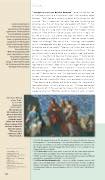
The Holy Women at the Tomb, by Giovani Romanelly (1610-1662). The women at the tomb are the rst to hear that Jesus has risen from the dead. Jesus had healed these women from various sicknesses and evil spirits. They are now witnesses of his Resurrection.
i. [24:13] Mk 16:12–13.
j. [24:16] Jn 20:14; 21:4.
k. [24:19] Mt 2:23; 21:11; Acts 2:22.
l. [24:21] 1:54, 68; 2:38.
m. [24:22–23] 24:1–11; Mt 28:1–8;
Mk 16:1–8.
n. [24:24] Jn 20:3–10.
o. [24:25–26] 9:22; 18:31; 24:44;
Acts 3:24; 17:3.
p. [24:27] 24:44; Dt 18:15; Ps 22:1–18;
Is 53; 1 Pt 1:10–11.
180
LUKE
The Appearance on the Road to Emmaus.* 13Now that very day two of them were going to a village seven miles* from Jerusalem called Emmaus,i 14and they were conversing about all the things that had occurred. 15And it happened that while they were conversing and debating, Jesus himself drew near and walked with them, 16* j but their eyes were prevented from recognizing him. 17He asked them, “What are you discussing as you walk along?” They stopped, looking downcast. 18One of them, named Cleopas, said to him in reply, “Are you the only visitor to Jerusalem who does not know of the things that have taken place there in these days?” 19And he replied to them, “What sort of things?” They said to him, “The things that happened to Jesus the Nazarene, who was a prophet mighty in deed and word before God and all the people,k 20how our chief priests and rulers both handed him over to a sentence of death and crucified him. 21l But we were hoping that he would be the one to redeem Israel; and besides all this, it is now the third day since this took place. 22m Some women from our group, however, have astounded us: they were at the tomb early in the morning 23and did not find his body; they came back and reported that they had indeed seen a vision of angels who announced that he was alive. 24n Then some of those with us went to the tomb and found things just as the women had described, but him they did not see.” 25o And he said to them, “Oh, how foolish you are! How slow of heart to believe all that the prophets spoke! 26Was it not necessary that the Messiah should suffer* these things and enter into his glory?” 27Then beginning with Moses and all the prophets, he interpreted to them what referred to him in all the scriptures.p 28As they approached the village to which they were going, he gave the impression that he was going on farther. 29But they urged him, “Stay with us, for it is nearly
* [24:13–35] This episode focuses on the interpretation of scripture by the risen Jesus and the recognition of him in the breaking of the bread. The references to the quotations of scripture and explanation of it (Lk 24:25–27), the kerygmatic proclamation (Lk 24:34), and the liturgical gesture (Lk 24:30) suggest that the episode is primarily catechetical and liturgical rather than apologetic.
* [24:13] Seven miles: literally, “sixty stades.” A stade was 607 feet. Some manuscripts read “160 stades” or more than eighteen miles. The exact location of Emmaus is disputed.
* [24:16] A consistent feature of the resurrection stories is that the risen Jesus was di erent and initially unrecognizable (Lk 24:37; Mk 16:12; Jn 20:14; 21:4).
* [24:26] That the Messiah should su er. . .: Luke is the only New Testament writer to speak explicitly of a su ering Messiah (Lk 24:26, 46; Acts 3:18; 17:3; 26:23). The idea of a su ering Messiah is not found in the Old Testament or in other Jewish literature prior to the New Testament period, although the idea is hinted at in Mk 8:31–33. See notes on Mt 26:63 and 26:67–68.


