


Page 193 - Demo
P. 193
LUKE
evening and the day is almost over.” So he went in to stay with them. 30And it happened that, while he was with them at table, he took bread, said the blessing, broke it, and gave it to them. 31With that their eyes were opened and they recognized him, but he vanished from their sight. 32Then they said to each other, “Were not our hearts burning [within us] while he spoke to us on
the way and opened the scriptures
to us?” 33So they set out at once
and returned to Jerusalem where
they found gathered together the
eleven and those with them 34who
were saying, “The Lord has truly
been raised and has appeared to
Simon!”q 35Then the two recounted
what had taken place on the way
and how he was made known to
them in the breaking of the bread.
The Appearance to the Disciples
in Jerusalem. 36* While they were
still speaking about this,r he stood
in their midst and said to them,
“Peace be with you.”s 37But they
were startled and terrified and
thought that they were seeing a
ghost.t 38Then he said to them,
“Why are you troubled? And why do
questions arise in your hearts? 39* Look at my hands and my feet, that it is I myself. Touch me and see, because a ghost does not have flesh and bones as you can see I have.” 40u And as he said this, he showed them his hands and his feet. 41While they were still incredulous for joy and were amazed, he asked them, “Have you anything here to eat?” 42They gave him a piece of baked fish;v 43he took it and ate it in front of them. 44He said to them, “These are my words that I spoke to you while I was still with you, that everything written about me in the law of Moses and in the prophets and psalms must be fulfilled.”w 45Then he opened their minds to understand the scriptures.x 46* And he said to them,y “Thus it is written that the Messiah would suffer and rise from the dead on the third day 47and that repentance, for the forgiveness of sins, would be
* [24:36–43, 44–49] The Gospel of Luke, like each of the other gospels (Mt 28:16–20; Mk 16:14–15; Jn 20:19–23), focuses on an important appearance of Jesus to the Twelve in which they are commissioned for their future ministry. As in Lk 24:6, 12, so in Lk 24:36, 40 there are omissions in the Western text.
* [24:39–42] The apologetic purpose of this story is evident in the concern with the physical details and the report that Jesus ate food.
* [24:46] See note on Lk 24:26.
q. [24:34] 1 Cor 15:4–5.
r. [24:36–53] Mk 16:14–19; Jn 20:19–20. s. [24:36] 1 Cor 15:5.
t. [24:37] Mt 14:26.
u. [24:40–41] Jn 21:5, 9–10, 13.
v. [24:42] Acts 10:41.
w. [24:44] 18:31; 24:27; Mt 16:21; Jn 5:39, 46. x. [24:45] Jn 20:9.
y. [24:46] 9:22; Is 53; Hos 6:2.
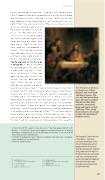
The Disciples at Emmaus by Rembrandt. These disciples left Jerusalem with heavy hearts. The one who had given them hope has been cruci ed. But just as their hope vanishes, Jesus joins them and listens to their suffering. Then, using the Scriptures, he reveals to them the meaning of all these events.
The Gospel of Luke is the rst of two parts—the story continues seamlessly in the Acts of the Apostles, which begins with an account of how the disciples are “clothed with power from on high” at Pentecost (Acts 2), and shows how Jesus continues to live and act through the deeds of Peter and the others and through extraordinary new disciples like Paul.
181


