


Page 20 - Demo
P. 20
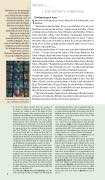
1:1 Matthew traces the genealogy of Jesus back to Abraham. Jesus’ family tree also includes many other people, some of them far from perfect. Jacob stole his brother’s birthright. Ruth was an outsider. David committed adultery with Bathsheba, the wife of Uriah. Ahaz was a coward, and Jechoniah saw the fall of Jerusalem and the exile of the Israelites in Babylon. Jesus is part of a real family, with all its complexity. God does not keep his distance from us; in Jesus, God becomes one of us. The name “Emmanuel,” given to Jesus only in Matthew, means “God is with us.”
A stained-glass window from the Cathedral of Chartres
MATTHEW
I. THE INFANCY NARRATIVE
1The Genealogy of Jesus.* 1a
The book of the genealogy of Jesus Christ, the son of David, the son of
* Abraham.
2b Abraham became the father of Isaac, Isaac the father of Jacob, Jacob the father of Judah and his brothers.c 3Judah became the father of Perez and Zerah, whose mother was Tamar.d Perez became the father of Hezron, Hezron the father of Ram, 4e Ram the father of Amminadab. Amminadab became the father of Nahshon, Nahshon the father of Salmon, 5f Salmon the father of Boaz, whose mother was Rahab. Boaz became the father of Obed, whose mother was Ruth. Obed became the father of Jesse, 6g Jesse the father of David the king.
David became the father of Solomon, whose mother had been the wife of Uriah. 7* h Solomon became the father of Rehoboam, Rehoboam the father of Abijah, Abijah the father of Asaph. 8Asaph became the father of Jehoshaphat, Jehoshaphat the father of Joram, Joram the father of Uzziah. 9Uzziah became the father of Jotham, Jotham the father of Ahaz, Ahaz the father of Hezekiah. 10 Hezekiah became the father of Manasseh, Manasseh the father of Amos,* Amos the father of Josiah. 11Josiah became the father of Jechoniah and his brothers at the time of the Babylonian exile.
12i After the Babylonian exile, Jechoniah became the father of Shealtiel, Shealtiel the father of Zerubbabel, 13Zerubbabel the father of Abiud. Abiud became the father of Eliakim, Eliakim the father of Azor, 14Azor the father of Zadok. Zadok became the father of Achim, Achim the father of Eliud, 15Eliud the father of Eleazar. Eleazar became the father of Matthan, Matthan the father of Jacob, 16Jacob the father of Joseph, the husband of Mary. Of her was born Jesus who is called the Messiah.
17 ThusthetotalnumberofgenerationsfromAbrahamtoDavidisfourteen generations; from David to the Babylonian exile, fourteen generations; from the Babylonian exile to the Messiah, fourteen generations.*
8
* [1:1–2:23] The infancy narrative forms the prologue of the gospel. Consisting of a genealogy and ve stories, it presents the coming of Jesus as the climax of Israel’s history, and the events of his conception, birth, and early childhood as the ful llment of Old Testament prophecy. The genealogy is probably traditional material that Matthew edited. In its rst two sections (Mt 1:2–11) it was drawn from Ru 4:18–22; 1 Chr 1–3. Except for Jechoniah, Shealtiel, and Zerubbabel, none of the names in the third section (Mt 1:12–16) is found in any Old Testament genealogy. While the genealogy shows the continuity of God’s providential plan from Abraham on, discontinuity is also present. The women Tamar (Mt 1:3), Rahab and Ruth (Mt 1:5), and the wife of Uriah, Bathsheba (Mt 1:6), bore their sons through unions that were in varying degrees strange and unexpected. These “irregularities” culminate in the supreme “irregularity” of the Messiah’s birth of a virgin mother; the age of ful llment is inaugurated by a creative act of God. Drawing upon both biblical tradition and Jewish stories, Matthew portrays Jesus as reliving the Exodus experience of Israel and the persecutions of Moses. His rejection by his own people and his passion are foreshadowed by the troubled reaction of “all Jerusalem” to the question of the magi who are seeking the “newborn king of the Jews” (Mt 2:2–3), and by Herod’s attempt to have him killed. The magi who do him homage pre gure the Gentiles who will accept the preaching of the gospel. The infancy narrative proclaims who Jesus is, the savior of his people from their sins(Mt1:21),Emmanuelinwhom“Godiswithus”(Mt1:23), and the Son of God (Mt 2:15).
* [1:1] The Son of David, the son of Abraham: two links of the genealogical chain are singled out. Although the
later, David is placed rst in order to emphasize that Jesus is the royal Messiah. The mention of Abraham may be due not only to his being the father of the nation Israel but to Matthew’s interest in the universal scope of Jesus’ mission; cf. Gn 22:18 “. . .in your descendants all the nations of the earth shall nd blessing.”
* [1:7] The successor of Abijah was not Asaph but Asa (see 1 Chr 3:10). Some textual witnesses read the latter name; however, Asaph is better attested. Matthew may have deliberately introduced the psalmist Asaph into the genealogy (and in Mt 1:10 the prophet Amos) in order to show that Jesus is the ful llment not only of the promises made to David (see 2 Sm 7) but of all the Old Testament.
* [1:10] Amos: some textual witnesses read Amon, who was the actual successor of Manasseh (see 1 Chr 3:14).
* [1:17] Matthew is concerned with fourteen generations, probably because fourteen is the numerical value of the Hebrew letters forming the name of David. In the second section of the genealogy (Mt 1:6b–11), three kings of Judah, Ahaziah, Joash, and Amaziah, have been omitted (see 1 Chr 3:11–12), so that there are fourteen generations in that section. Yet the third (Mt 1:12–16) apparently has only thirteen. Since Matthew here emphasizes that each section has fourteen, it is unlikely that the thirteen of the last was due to his oversight. Some scholars suggest that Jesus who is called the Messiah (Mt 1:16b) doubles the nal member of the chain: Jesus, born within the family of David, opens up the new age as Messiah, so that in fact there are fourteen generations in the third section. This is perhaps too subtle, and the hypothesis of a slip not on the part of Matthew but of a later scribe seems likely. On Messiah, see note on Lk 2:11.


