


Page 229 - Demo
P. 229
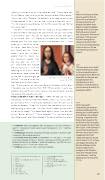
13:6
Peter at rst refuses to allow Jesus to wash his feet: he resists this total reversal of the roles of teacher and disciple. Only when Jesus begins to reveal the deeper meaning of this action does Peter allow Jesus to wash him. To have an “inheritance” with Jesus (13:8), we must follow his example and “wash one another’s feet” (13:14). Do we resist allowing others to serve us? Do we resist becoming servants to others?
13:23
“The one whom Jesus loved.” Several references are made to this unnamed disciple in the Gospel of John. We do not know who this disciple was, though tradition has identi ed him as John himself, or as the founder of the community for which this Gospel was written.
13:30
“And it was night.” Traditionally, the Passover meal was celebrated in the evening, but in the Gospel of John darkness has a deeper meaning. It represents the forces of evil at work in the world, forces that constantly seek to thwart the will of God, who is light. Judas’ betrayal is not just the moral failure of one man, but a sign of Jesus’ struggle with evil itself: “Satan entered him,” we are told of Judas (13:27). In these Last Supper discourses, we nd the ful llment of the words we heard in the prologue to the Gospel of John, that “the light shines
in the darkness, / and the darkness has not overcome it” (1:5).
217
* [13:10] Bathed: many have suggested that this passage is a symbolic reference to baptism. The Greek root involved is used in baptismal contexts in 1 Cor 6:11; Eph 5:26; Ti 3:5; Heb 10:22.
* [13:16] Messenger: the Greek has apostolos, the only occurrence of the term in John. It is not used in the technical sense here.
* [13:23] The one whom Jesus loved: also mentioned in Jn 19:26; 20:2; 21:7. A disciple, called “another disciple” or “the other disciple,” is mentioned in Jn 18:15 and Jn 20:2; in the latter reference he is identi ed with the disciple whom Jesus loved. There is also an unnamed disciple in Jn 1:35–40; see note on Jn 1:37.
* [13:26] Morsel: probably the bitter herb dipped in salt water.
a. [13:1] 2:4; 7:30; 8:20; Mt 26:17, 45; Mk 14:12, 41; Lk 22:7.
b. [13:2] 6:71; 17:12; Mt 26:20–21; Mk 14:17–18; Lk 22:3.
c. [13:3] 3:35.
d. [13:5] 1 Sm 25:41.
e. [13:8] 2 Sm 20:1.
f. [13:10] 15:3.
g. [13:11] 6:70.
h. [13:13] Mt 23:8, 10.
i. [13:15] Lk 22:27; 1 Pt 2:21.
j. [13:16] 15:20; Mt 10:24; Lk 6:40.
k. [13:18] Ps 41:10.
l. [13:20] Mt 10:40; Mk 9:37; Lk 9:48.
m. [13:21–30] Mt 26:21–25; Mk 14:18–21;
Lk 22:21–23.
n. [13:23] 19:26; 20:2; 21:7, 20; Mt 10:37. o. [13:25] 21:20.
JOHN
I wash you, you will have no inheritance with me.”e 9Simon Peter said to him, “Master, then not only my feet, but my hands and head as well.” 10Jesus said to him, “Whoever has bathed* has no need except to have his feet washed, for he is clean all over; so you are clean, but not all.”f 11For he knew who would betray him; for this reason, he said, “Not all of you are clean.”g
12So when he had washed their feet [and] put his garments back on and reclined at table again, he said to them, “Do you realize what I have done for you? 13You call me ‘teacher’ and ‘master,’ and rightly so, for indeed I am.h 14If I, therefore, the master and teacher, have washed your feet, you ought to wash one another’s feet. 15I have given you a model to follow,
so that as I have done for you,
you should also do.i 16Amen,
amen, I say to you, no slave is
greater than his master nor
any messenger* greater than
the one who sent him.j 17If
you understand this, blessed
are you if you do it. 18I am not
speaking of all of you. I know
those whom I have chosen. But
so that the scripture might be
ful lled, ‘The one who ate my
food has raised his heel against
me.’k 19From now on I am telling you before it happens, so that when it happens you may believe that I AM. 20Amen, amen, I say to you, whoever receives the one I send receives me, and whoever receives me receives the one who sent me.”l
Announcement of Judas’s Betrayal.m 21When he had said this, Jesus was deeply troubled and testi ed, “Amen, amen, I say to you, one of you will betray me.” 22The disciples looked at one another, at a loss as to whom he meant. 23One of his disciples, the one whom Jesus loved,* was reclining at Jesus’ side.n 24So Simon Peter nodded to him to nd out whom he meant. 25He leaned back against Jesus’ chest and said to him, “Master, who is it?”o 26Jesus answered, “It is the one to whom I hand the morsel* after I have dipped it.” So he dipped the morsel and
The Passover, by Dirk Bouts (1410/20-1475)


