


Page 230 - Demo
P. 230
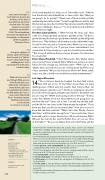
13:34 Jesus loves his disciples so much that he is about to die for them. It is this kind of love which we are to have for each other: “As I have loved you, so you also should love one another” (13:34). This extraordinary love must be the hallmark of discipleship: it is the way we will be recognized as followers of Jesus.
14:2 Jesus gives a glimpse of heaven, a place not foreign, but as homely as a “Father’s house,” a house with “many dwelling places”: not a narrow place for a few, but a home for many.
14:8 Philip asks for a vision of God. Though Philip was one of the rst disciples Jesus called (John 1:43) and has witnessed the signs Jesus has performed, he still does not fully realize who Jesus is. Jesus is God’s Word made esh—the deity incarnate. Therefore, to know him is to know God; to see him is to see God.
CHAPTER 13
p. [13:27] 13:2; Lk 22:3. q. [13:29] 12:5–6.
r. [13:32] 17:1–5.
s. [13:33] 7:33; 8:21.
t. [13:34] 15:12–13, 17; Lv 19:18;
1 Thes 4:9; 1 Jn 2:7–10; 3:23; 2 Jn 5.
u. [13:36] Mk 14:27; Lk 22:23. v. [13:38] 18:27; Mt 26:33–35; Mk 14:29–31; Lk 22:33–34.
CHAPTER 14
a. [14:3] 12:26; 17:24; 1 Jn 2:28. b. [14:6] 8:31–47.
218
JOHN -
[took it and] handed it to Judas, son of Simon the Iscariot. 27After he took the morsel, Satan entered him. So Jesus said to him, “What you are going to do, do quickly.”p 28[Now] none of those reclining at table realized why he said this to him. 29Some thought that since Judas kept the money bag, Jesus had told him, “Buy what we need for the feast,” or to give something to the poor.q 30So he took the morsel and left at once. And it was night.
The New Commandment. 31* When he had left, Jesus said,* “Now is the Son of Man glori ed, and God is glori ed in him. 32[If God is glori ed in him,] God will also glorify him in himself, and he will glorify him at once.r 33My children, I will be with you only a little while longer. You will look for me, and as I told the Jews, ‘Where I go you cannot come,’ so now I say it to you.s 34I give you a new commandment:* love one another. As I have loved you, so you also should love one another.t 35This is how all will know that you are my disciples, if you have love for one another.”
Peter’s Denial Predicted. 36Simon Peter said to him, “Master, where are you going?” Jesus answered [him], “Where I am going, you cannot follow me now, though you will follow later.”u 37Peter said to him, “Master, why can’t I follow you now? I will lay down my life for you.” 38Jesus answered, “Will you lay down your life for me? Amen, amen, I say to you, the cock will not crow before you deny me three times.”v
Last Supper Discourses.
141* “Do not let your hearts be troubled. You have faith* in God; 2
have faith also in me. In my Father’s house there are many dwelling places. If there were not, would I have told you that I am going to prepare a place for you? 3* And if I go and prepare a place for you, I will come back again and take you to myself, so that where I am you also may be.a 4Where [I] am going you know the way.”* 5Thomas said to him, “Master, we do not know where you are going; how can we know the way?” 6Jesus said to him, “I am the way and the truth* and the life. No one comes to the Father except through me.b 7If you know me, then you will also know my Father.* From now on you do know him and have seen him.”c 8Philip said to him, “Master, show us the Father,* and that will be enough for us.”d 9Jesus said to him, “Have I been with you for so long a time and you still do not know me, Philip? Whoever has seen me has seen the Father. How can you say, ‘Show us the Father’?e 10Do you not believe that I am in the Father and the
* [13:31–17:26] Two farewell discourses and a prayer. These seem to be Johannine compositions, including sayings of Jesus at the Last Supper and on other occasions, modeled on similar farewell discourses in Greek literature and the Old Testament (of Moses, Joshua, David).
* [13:31–38] Introduction: departure and return. Terms of coming and going predominate. These verses form an introduction to the last discourse of Jesus, which extends through Jn 14–17. In it John has collected Jesus’ words to his own (Jn 13:1). There are indications that several speeches have been fused together, e.g., in Jn 14:31 and Jn 17:1.
* [13:34] I give you a new commandment: this puts Jesus on a par with Yahweh. The commandment itself is not new; cf. Lv 19:18 and the note there.
* [14:1–31] Jesus’ departure and return. This section is a dialogue marked o by a literary inclusion in Jn 14:1, 27: “Do not let your hearts be troubled.”
* [14:1] You have faith: could also be imperative: “Have faith.”
* [14:3] Come back again: a rare Johannine reference to the parousia; cf. 1 Jn 2:28.
* [14:4] The way: here, of Jesus himself; also a designation of Christianity in Acts 9:2; 19:9,
23; 22:4; 24:14, 22.
* [14:6] The truth: in John, the divinely revealed reality of the Father manifested in the
person and works of Jesus. The possession of truth confers knowledge and liberation from
sin (Jn 8:32).
* [14:7] An alternative reading, “If you knew me, then you would have known my Father also,”
would be a rebuke, as in Jn 8:19.


