


Page 25 - Demo
P. 25
MATTHEW -
threshing floor and gather his wheat into his barn, but the chaff he will burn with unquenchable fire.”
The Baptism of Jesus.* 13i Then Jesus came from Galilee to John at the Jordan to be baptized by him. 14* John tried to prevent him, saying, “I need to be baptized by you, and yet you are coming to me?” 15Jesus said to him in reply, “Allow it now, for thus it is fitting for us to fulfill all righteousness.”Then he allowed him. 16* j After Jesus was baptized, he came up from the water and behold, the heavens were opened [for him], and he saw the Spirit of God descending like a dove [and] coming upon him. 17And a voice came from the heavens, saying, “This is my beloved Son,* with whom I am well pleased.”k
4The Temptation of Jesus.
1* a Then Jesus was led by the Spirit into the desert to be tempted
2b *
by the devil. He fasted for forty days and forty nights, and
afterwards he was hungry. 3The tempter approached and said to him, “If you are the Son of God, command that these stones become loaves of bread.” 4* He said in reply, “It is written:c
‘One does not live by bread alone,
but by every word that comes forth from the mouth of God.’”
5* Then the devil took him to the holy city, and made him stand on the parapet of the temple, 6and said to him, “If you are
the Son of God, throw yourself down. For it is written:
‘He will command his angels concerning you’ and ‘with their hands they will support you,
lest you dash your foot against a stone.’”d
7Jesus answered him, “Again it is written, ‘You shall not put the Lord, your God, to the test.’”e 8Then the devil took him up to a very high mountain, and showed him all the kingdoms of the world in their magnificence, 9and he said to him, “All these I shall
3:13
Jesus comes to John to be baptized. After his baptism, there is a theophany:
God is made manifest as the heavens open, the Holy Spirit descends in the form of a dove, and God’s voice declares Jesus the “Beloved.” Jesus’ baptism is a turning-point for him: it marks the beginning of his public life and ministry.
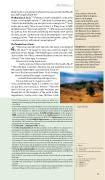
The desert is a sacred place for the Hebrew people. After their escape from slavery in Egypt, the Israelites, led by Moses, wandered in the desert for forty years before entering the promised land. Jesus’ forty days of fasting and temptation in the desert are a time of total trust in God.
Lake Galilee
Chapter 3
i. [3:13–17] Mk 1:9–11; Lk 3:21–22; Jn 1:31–34.
j. [3:16] Is 42:1.
k. [3:17] 12:18; 17:5; Gn 22:2; Ps 2:7; Is 42:1.
Chapter 4
a. [4:1–11] Mk 1:12–13; Lk 4:1–13.
b. [4:2] Ex 24:18; Dt 8:2.
c. [4:4] Dt 8:3.
d. [4:6] Ps 91:11–12.
e. [4:7] Dt 6:16.
13
* [3:13–17] The baptism of Jesus is the occasion on which he is equipped for his ministry by the holy Spirit and proclaimed to be the Son of God.
* [3:14–15] This dialogue, peculiar to Matthew, reveals John’s awareness of Jesus’ superiority to him as the mightier one who is coming and who will baptize with the holy Spirit (Mt 3:11). His reluctance to admit Jesus among the sinners whom he is baptizing with water is overcome by Jesus’ response. To ful ll all righteousness: in this gospel to ful ll usually refers to ful llment of prophecy, and righteousness to moral conduct in conformity with God’s will. Here, however, as in Mt 5:6; 6:33, righteousness seems to mean the saving activity of God. To ful ll all righteousness is to submit to the plan of God for the salvation of the human race. This involves Jesus’ identi cation with sinners; hence the propriety of his accepting John’s baptism.
* [3:16] The Spirit. . .coming upon him: cf. Is 42:1.
* [3:17] This is my beloved Son: the Marcan address to Jesus (Mk 1:11) is changed into a
proclamation. The Father’s voice speaks in terms that re ect Is 42:1; Ps 2:7; Gn 22:2.
* [4:1–11] Jesus, proclaimed Son of God at his baptism, is subjected to a triple temptation. Obedience to the Father is a characteristic of true sonship, and Jesus is tempted by the devil to rebel against God, overtly in the third case, more subtly in the rst two. Each refusal of Jesus is expressed in language taken from the Book of Deuteronomy (Dt 8:3; 6:13, 16). The testings of Jesus resemble those of Israel during the wandering in the desert and later in Canaan, and the victory of Jesus, the true Israel and the true Son, contrasts with the failure of the ancient and disobedient “son,” the old Israel. In the temptation account
Matthew is almost identical with Luke; both seem to have drawn upon the same source.
* [4:2] Forty days and forty nights: the same time as that during which Moses remained on Sinai (Ex 24:18). The time reference, however, seems primarily intended to recall the forty
years during which Israel was tempted in the desert (Dt 8:2).
* [4:4] Cf. Dt 8:3. Jesus refuses to use his power for his own bene t and accepts whatever
God wills.
* [4:5–7] The devil supports his proposal by an appeal to the scriptures, Ps 91:11a, 12. Unlike
Israel (Dt 6:16), Jesus refuses to “test” God by demanding from him an extraordinary show
of power.
* [4:9] The worship of Satan to which Jesus is tempted is probably intended to recall Israel’s
worship of false gods. His refusal is expressed in the words of Dt 6:13.


