


Page 23 - Demo
P. 23
MATTHEW
all the boys in Bethlehem and its vicinity two years old and under, in accordance with the time he had ascertained from the magi. 17Then was fulfilled what had been said through Jeremiah the prophet:
18* e “A voice was heard in Ramah, sobbing and loud lamentation;
Rachel weeping for her children,
and she would not be consoled, since they were no more.”
The Return from Egypt. 19When Herod had died, behold, the angel of the Lord appeared in a dream to Joseph in Egypt 20and said,f “Rise, take the child and his mother and go to the land of Israel, for those who sought the child’s life are dead.”* 21He rose, took the child and his mother, and went to the land of Israel. 22But when he heard that Archelaus was ruling over Judea in place of his father Herod,* he was afraid to go back there. And because he had been warned in a dream, he departed for the region of Galilee. 23* g He went and dwelt in a town called Nazareth, so that what had been spoken through the prophets might be fulfilled, “He shall be called a Nazorean.”
2:23
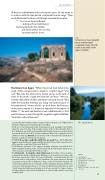
At the time of Jesus, Nazareth was a small and quite insigni cant town, far to the north of Jerusalem, in the region of Galilee.
conceived by the holy Spirit, stands in unique relation to God. He is son of David and of
Abraham, of Mary and of Joseph, but, above all, of God.
* [2:18] Jer 31:15 portrays Rachel, wife of the patriarch Jacob, weeping for her children
taken into exile at the time of the Assyrian invasion of the northern kingdom (722–21 B.C.). Bethlehem was traditionally identi ed with Ephrath, the place near which Rachel was buried (see Gn 35:19; 48:7), and the mourning of Rachel is here applied to her lost children of a later age. Ramah: about six miles north of Jerusalem. The lamentation of Rachel is so great as to be heard at a far distance.
* [2:20] For those who sought the child’s life are dead: Moses, who had ed from Egypt because the Pharaoh sought to kill him (see Ex 2:15), was told to return there, “for all the men who sought your life are dead” (Ex 4:19).
* [2:22] With the agreement of the emperor Augustus, Archelaus received half of his father’s kingdom, including Judea, after Herod’s death. He had the title “ethnarch” (i.e., “ruler of a nation”) and reigned from 4 B.C. to A.D. 6.
* [2:23] Nazareth. . .he shall be called a Nazorean: the tradition of Jesus’ residence in Nazareth was rmly established, and Matthew sees it as being in accordance with the foreannounced plan of God. The town of Nazareth is not mentioned in the Old Testament, and no such prophecy can be found there. The vague expression “through the prophets” may be due to Matthew’s seeing a connection between Nazareth and certain texts in which there are words with a remote similarity to the name of that town. Some such Old Testament texts are Is 11:1 where the Davidic king of the future is called “a bud” (nēser) that shall blossom from the roots of Jesse, and Jgs 13:5, 7 where Samson, the future deliverer of Israel from the Philistines, is called one who shall be consecrated (a nāzîr) to God.
The Jordan River
Chapter 2
a. [2:2] Nm 24:17.
b. [2:5–6] Mi 5:1; 2 Sm 5:2.
c. [2:11] Ps 72:10–11, 15; Is 60:6.
d. [2:15] Hos 11:1.
e. [2:18] Jer 31:15.
f. [2:20] Ex 4:19.
g. [2:23] 13:54; Mk 1:9; Lk 2:39; 4:34;
Jn 19:19.
11


