


Page 277 - Demo
P. 277
THE ACTS OF THE APOSTLES
news to you that what God promised our ancestors 33he has brought to ful llment for us, [their] children, by raising up Jesus, as it is written in the second psalm, ‘You are my son; this day I have begotten you.’o 34And that he raised him from the dead never to return to corruption he declared in this way, ‘I shall give you the bene ts assured to David.’p 35Thatiswhyhealsosaysinanotherpsalm,‘Youwillnotsu eryourholy one to see corruption.’q 36Now David, after he had served the will of God in his lifetime, fell asleep, was gathered to his ancestors, and did see corruption.r 37But the one whom God raised up did not see corruption. 38You must know, my brothers, that through him forgiveness of sins is being proclaimed to you, [and] in regard to everything from which you could not be justi ed* under the law of Moses, 39in him every believer is justi ed.s 40Be careful, then, that what was said in the prophets not come about:
41‘Look on, you sco ers,
be amazed and disappear.
For I am doing a work in your days,
a work that you will never believe even if someone tells you.’”t
42As they were leaving, they invited them to speak on these subjects the following sabbath. 43After the congregation had dispersed, many Jews and worshipers who were converts to Judaism followed Paul and Barnabas, who spoke to them and urged them to remain faithful to the grace of God.
Address to the Gentiles. 44On the following sabbath
almost the whole city gathered to hear the word of the
Lord. 45When the Jews saw the crowds, they were lled
with jealousy and with violent abuse contradicted what
Paul said. 46u Both Paul and Barnabas spoke out boldly
and said, “It was necessary that the word of God be
spoken to you rst, but since you reject it and condemn yourselves as unworthy of eternal life, we now turn to the Gentiles.* 47For so the Lord has commanded us, ‘I have made you a light to the Gentiles, that you may be an instrument of salvation to the ends of the earth.’”v
48The Gentiles were delighted when they heard this and glori ed the word of the Lord. All who were destined for eternal life came to believe, 49and the word of the Lord continued to spread through the whole region. 50The Jews, however, incited the women of prominence who were worshipers and the leading men of the city, stirred up a persecution against Paul and Barnabas, and expelled them from their territory. 51w So they shook the dust from their feet in protest against them and went to Iconium.* 52The disciples were lled with joy and the holy Spirit.
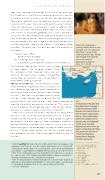
Paul’s rst missionary journey lasted about a year (around A.D. 47) and took him from Cyprus to the south of present-day Turkey, and brought him back by sea to his point of
departure in Antioch
(Acts 13.1-14.28).
Antioch in Pisidia
Perga Attalia
Iconium Lystra Derbe
Cyprus
Jerusalem
Antioch
Damas
13:48
The response of the Jews who have heard Paul’s message is at rst favorable, but when Gentiles also come to listen to him, the result is tension and division. Paul and Barnabas determine to preach only to Gentiles, who are “delighted” (13:48). Soon, Paul and Barnabas are driven from the region, and yet they are “ lled with joy and the Holy Spirit” (13:52), and they leave behind them a edgling Christian community.
n. [13:31] 1:3, 8; 10:39, 41; Mt 28:8–10, 16–20; Mk 16:9, 12–20; Lk 24:13–53; Jn 20:11–29; 21:1–23.
o. [13:33] Ps 2:7.
p. [13:34] Is 55:3.
q. [13:35] Ps 16:10.
r. [13:36] 2:29; 1 Kgs 2:10.
s. [13:39] Rom 3:20.
t. [13:41] Heb 1:5.
u. [13:46] 3:26; Rom 1:16.
v. [13:47] Is 49:6.
w. [13:51] Mt 10:14; Mk 6:11; Lk 9:5; 10:11.
265
* [13:38–39] Justi ed: the verb is the same as that used in Paul’s letters to speak of the experience of justi cation and, as in Paul, is here connected with the term “to have faith” (“every believer”). But this seems the only passage about Paul in Acts where justi cation is mentioned. In Lucan fashion it is paralleled with “forgiveness of sins” (a theme at Acts 2:38; 3:19; 5:31; 10:43) based on Jesus’ resurrection (Acts 13:37) rather than his cross, and is put negatively (Acts 13:38). Therefore, some would translate, “in regard to everything from which you could not be acquitted. . .every believer is acquitted.”
* [13:46] The refusal to believe frustrates God’s plan for his chosen people; however, no adverse judgment is made here concerning their ultimate destiny. Again, Luke, in the words of Paul, speaks of the priority of Israel in the plan for salvation (see Acts 10:36).
* [13:51] See note on Lk 9:5.


