


Page 278 - Demo
P. 278
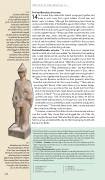
14:12 In Greek and Roman mythology, Zeus was the most powerful among the gods, considered the father of both gods and human beings. Hermes was the messenger of Zeus, usually depicted with winged sandals and/or a winged cap to indicate the speed with which he communicated the messages of Zeus. When the people of Lystra witness the healing of the crippled man, they struggle to t Paul and Barnabas into their worldview. They call Paul Hermes because he is the preacher, and they assume
14:21 Barnabas must be Zeus. Paul and Barnabas retrace their steps, encouraging the Christian communities in each area they have visited and appointing “presbyters,” leaders from among their own number. Each local church, while it has strong ties with Jerusalem, is also to be self-su cient.
266
THE ACTS OF THE APOSTLES
Paul and Barnabas at Iconium.
141In Iconium they entered the Jewish synagogue together and spoke in such a way that a great number of both Jews and Greeks came to believe, 2although the disbelieving Jews stirred up and poisoned the minds of the Gentiles against the brothers. 3So they stayed for a considerable period, speaking out boldly for the Lord, who con rmed the word about his grace by granting signs and wonders to occur through their hands.a 4The people of the city were divided: some were with the Jews; others, with the apostles. 5When there was an attempt by both the Gentiles and the Jews, together with their leaders, to attack and stone them,b 6they realized it and ed to the Lycaonian cities of Lystra and Derbe and to the surrounding countryside, 7where
they continued to proclaim the good news.
Paul and Barnabas at Lystra. 8* At Lystra there was a crippled man, lame from birth, who had never walked. 9He listened to Paul speaking, who looked intently at him, saw that he had the faith to be healed, 10and called out in a loud voice, “Stand up straight on your feet.” He jumped up and began to walk about. 11When the crowds saw what Paul had done, they cried out in Lycaonian, “The gods have come down to us in human form.”c 12They called Barnabas “Zeus”* and Paul “Hermes,” because he was the chief speaker. 13And the priest of Zeus, whose temple was at the entrance to the city, brought oxen and garlands to the gates, for he together with the people intended to o er sacri ce.
14The apostles Barnabas and Paul tore their garments* when they heard this and rushed out into the crowd, shouting, 15* “Men, why are you doing this? We are of the same nature as you, human beings. We proclaim to you good news that you should turn from these idols to the living God, ‘who made heaven and earth and sea and all that is in them.’d 16In past generations he allowed all Gentiles to go their own ways;e 17yet, in bestowing his goodness, he did not leave himself without witness, for he gave you rains from heaven and fruitful seasons, and lled you with nourishment and gladness for your hearts.”f 18Even with these words, they scarcely restrained
the crowds from o ering sacri ce to them.
19g However, some Jews from Antioch and Iconium arrived and won
over the crowds. They stoned Paul and dragged him out of the city, supposing that he was dead. 20But when the disciples gathered around him, he got up and entered the city. On the following day he left with Barnabas for Derbe.
* [14:8–18] In an e ort to convince his hearers that the divine power works through his word, Paul cures the cripple. However, the pagan tradition of the occasional appearance of gods among human beings leads the people astray in interpreting the miracle. The incident reveals the cultural di culties with which the church had to cope. Note the similarity of the miracle worked here by Paul to the one performed by Peter in Acts 3:2–10.
* [14:12] Zeus. . .Hermes: in Greek religion, Zeus was the chief of the Olympian gods, the “father of gods and men”; Hermes was a son of Zeus and was usually identi ed as the herald and messenger of the gods.
* [14:14] Tore their garments: a gesture of protest.
* [14:15–17] This is the rst speech of Paul to Gentiles recorded by Luke in Acts (cf. Acts 17:22–
31). Rather than showing how Christianity is the logical outgrowth of Judaism, as he does in speeches before Jews, Luke says that God excuses past Gentile ignorance and then presents a natural theology arguing for the recognition of God’s existence and presence through his activity in natural phenomena.
a. [14:3] Mk 16:17–20.
b. [14:5] 2 Tm 3:11.
c. [14:11] 28:6.
d. [14:15] 3:12; 10:26; Ex 20:11; Ps 146:6.
e. [14:16] 17:30.
f. [14:17] Wis 13:1.
g. [14:19–20] 2 Cor 11:25; 2 Tm 3:11.


