


Page 29 - Demo
P. 29
MATTHEW
Teaching About Adultery. 27* “You have heard that it was said,r ‘You shall not commit adultery.’ 28But I say to you, everyone who looks at a woman with lust has already committed adultery with her in his heart. 29* If your right eye causes you to sin, tear it out and throw it away.s It is better for you to lose one of your members than to have your whole body thrown into Gehenna. 30And if your right hand causes you to sin, cut it off and throw it away. It is better for you to lose one of your members than to have your whole body go into Gehenna.
Teaching About Divorce. 31* “It was also said, ‘Whoever divorces his wife must give her a bill of divorce.’t 32But I say to you, whoever divorces his wife (unless the marriage is unlawful) causes her to commit adultery, and whoever marries a divorced woman commits adultery.u
Teaching About Oaths. 33* v “Again you have heard that it was said to your ancestors, ‘Do not take a false oath, but make good to the Lord all that you vow.’ 34w But I say to you, do not swear at all;* not by heaven, for it is God’s throne; 35nor by the earth, for it is his footstool; nor by Jerusalem, for it is the city of the great King. 36Do not swear by your head,foryoucannotmakeasinglehairwhiteorblack.37* Letyour‘Yes’ mean ‘Yes,’ and your ‘No’ mean ‘No.’ Anything more is from the evil one. Teaching About Retaliation. 38* “You have heard that it was said,x ‘An eye for an eye and a tooth for a tooth.’ 39y But I say to you, offer no resistance to one who is evil. When someone strikes you on [your] right cheek, turn the other one to him as well. 40If anyone wants to go to law with you over your tunic, hand him your cloak as well. 41Should anyone press you into service for one mile,* go with him for two miles.z 42Give to the one who asks of you, and do not turn your back on one who wants to borrow.a
Love of Enemies.* 43b “You have heard that it was said, ‘You shall love your neighbor and hate your enemy.’c 44But I say to you, love your enemies, and pray for those who persecute you, 45that you may be
5:38
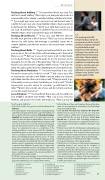
The teaching in the Old Testament about “an eye for an eye and a tooth for a tooth” (Leviticus 24:20) was intended to provide balance and proportion in the redressing
of wrongs. Jesus invites us to di erent kind of relationship with others. We are called to extraordinary love, love that embraces not only those who are like us, but those who are not like us, and even those who hate us. Jesus invites his followers to be “perfect” even as God is perfect (5:48).
* [5:27] See Ex 20:14; Dt 5:18.
* [5:29–30] No sacri ce is too great to avoid total destruction in
Gehenna.
* [5:31–32] See Dt 24:1–5. The Old Testament commandment that
a bill of divorce be given to the woman assumes the legitimacy of divorce itself. It is this that Jesus denies. (Unless the marriage is unlawful): this “exceptive clause,” as it is often called, occurs also in Mt 19:9, where the Greek is slightly di erent. There are other sayings of Jesus about divorce that prohibit it absolutely (see Mk 10:11–12; Lk 16:18; cf. 1 Cor 7:10, 11b), and most scholars agree that they represent the stand of Jesus. Matthew’s “exceptive clauses” are understood by some as a modi cation of the absolute prohibition. It seems, however, that the unlawfulness that Matthew gives as a reason why a marriage must be broken refers to a situation peculiar to his community: the violation of Mosaic law forbidding marriage between persons of certain blood and/or legal relationship (Lv 18:6–18). Marriages of that sort were regarded as incest (porneia), but some rabbis allowed Gentile converts to Judaism who had contracted such marriages to remain in them. Matthew’s “exceptive clause” is against such permissiveness for Gentile converts to Christianity; cf. the similar prohibition of porneia in Acts 15:20, 29. In this interpretation, the clause constitutes no exception to the absolute prohibition of divorce when the marriage is lawful.
* [5:33] This is not an exact quotation of any Old Testament text, but see Ex 20:7; Dt 5:11; Lv 19:12. The purpose of an oath was to guarantee truthfulness by one’s calling on God as witness.
* [5:34–36] The use of these oath formularies that avoid the divine name is in fact equivalent to swearing by it, for all the things sworn by are related to God.
* [5:37] Let your ‘Yes’ mean ‘Yes,’ and your ‘No’ mean ‘No’: literally, “let your speech be ‘Yes, yes,’ ‘No, no.’” Some have understood this as a milder form of oath, permitted by Jesus. In view of Mt 5:34, “Do not swear at all,” that is unlikely. From the evil one: i.e., from the devil. Oath-taking presupposes a sinful weakness of the human race, namely, the tendency to lie. Jesus demands of his disciples a truthfulness that makes oaths unnecessary.
* [5:38–42] See Lv 24:20. The Old Testament commandment was meant to moderate vengeance; the punishment should not exceed the injury done. Jesus forbids even this proportionate retaliation. Of the  ve examples that follow, only the  rst deals directly with retaliation for evil; the others speak of liberality.
* [5:41] Roman garrisons in Palestine had the right to requisition the property and services of the native population.
* [5:43–48] See Lv 19:18. There is no Old Testament commandment demanding hatred of one’s enemy, but the “neighbor” of the love commandment was understood as one’s fellow countryman. Both in the Old Testament (Ps 139:19–22) and at Qumran (1QS 9:21) hatred of evil persons is assumed to be right. Jesus extends the love commandment to the enemy and the persecutor. His disciples, as children of God, must imitate the example of their Father, who grants his gifts of sun and rain to both the good and the bad.
i. [5:13] Mk 9:50; Lk 14:34–35.
j. [5:14] Jn 8:12.
k. [5:15] Mk 4:21; Lk 8:16; 11:33.
l. [5:16] Jn 3:21.
m. [5:18] Lk 16:17.
n. [5:21] Ex 20:13; Dt 5:17.
o. [5:22] Jas 1:19–20.
p. [5:23] Mk 11:25.
q. [5:25–26] 18:34–35; Lk 12:58–59. r. [5:27] Ex 20:14; Dt 5:18.
s. [5:29–30] 18:8–9; Mk 9:43–47.
t. [5:31] 19:3–9; Dt 24:1.
u. [5:32] Lk 16:18; 1 Cor 7:10–11.
v. [5:33] Lv 19:12; Nm 30:3.
w. [5:34–37] Ps 48:3; Sir 23:9; Is 66:1; Jas 5:12.
x. [5:38] Ex 21:24; Lv 24:19–20.
y. [5:39–42] Lk 6:29–30.
z. [5:41] Lam 3:30.
a. [5:42] Dt 15:7–8.
b. [5:43–48] Lk 6:27, 32–36. 17
c. [5:43] Lv 19:18.


