


Page 30 - Demo
P. 30
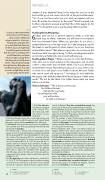
6:1 Secrecy is a persistent theme in the Sermon on the Mount: Carry out your traditional religious practices, Jesus says, but pray, fast, and give alms so secretly that God alone can see them. Jesus uses hyperbole to make the point: we should keep the secret so well that even our left hand does not know what our right is doing! These teachings are not really about secrets: they are about having the right motives. Being human, we like to be praised. Jesus tells us to let our light shine, not for our own glory, but for God’s.
MATTHEW -
children of your heavenly Father, for he makes his sun rise on the bad and the good, and causes rain to fall on the just and the unjust. 46For if you love those who love you, what recompense will you have? Do not the tax collectors* do the same? 47And if you greet your brothers only, what is unusual about that? Do not the pagans do the same?* 48So be perfect,* just as your heavenly Father is perfect.d
6Teaching About Almsgiving.*
1“[But] take care not to perform righteous deeds in order that
people may see them; otherwise, you will have no recompense from your heavenly Father. 2When you give alms, do not blow a trumpet before you, as the hypocrites* do in the synagogues and in the streets to win the praise of others. Amen, I say to you, they have received their reward.b 3But when you give alms, do not let your left hand know what your right is doing, 4so that your almsgiving may be secret. And your Father who sees in secret will repay you.
Teaching About Prayer. 5“When you pray, do not be like the hypo- crites, who love to stand and pray in the synagogues and on street corners so that others may see them. Amen, I say to you, they have received their reward. 6But when you pray, go to your inner room, close the door, and pray to your Father in secret. And your Father who sees in secret will repay you. 7* In praying, do not babble like the pagans, who think that they will be heard because of their many words.* 8Do not be like them. Your Father knows what you need before you ask him.
The Lord’s Prayer. 9* “This is how you are to pray:c
Our Father in heaven,* hallowed be your name,
10your kingdom come,* your will be done,
on earth as in heaven.d
a
..* [5:46] Tax collectors: Jews who were engaged in the collection of in- direct taxes such as tolls and customs. See note on Mk 2:14.
* [5:47] Jesus’ disciples must not be content with merely usual standards of conduct; see Mt 5:20 where the verb “surpass” (Greek perisseuō) is cognate with the unusual (perisson) of this verse.
* [5:48] Perfect: in the gospels this word occurs only in Matthew,
here and in Mt 19:21. The Lucan parallel (Lk 6:36) demands that
the disciples be merciful.
* [6:1–18] The sermon continues with a warning against doing
good in order to be seen and gives three examples, almsgiving (Mt 6:2–4), prayer (Mt 6:5–15), and fasting (Mt 6:16–18). In each, the conduct of the hypocrites (Mt 6:2) is contrasted with that demanded of the disciples. The sayings about reward found here and elsewhere (Mt 5:12, 46; 10:41–42) show that this is a genuine element of Christian moral exhortation. Possibly to underline the di erence between the Christian idea of reward and that of the hypocrites, the evangelist uses two di erent Greek verbs to express the rewarding of the disciples and that of the hypocrites; in the latter case it is the verb apechō, a commercial term for giving a receipt for what has been paid in full (Mt 6:2, 5, 16).
* [6:2] The hypocrites: the scribes and Pharisees, see Mt 23:13, 15, 23, 25, 27, 29. The designation re ects an attitude resulting not only from the controversies at the time of Jesus’ ministry but from the opposition between Pharisaic Judaism and the
church of Matthew. They have received their reward: they
desire praise and have received what they were looking for.
* [6:7–15] Matthew inserts into his basic traditional material an expansion of the material on prayer that includes the model prayer, the “Our Father.” That prayer is found in Lk 11:2–4 in a
di erent context and in a di erent form.
* [6:7] The example of what Christian prayer should be like
contrasts it now not with the prayer of the hypocrites but with that of the pagans. Their babbling probably means their reciting a long list of divine names, hoping that one of them will force a response from the deity.
* [6:9–13] Matthew’s form of the “Our Father” follows the liturgical tradition of his church. Luke’s less developed form also represents the liturgical tradition known to him, but it is probably closer than Matthew’s to the original words of Jesus.
* [6:9] Our Father in heaven: this invocation is found in many rabbinic prayers of the post-New Testament period. Hallowed be your name: though the “hallowing” of the divine name could be understood as reverence done to God by human praise and by obedience to his will, this is more probably a petition that God hallow his own name, i.e., that he manifest his glory by an act of power (cf. Ez 36:23), in this case, by the establishment of his kingdom in its fullness.
* [6:10] Your kingdom come: this petition sets the tone of the prayer, and inclines the balance toward divine rather than human action in the petitions that immediately precede and follow it. Your will be done, on earth as in heaven: a petition that the divine purpose to establish the kingdom, a purpose present now in heaven, be executed on earth.
18
Chapter 5
d. [5:48] Lv 11:44; 19:2; Dt 18:13; Jas 1:4; 1 Pt 1:16; 1 Jn 3:3.
Chapter 6
a. [6:1] 23:5.
b. [6:2] Jn 12:43.
c. [6:9–13] Lk 11:2–4. d. [6:10] 26:42.


