


Page 314 - Demo
P. 314
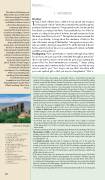
The Letter to the Romans was likely written about 57AD, while Paul was staying at Cenchrae, a city situated between Corinth and Athens in Greece. In most of his letters, Paul writes to a community where he has preached the Gospel in person, in order to encourage, to correct problems that have arisen or to solicit help. Here, he writes to a Christian community that has been established for nearly twenty years, a community that he does not know personally. Paul introduces himself and his teaching by letter because he intends to visit Rome shortly on a missionary journey to Spain (a journey which never took place). Romans is Paul’s longest letter, and has long been considered his theological masterpiece. It is a challenging letter, but a rewarding one, speaking of the unbreakable bond between God and humanity in Jesus Christ and beautifully expressing the heart of Paul’s teaching: Christ’s love for us.
Antioch in Pisidia
a. [1:1] Gal 1:10; Phil 1:1; Jas 1:1 / Acts 9:15; 13:2; 1 Cor 1:1; Gal 1:15; Ti 1:1.
b. [1:2] 16:25–26; Ti 1:2.
c. [1:3] 9:5; 2 Sm 7:12; Mt 1:1; Mk 12:35;
Jn 7:42; Acts 13:22–23; 2 Tm 2:8;
Rev 22:16.
d. [1:4] 10:9; Acts 13:33; Phil 3:10.
e. [1:5] 15:15; Gal 2:7, 9 / 15:18; Acts 9:15;
26:16–18; Gal 1:16; 2:7, 9.
f. [1:6] 1 Cor 1:9.
g. [1:7] Nm 6:25–26; 1 Cor 1:2–3;
2 Cor 1:1–2.
h. [1:8] 16:19; 1 Thes 1:8.
i. [1:9] 2 Cor 1:23; Eph 1:16; Phil 1:8;
1 Thes 1:2; 2:5, 10; 2 Tm 1:3.
j. [1:10] 15:23, 32; Acts 18:21; 1 Cor 4:19;
1 Thes 2:17.
k. [1:11] 1 Thes 2:17; 3:10.
302
ROMANS
I. ADDRESS
1Greeting.*
1Paul, a slave of Christ Jesus,* called to be an apostle and set apart
a2
for the gospel of God, which he promised previously through his
prophets in the holy scriptures,b 3* the gospel about his Son, descended from David according to the esh,c 4but established as Son of God in power according to the spirit of holiness through resurrection from the dead, Jesus Christ our Lord.d 5* Through him we have received the grace of apostleship, to bring about the obedience of faith, for the sake of his name, among all the Gentiles,e 6among whom are you also, who are called to belong to Jesus Christ;f 7to all the beloved of God in Rome, called to be holy.* Grace to you and peace from God our Father and the Lord Jesus Christ.g
Thanksgiving. 8First, I give thanks* to my God through Jesus Christ for all of you, because your faith is heralded throughout the world.h 9God is my witness, whom I serve with my spirit in proclaiming the gospel of his Son, that I remember you constantly,i 10* always asking in my prayers that somehow by God’s will I may at last nd my way clear to come to you.j 11For I long to see you, that I may share with you some spiritual gift so that you may be strengthened,k 12that is,
* [1:1–7] In Paul’s letters the greeting or praescriptio follows a standard form, though with variations. It is based upon the common Greco-Roman epistolary practice, but with the addition of Semitic and speci cally Christian elements. The three basic components are: name of sender; name of addressee; greeting. In identifying himself, Paul often adds phrases to describe his apostolic mission; this element is more developed in Romans than in any other letter. Elsewhere he associates co-workers with himself in the greeting: Sosthenes (1 Corinthians), Timothy (2 Corinthians; Philippians; Philemon) Silvanus (1 Thessalonians—2 Thessalonians). The standard secular greeting was the in nitive chairein, “greetings.” Paul uses instead the similar- sounding charis, “grace,” together with the Semitic greeting šālôm (Greek eirēnē), “peace.” These gifts, foreshadowed in God’s dealings with Israel (see Nm 6:24–26), have been poured out abundantly in Christ, and Paul wishes them to his readers. In Romans the Pauline praescriptio is expanded and expressed in a formal tone; it emphasizes Paul’s o ce as apostle to the Gentiles. Rom 1:3–4 stress the gospel or kerygma, Rom 1:2 the ful llment of God’s promise, and Rom 1:1, 5 Paul’s o ce. On his call, see Gal 1:15–16; 1 Cor 9:1; 15:8–10; Acts 9:1–22; 22:3–16; 26:4–18. * [1:1] Slave of Christ Jesus: Paul applies the term slave to himself in order to express his
undivided allegiance to the Lord of the church, the Master of all, including slaves and masters. “No one can serve (i.e., be a slave to) two masters,” said Jesus (Mt 6:24). It is this aspect of the slave-master relationship rather than its degrading implications that Paul emphasizes when he discusses Christian commitment.
* [1:3–4] Paul here cites an early confession that proclaims Jesus’ sonship as messianic descendant of David (cf. Mt 22:42; 2 Tm 2:8; Rev 22:16) and as Son of God by the resurrection. As “life-giving spirit” (1 Cor 15:45), Jesus Christ is able to communicate the Spirit to those who believe in him.
* [1:5] Paul recalls his apostolic o ce, implying that the Romans know something of his history. The obedience of faith: as Paul will show at length in chaps. 6–8 and 12–15, faith in God’s justifying action in Jesus Christ relates one to God’s gift of the new life that is made possible through the death and resurrection of Jesus Christ and the activity of the holy Spirit (see especially Rom 8:1–11).
* [1:7] Called to be holy: Paul often refers to Christians as “the holy ones” or “the saints.” The Israelite community was called a “holy assembly” because they had been separated for the worship and service of the Lord (see Lv 11:44; 23:1–44). The Christian community regarded its members as sancti ed by baptism (Rom 6:22; 15:16; 1 Cor 6:11; Eph 5:26–27). Christians are called to holiness (1 Cor 1:2; 1 Thes 4:7), that is, they are called to make their lives conform to the gift they have already received.
* [1:8] In Greco-Roman letters, the greeting was customarily followed by a prayer. The Pauline letters usually include this element (except Galatians and 1 Timothy, 2 Timothy) expressed in Christian thanksgiving formulas and usually stating the principal theme of the letter. In 2 Corinthians the thanksgiving becomes a blessing, and in Ephesians it is preceded by a lengthy blessing. Sometimes the thanksgiving is blended into the body of the letter, especially in 1 Thessalonians. In Romans it is stated brie y.
* [1:10–12] Paul lays the groundwork for his more detailed statement in Rom 15:22–24 about his


