


Page 315 - Demo
P. 315
ROMANS
that you and I may be mutually encouraged by one another’s faith, yours and mine. 13I do not want you to be unaware, brothers,* that I often planned to come to you, though I was prevented until now, that I might harvest some fruit among you, too, as among the rest of the Gentiles.l 14To Greeks* and non-Greeks alike, to the wise and the ignorant, I am under obligation; 15that is why I am eager to preach the gospel also to you in Rome.m
II. HUMANITY LOST WITHOUT THE GOSPEL
God’s Power for Salvation.* 16For I am not ashamed of the gospel. It is the power of God for the salvation of everyone who believes: for Jew rst, and then Greek.n 17For in it is revealed the righteousness of God from faith to faith;* as it is written, “The one who is righteous by faith will live.”o
Punishment of Idolaters. 18* The wrath* of God* is indeed being revealed from heaven against every impiety and wickednessp of those who suppress the truth by their wickedness. 19For what can be
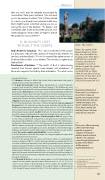
Rome, The Capitol
Rome, the capital of the Roman Empire in Paul’s day, was a beautiful city located on the Tiber River and built on seven hills;
it had at least thirteen synagogues as well as shrines to gods like Apollo, Mithra and Isis. Paul eventually did see Rome when he was taken there as a prisoner. It may have been Emperor Nero who had Paul killed around 64 A.D.
1:1
Paul tells the Christians of Rome who he is in relation to Jesus Christ: a slave, an apostle, one set apart. He also reminds them who they are: “called to belong to Jesus Christ,” “called to be holy.” In Christ, Paul is already one with the Roman Christians whom he has never met.
1:16
These verses o er a summary of the entire letter: Paul preaches a gospel of “salvation of everyone,” whether Jewish or Gentile (“Greek”). This salvation comes through righteousness by faith. These themes
will be explored
in great depth later on.
l. [1:13] 15:22; Jn 15:16; Acts 19:21.
m. [1:15] Acts 28:30–31.
n. [1:16] Ps 119:46; 1 Cor 1:18, 24 / Rom 2:9;
Acts 3:26; 13:46.
o. [1:17] 3:21–22; Heb 2:4; Gal 3:11; Heb 10:38.
p. [1:18] 2:5, 8–9; Is 66:15; Eph 5:6; Col 3:6.
303
projected visit to Rome.
* [1:13] Brothers is idiomatic for all Paul’s “kin in Christ,” all those who believe in the gospel; it
includes women as well as men (cf. Rom 4:3).
* [1:14] Greeks and non-Greeks: literally, “Greeks and barbarians.” As a result of Alexander’s
conquests, Greek became the standard international language of the Mediterranean world. Greeks in Paul’s statement therefore means people who know Greek or who have been in uenced by Greek culture. Non-Greeks were people whose cultures remained substantially una ected by Greek in uences. Greeks called such people “barbarians” (cf. Acts 28:2), meaning people whose speech was foreign. Roman citizens would scarcely classify themselves as such, and Nero, who was reigning when Paul wrote this letter, prided himself on his admiration for Greek culture. Under obligation: Paul will expand on the theme of obligation in Rom 13:8; 15:1, 27.
* [1:16–17] The principal theme of the letter is salvation through faith. I am not ashamed of the gospel: Paul is not ashamed to proclaim the gospel, despite the criticism that Jews and Gentiles leveled against the proclamation of the cruci ed savior; cf. 1 Cor 1:23–24. Paul a rms, however, that it is precisely through the cruci xion and resurrection of Jesus that God’s saving will and power become manifest. Jew rst (cf. Rom 2:9–10) means that Jews especially, in view of the example of Abraham (Rom 4), ought to be the leaders in the response of faith.
* [1:17] In it is revealed the righteousness of God from faith to faith: the gospel centers in Jesus Christ, in whom God’s saving presence and righteousness in history have been made known. Faith is a rmation of the basic purpose and meaning of the Old Testament as proclamation of divine promise (Rom 1:2; 4:13) and exposure of the inability of humanity to e ect its salvation even through covenant law. Faith is the gift of the holy Spirit and denotes acceptance of salvation as God’s righteousness, that is, God’s gift of a renewed relationship in forgiveness and power for a new life. Faith is response to God’s total claim on people and their destiny. The one who is righteous by faith will live: see note on Heb 2:4.
* [1:18–3:20] Paul aims to show that all humanity is in a desperate plight and requires God’s special intervention if it is to be saved.
* [1:18–32] In this passage Paul uses themes and rhetoric common in Jewish-Hellenistic mission proclamation (cf. Wis 13:1–14:31) to indict especially the non-Jewish world. The close association of idolatry and immorality is basic, but the generalization needs in all fairness to be balanced against the fact that non-Jewish Christian society on many levels displayed moral attitudes and performance whose quality would challenge much of contemporary Christian culture. Romans themselves expressed abhorrence over devotion accorded to animals in Egypt. Paul’s main point is that the wrath of God does not await the end of the world but goes into action at each present moment in humanity’s history when misdirected piety serves as a facade for self-interest.
* [1:18] The wrath of God: God’s reaction to human sinfulness, an Old Testament phrase that expresses the irreconcilable opposition between God and evil (see Is 9:11, 16, 18, 20; 10:4; 30:27). It is not contrary to God’s universal love for his creatures, but condemns Israel’s turning aside from the covenant obligations. Hosea depicts Yahweh as su ering intensely at the thought of having to punish Israel (Hos 11:8–9). God’s wrath was to be poured forth


