


Page 317 - Demo
P. 317
ROMANS
2God’s Just Judgment.
1* Therefore, you are without excuse,a every one of you who passes
*
judgment. For by the standard by which you judge another you
condemn yourself, since you, the judge, do the very same things. 2We know that the judgment of God on those who do such things is true. 3Do you suppose, then, you who judge those who engage in such things and yet do them yourself, that you will escape the judgment of God?b 4Or do you hold his priceless kindness, forbearance, and patience in low esteem, unaware that the kindness of God would lead you to repentance?c 5By your stubbornness and impenitent heart,d you are storing up wrath for yourself for the day of wrath and revelation of the just judgment of God, 6e who will repay everyone according to his works:* 7eternal life to those who seek glory, honor, and immortality through perseverance in good works, 8but wrath and
fury to those who sel shly disobey the truth and obey wickedness.f 9Yes, a iction and distress will come upon every human being who does evil, Jew rst and then Greek. 10g But there will be glory, honor, and peace for everyone who does good, Jew rst and then Greek. 11* h There is no partiality with God.
Judgment by the Interior Law.* 12All who sin outside
the law will also perish without reference to it, and all
who sin under the law will be judged in accordance
with it.i 13For it is not those who hear the law who are
just in the sight of God; rather, those who observe the
law will be justi ed.j 14For when the Gentiles who do not have the law by nature observe the prescriptions of the law, they are a law for themselves even though they do not have the law.k 15They show that the demands of the law are written in their hearts,* while their conscience also bears witness and their con icting thoughts accuse or even defend them 16on the day when, according to my gospel, God will judge people’s hidden works through Christ Jesus.l
2:9
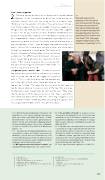
Paul adds nuance to his depiction of the non-Jewish, non-Christian world. The Jews, Paul says, must not boast of their special relationship with God, since each individual will be judged based on his or her response to God, “Jew rst and then Greek” (2:9). God judges “people’s hidden works” (2:16) and shows no “partiality” (2:11).
*[2:1–3:20]AfterhisgeneralindictmentoftheGentile,Paul shows that in spite of special revelation Jews enjoy no advantage in moral status before God (Rom 3:1–8). With the entire human race now declared guilty before God (Rom 3:9–20), Paul will then be able to display the solution for the total problem: salvation through God’s redemptive work that is revealed in Christ Jesus for all who believe (Rom 3:21–31).
* [2:1–11] As a rst step in his demonstration that Jews enjoy no real moral supremacy over Gentiles, Paul explains that the nal judgment will be a review of performance, not of privilege. From this perspective Gentiles stand on an equal footing with Jews, and Jews cannot condemn the sins of Gentiles without condemning themselves.
* [2:6] Will repay everyone according to his works: Paul reproduces the Septuagint text of Ps 62:12 and Prv 24:12.
a. [2:1] Mt 7:1–2.
b.[2:3] Wis 16:15–16.
c. [2:4] 3:25–26; 9:22; Wis 11:23; 15:1; 2 Pt 3:9, 15.
d.[2:5] Ex 33:3; Acts 7:51; Rev 6:17; 11:18.
e. [2:6] Ps 62:12; Prv 24:12; Sir 16:14; Mt 16:27; Jn 5:29; 2 Cor 5:10. f. [2:8] 2 Thes 1:8.
*[2:11] No partiality with God: this sentence is not at variance with the statements in Rom 2:9–10. Since Jews are the rst to go under indictment, it is only fair that they be given rst consideration in the distribution of blessings. Basic, of course, is the understanding that God accepts no bribes (Dt 10:17).
* [2:12–16] Jews cannot reasonably demand from Gentiles the standard of conduct inculcated in the Old Testament since God did not address its revelation to them. Rather, God made it possible for Gentiles to know instinctively the di erence between right and wrong. But, as Paul explained in Rom 1:18–32, humanity misread the evidence of God’s existence, power, and divinity, and “while claiming to be wise, they became fools” (Rom 1:22).
* [2:15] Paul expands on the thought of Jer 31:33; Wis 17:11.
g.[2:10] 1:16; 3:9.
h.[2:11] Dt 10:17; 2 Chr 19:7; Sir 35:12–13; Acts 10:34; Gal 2:6;
Eph 6:9; Col 3:25; 1 Pt 1:17.
i. [2:12] 3:19.
j. [2:13] Mt 7:21; Lk 6:46–49; 8:21; Jas 1:22–25; 1 Jn 3:7. k. [2:14] Acts 10:35.
305


