


Page 316 - Demo
P. 316
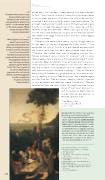
1:20 All people have access to God, because God’s power and holiness can be “understood and perceived in what he has made”—in the created world, in the human person. Where do you see signs of God’s presence and power?
1:24 What happens to humanity when it rejects God? Paul describes a world fallen into idolatry, worshipping human beings or animals, and given over to lust of every kind. Paul does not say that these people will be punished in the nal judgment. Rather, he says that they are already experiencing the wrath of God (1:18). Paul is typical of his time in depicting the pagan world as intrinsically immoral, and he exaggerates in order to emphasize his point: humanity needs salvation.
304
ROMANS
known about God is evident to them, because God made it evident to them.q 20Ever since the creation of the world, his invisible attributes of eternal power and divinity have been able to be understood and perceived in what he has made.r As a result, they have no excuse; 21for although they knew God they did not accord him glory as God or give him thanks. Instead, they became vain in their reasoning, and their senseless minds were darkened.s 22While claiming to be wise,t they became fools 23and exchanged the glory of the immortal God for the likeness of an image of mortal man or of birds or of four-legged animals or of snakes.u
24Therefore, God handed them over to impurity through the lusts of their hearts* for the mutual degradation of their bodies.v 25They exchanged the truth of God for a lie and revered and worshiped the creature rather than the creator, who is blessed forever. Amen.w 26Therefore, God handed them over to degrading passions. Their females exchanged natural relations for unnatural, 27and the males likewise gave up natural relations with females and burned with lust for one another. Males did shameful things with males and thus received in their own persons the due penalty for their perversity.x 28And since they did not see t to acknowledge God, God handed them over to their undiscerning mind to do what is improper. 29y They are lled with every form of wickedness, evil, greed, and malice; full of envy, murder, rivalry, treachery, and spite. They are gossips 30and scandalmongers and they hate God. They are insolent, haughty, boastful, ingenious in their wickedness, and rebellious toward their parents. 31They are senseless, faithless, heartless, ruthless. 32Although they know the just
decree of God that all who practice such things deserve death, they not only do them but give approval to those who practice them.z
“The Ship of Fools,” by Hieronymus Bosch (1 5 -1516)
especiallyonthe“DayofYahweh”andthustookon an eschatological connotation (see Zep 1:15).
* [1:24] In order to expose the depth of humanity’s
rebellion against the Creator, God handed them over to impurity through the lusts of their hearts. Instead of curbing people’s evil interests, God abandoned them to self-indulgence, there- by removing the facade of apparent conformity to the divine will. Subsequently Paul will show that the Mosaic law produces the same e ect; cf. Rom 5:20; 7:13–24. The divine judgment expressed here is related to the theme of hardness of heart described in Rom 9:17–18.
q. [1:19–32] Wis 13–19; Acts 14:15–17; 17:23–29.
r. [1:20] Jb 12:7–9; Ps 8:4; 19:2; Sir 17:7–9; Is 40:26;
Acts 14:17; 17:25–28.
s. [1:21] Eph 4:17–18.
t. [1:22] Wis 13:1–9; Is 5:21; Jer 10:14; Acts 17:29–30;
1 Cor 1:19–21.
u. [1:23] Dt 4:15–19; Ps 106:20; Wis 11:15; 12:24;
13:10–19; Jer 2:11.
v. [1:24] Wis 12:25; 14:22–31; Acts 7:41–42; Eph 4:19.
w. [1:25] 9:5; Jer 13:25–27.
x. [1:27] Lv 18:22; 20:13; Wis 14:26; 1 Cor 6:9; 1 Tm 1:10.
y. [1:29–31] 13:13; Mt 15:19; Mk 7:21–22; Gal 5:19–21;
2 Tm 3:2–4.
z. [1:32] Acts 8:1; 2 Thes 2:12.


