


Page 320 - Demo
P. 320
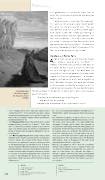
Abraham and the three angels by Gustave Doré (1866)
ROMANS -
his righteousness in the present time, that he might be righteous and justify the one who has faith in Jesus.
27s What occasion is there then for boasting?* It is ruled out. On what principle, that of works? No, rather on the principle of faith.* 28For we consider that a person is justi ed by faith apart from works of the law.t 29Does God belong to Jews alone? Does he not belong to Gentiles, too? Yes, also to Gentiles,u 30for God is one and will justify the circumcised on the basis of faith and the uncircumcised through faith.v 31Are we then annulling the law by this faith? Of course not!w On the contrary, we are supporting the law.*
4Abraham Justi ed by Faith.
* 1What then can we say that Abraham found,
a 2* our ancestor according to the esh?
Indeed, if Abraham was justi ed on the basis of his works, he has reason to boast; but this was not so in the sight of God. 3b For what does the scripture say? “Abraham believed God, and it was credited to him as righteousness.”* 4A worker’s wage is credited not as a gift, but as something due.c 5But when one does not work, yet believes in the one who justi es the ungodly, his faith is credited as righteousness. 6So also David declares
the blessedness of the person to whom God credits righteousness apart from works:
7“Blessed are they whose iniquities are forgivend and whose sins are covered.
8Blessed is the man whose sin the Lord does not record.”
* [3:27–31] People cannot boast of their own holiness, since it is God’s free gift (Rom 3:27), both to the Jew who practices circumcision out of faith and to the Gentile who accepts faith without the Old Testament religious culture symbolized by circumcision (Rom 3:29–30).
* [3:27] Principle of faith: literally, “law of faith.” Paul is fond of wordplay involving the term “law”; cf. Rom 7:21, 23; 8:2. Since “law” in Greek may also connote “custom” or “principle,” his readers and hearers would have sensed no contradiction in the use of the term after the negative statement concerning law in Rom 3:20.
* [3:31] We are supporting the law: giving priority to God’s intentions. God is the ultimate source of law, and the essence of law is fairness. On the basis of the Mosaic covenant, God’s justice is in question if those who sinned against the law are permitted to go free (see Rom 3:23–26). In order to rescue all humanity rather than condemn it, God thinks of an alternative: the law or “principle” of faith (Rom 3:27). What can be more fair than to admit everyone into the divine presence on the basis of forgiveness grasped by faith? Indeed, this principle of faith antedates the Mosaic law, as Paul will demonstrate in Rom 4, and does not therefore mark a change in divine policy.
* [4:1–25] This is an expanded treatment of the signi cance of Abraham’s faith, which Paul discusses in Gal 3:6–18; see notes there.
* [4:2–5] Rom 4:2 corresponds to Rom 4:4, and Rom 4:3–5. The Greek term here rendered credited means “made an entry.” The context determines whether it is credit or debit. Rom 4:8 speaks of “recording sin” as a debit. Paul’s repeated use of accountants’ terminology in this and other passages can be traced both to the Old Testament texts he quotes and to his business activity as a tentmaker. The commercial term in Gn 15:6, “credited it to him,” reminds Paul in Rom 4:7–8 of Ps 32:2, in which the same term is used and applied to forgiveness of sins. Thus Paul is able to argue that Abraham’s faith involved receipt of forgiveness of sins and that all believers bene t as he did through faith.
* [4:3] Jas 2:24 appears to con ict with Paul’s statement. However, James combats the error of extremists who used the doctrine of justi cation through faith as a screen for moral self-determination. Paul discusses the subject of holiness in greater detail than does James and beginning with Rom 6 shows how justi cation through faith introduces one to the gift of a new life in Christ through the power of the holy Spirit.
CHAPTER 4
a. [4:1] Gal 3:6–9.
b. [4:3] Gn 15:6; Gal 3:6; Jas 2:14, 20–24.
c. [4:4] 11:6.
308
CHAPTER 3
s. [3:27] 8:2; 1 Cor 1:29–31.
t. [3:28] 5:1; Gal 2:16.
u. [3:29] 10:12.
v. [3:30] Dt 6:4; Gal 3:20; Jas 2:19 / Rom 4:11–12.
w. [3:31] 8:4; Mt 5:17.


