


Page 321 - Demo
P. 321
ROMANS
9Does this blessedness* apply only to the circumcised, or to the uncircumcised as well? Now we assert that “faith was credited to Abraham as righteousness.”e 10Under what circumstances was it credited? Was he circumcised or not? He was not circumcised, but uncircumcised. 11And he received the sign of circumcision as a seal on the righteousness received through faith while he was uncircumcised. Thus he was to be the father of all the uncircumcised who believe, so that to them [also] righteousness might be credited,f 12as well as the father of the circumcised who not only are circumcised but also follow the path of faith that our father Abraham walked while still uncircumcised.
Inheritance Through Faith. 13It was not through the law that the promise was made to Abraham and his descendants that he would inherit the world, but through the righteousness that comes from faith.g 14For if those who adhere to the law are the heirs, faith is null and the promise is void.h 15For the law produces wrath;i but where there is no law, neither is there violation.* 16For this reason, it depends on faith, so that it may be a gift, and the promise may be guaranteed to all his descendants, not to those who only adhere to the law but to those who follow the faith of Abraham, who is the father of all of us,j 17as it is written, “I have made you father of many nations.” He is our father in the sight of God, in whom he believed, who gives life to the dead and calls into being what does not exist.k 18He
believed, hoping against hope,l that he would become “the father of many nations,” according to what was said, “Thus shall your descendants be.” 19m He did not weaken in faith when he considered his own body as [already] dead (for he was almost a hundred years old) and the dead womb of Sarah. 20He did not doubt God’s promise in unbelief;* rather, he was empowered by faith and gave glory to God 21and was fully convinced that what he had promised he was also able to do.n 22That is why “it was credited to him as righteousness.”o 23But it was not for him alone that it was written that “it was credited to him”; 24it was also for us, to whom it will be credited, who believe in the one who raised Jesus our Lord from the dead,p 25who was handed over for our transgressions and was raised for our justi cation.q
* [4:9] Blessedness: evidence of divine favor.
* [4:15] Law has the negative function of bringing the deep-seated rebellion against God to
the surface in speci c sins; see note on Rom 1:18–32.
* [4:20] He did not doubt God’s promise in unbelief: any doubts Abraham might have
had were resolved in commitment to God’s promise. Heb 11:8–12 emphasizes the faith of Abraham and Sarah.
d. [4:7–8] Ps 32:1–2.
e. [4:9] 4:3.
f. [4:11] Gn 17:10–11; Gal 3:6–8.
g. [4:13] Gn 12:7; 18:18; 22:17–18; Sir 44:21;
Gal 3:16–18, 29.
h. [4:14] Gal 3:18.
i. [4:15] 3:20; 5:13; 7:8; Gal 3:19.
j. [4:16] Sir 44:19; Gal 3:7–9.
k. [4:17] Gn 17:5; Heb 11:19 / Is 48:13. l. [4:18] Gn 15:5.
m. [4:19–20] Gn 17:17; Heb 11:11.
n. [4:21] Gn 18:14; Lk 1:37.
o. [4:22] Gn 15:6.
p. [4:24] 10:9; 1 Pt 1:21.
q. [4:25] Is 53:4–5, 12; 1 Cor 15:17; 1 Pt 1:3 / 8:11.
4:1
Paul supports his argument through a careful reading of the story of Abraham found in the Old Testament Book of Genesis. Abraham’s righteousness came from his trust in God’s promises—in other words, not from works, but from faith. He became the father of both Ishmael and Isaac, the uncircumcised and the circumcised.
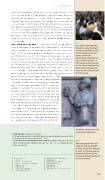
Abraham, detail from and anonymous altarpiece
4:20
Abraham believed that God could bring life out of death and that a child would be born to Sarah. In the same way, we believe that Jesus rose from the dead and that life will arise for us out of death.
309


