


Page 322 - Demo
P. 322
5:3 For those who have this faith in the saving love of God in Christ, a ictions do not weaken our faith, but rather strengthen it. A iction teaches us to live in hope, and the hope we have will never disappoint.
5:6 The love of Christ staggers Paul’s imagination: Jesus died out of love for us and handed
himself over for sinners.
5:8 “Thou, thou, my Jesus, after me Didst reach thine arms out dying, For my sake su eredst nails and lance, Mocked and marred countenance, Sorrows passing number, Sweat, and care and cumber, Yea, and death, and this for me. And thou couldst see me sinning: Then I, why should I not love thee, Jesu, so much in love with me?”
Gerard Manley Hopkins SJ (1844-1899)
ROMANS
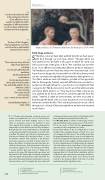
Adam and Eve, by Tommaso Masolino Da Panicale (1383-1440)
5Faith, Hope, and Love.*
1Therefore, since we have been justi ed by faith, we have peace*
a2
with God through our Lord Jesus Christ, through whom we
have gained access [by faith] to this grace in which we stand, and we boast in hope of the glory of God.b 3Not only that, but we even boast of our a ictions, knowing that a iction produces endurance, 4and endurance, proven character, and proven character, hope,c 5and hope does not disappoint, because the love of God has been poured out into our hearts through the holy Spirit that has been given to us.d 6For Christ, while we were still helpless, yet died at the appointed time for the ungodly. 7Indeed, only with di culty does one die for a just person, though perhaps for a good person one might even nd courage to die.* 8But God proves his love for us in that while we were still sinners Christ died for us.e 9How much more then, since we are now justi ed by his blood, will we be saved through him from the wrath.f 10Indeed, if, while we were enemies, we were reconciled to God through the death of his Son, how much more, once reconciled, will we be saved by his life.g 11Not only that, but we also boast of God through our Lord Jesus Christ, through whom we have now received reconciliation.
* [5:1–11] Popular piety frequently construed reverses and troubles as punishment for sin; cf. Jn 9:2. Paul therefore assures believers that God’s justifying action in Jesus Christ is a declaration of peace. The cruci xion of Jesus Christ displays God’s initiative in certifying humanity for unimpeded access into the divine presence. Reconciliation is God’s gift of pardon to the entire human race. Through faith one bene ts personally from this pardon or, in Paul’s term, is justi ed. The ultimate aim of God is to liberate believers from the pre-Christian self as described in Rom 1–3. Since this liberation will rst nd completion in the believer’s resurrection, salvation is described as future in Rom 5:10. Because this fullness of salvation belongs to the future it is called the Christian hope. Paul’s Greek term for hope does not, however, suggest a note of uncertainty, to the e ect: “I wonder whether God really means it.” Rather, God’s promise in the gospel lls believers with expectation and anticipation for the climactic gift of unalloyed commitment in the holy Spirit to the performance of the will of God. The persecutions that attend Christian commitment are to teach believers patience and to strengthen this hope, which will
not disappoint them because the holy Spirit dwells in their
hearts and imbues them with God’s love (Rom 5:5).
* [5:1] We have peace: a number of manuscripts, versions,
and church Fathers read “Let us have peace”; cf. Rom 14:19. * [5:7] In the world of Paul’s time the good person is
especially one who is magnanimous to others.
* [5:12–21] Paul re ects on the sin of Adam (Gn 3:1–13) in the light of the redemptive mystery of Christ. Sin, as used in the singular by Paul, refers to the dreadful power that has gripped humanity, which is now in revolt against the Creator and engaged in the exaltation of its own desires and interests. But no one has a right to say, “Adam made me do it,” for all are culpable (Rom 5:12): Gentiles under the demands of the law written in their hearts (Rom 2:14–15), and Jews under the Mosaic covenant. Through the Old Testament law, the sinfulness of humanity that was operative from the beginning (Rom 5:13) found further stimulation, with the result that sins were generated in even greater abundance. According to Rom 5:15–21, God’s act in Christ is in total contrast to the disastrous e ects of the virus of sin that
invaded humanity through Adam’s crime.
e. [5:8] Jn 3:16; 1 Jn 4:10, 19.
f. [5:9] 1:18; 1 Thes 1:10.
g. [5:10] 8:7–8; 2 Cor 5:18; Col 1:21–22.
310
a. [5:1] 3:24–28; Gal 2:16.
b. [5:2] Eph 2:18; 3:12.
c. [5:4] 2 Cor 12:9–10; Jas 1:2–4; 1 Pt 1:5–7; 4:12–14.
d. [5:5] 8:14–16; Ps 22:5–6; 25:20.


