


Page 323 - Demo
P. 323
ROMANS -
Humanity’s Sin Through Adam. 12* Therefore, just as through one person sin entered the world,h and through sin, death, and thus death came to all, inasmuch as all sinned*— 13for up to the time of the law, sin was in the world, though sin is not accounted when there is no law.i 14But death reigned from Adam to Moses, even over those who did not sin after the pattern of the trespass of Adam, who is the type of the one who was to come.j
Grace and Life Through Christ. 15But the gift is not like the transgression. For if by that one person’s transgression the many died, how much more did the grace of God and the gracious gift of the one person Jesus Christ over ow for the many. 16And the gift is not like the result of the one person’s sinning. For after one sin there was the judgment that brought condemnation; but the gift, after many transgressions, brought acquittal. 17For if, by the transgression of one person, death came to reign through that one, how much more will those who receive the abundance of grace and of the gift of justi cation come to reign in life through the one person Jesus Christ. 18In conclusion, just as through one transgression condemnation came upon all, so through one righteous act acquittal and life came to all.k 19For just as through the disobedience of one person the many were made sinners, so through the obedience of one the many will be made righteous.l 20The law entered in* so that transgression might increase but, where sin increased, grace over owed all the more,m 21so that, as sin reigned in death, grace also might reign through justi cation for eternal life through Jesus Christ our Lord.n
IV. JUSTIFICATION AND THE CHRISTIAN LIFE
6Freedom from Sin; Life in God.
1* What then shall we say? Shall we persist in sin that grace may
a2b abound? Of course not! How can we who died to sin yet live in it?
3Or are you unaware that we who were baptized into Christ Jesus were baptized into his death?c 4We were indeed buried with him through baptism into death, so that, just as Christ was
raised from the dead by the glory of the Father,
we too might live in newness of life.d
5:12
The Church’s theology of original sin—the idea that, ever since Adam and Eve, human beings have been born with concupiscence, a tendency towards sin—is based on this passage.
5:15
“O love, O charity
beyond all telling,
to ransom a slave you gave away your Son!
O truly necessary sin of Adam, destroyed completely by the death of Christ!
O happy fault that earned so great, so glorious a Redeemer!” The Easter Proclamation (Exsultet), Roman Missal
6:3
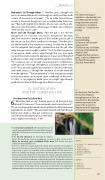
In a few words, Paul describes the mystery of baptism: through baptism in Christ, we die with Christ. We are buried with him and share in the power of his resurrection. Baptism marks the beginning of a new life, a resurrected life.
CHAPTER 5
h. [5:12] Gn 2:17; 3:1–19; Wis 2:24 / Rom 3:19, 23.
i. [5:13] 4:15.
j. [5:14] 1 Cor 15:21.
k. [5:18] 1 Cor 15:21–22.
l. [5:19] Is 53:11; Phil 2:8–9.
m. [5:20] 4:15; 7:7–8; Gal 3:19.
n. [5:21] 6:23.
CHAPTER 6
a. [6:1] 3:5–8.
b. [6:2] 1 Pt 4:1.
c. [6:3] Gal 3:27.
d. [6:4] Col 2:12; 1 Pt 3:21–22.
311
* [5:12] Inasmuch as all sinned: others translate “because all sinned,” and understand Rom 5:13 as a parenthetical remark. Unlike Wis 2:24, Paul does not ascribe the entry of death to the devil.
*[5:20] The law entered in: sin had made its entrance
(Rom 5:12); now the law comes in alongside sin. See notes on Rom 1:18–32; 5:12–21. Where sin increased, grace over owed all the more: Paul declares that grace outmatches the productivity of sin.
* [6:1–11] To defend the gospel against the charge that it promotes moral laxity (cf. Rom 3:5–8), Paul expresses himself in the typical style of spirited diatribe. God’s display of generosity or grace is not evoked by sin but, as stated in Rom 5:8 is the expression of God’s love, and this love pledges eternal life to all believers (Rom 5:21). Paul views the present conduct of the believers from the perspective of God’s completed salvation when the body is resurrected and directed totally by the holy Spirit. Through baptism believers share the death of Christ and thereby escape from the grip of sin. Through the resurrection of Christ the power to live anew becomes reality for them, but the fullness of participation in Christ’s resurrection still lies in the future. But life that is lived in dedication to God now is part and parcel of that future. Hence anyone who sincerely claims to be interested in that future will scarcely be able to say, “Let us sin so that grace may prosper” (cf. Rom 6:1).


