


Page 35 - Demo
P. 35
MATTHEW
Other Healings. 16When it was evening, they brought him many who were possessed by demons, and he drove out the spirits by a word* and cured all the sick, 17to fulfill what had been said by Isaiah the prophet:* g
“He took away our infirmities
and bore our diseases.”
The Would-be Followers of Jesus.* 18h When Jesus saw a crowd around him, he gave orders to cross to the other side.* 19i A scribe approached and said to him, “Teacher,* I will follow you wherever you go.” 20Jesus answered him, “Foxes have dens and birds of the sky have nests, but the Son of Man* has nowhere to rest his head.” 21Another of [his] disciples said to him, “Lord, let me go first and bury my father.” 22* But Jesus answered him, “Follow me, and let the dead bury their dead.”
The Calming of the Storm at Sea. 23* j He got into a boat and his disciples followed him. 24Suddenly a violent storm* came up on the sea, so that the boat was being swamped by waves; but he was asleep. 25k They came and woke him, saying, “Lord, save us!* We are perishing!” 26He said to them, “Why are you terrified, O you of little faith?”* Then he got up, rebuked the winds and the sea, and there was great calm. 27The men were amazed and said, “What sort of man is this, whom even the winds and the sea obey?”
8:19
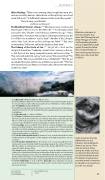
When the scribe wants to become a disciple, Jesus warns that following him will mean letting go of security:
it will mean being homeless. Jesus uses hyperbole to make a point: if we wish to follow him, we cannot hedge our bets or nish a pet project rst. When Jesus calls, do we dare to follow?
In the ancient world, many di erent illnesses and behaviors were attributed to demonic possession. These men are outcasts, living among the tombs, until Jesus sets them free from the forces of evil that hold them bound. The demons recognize Jesus’ true identity with a clarity that his disciples do not yet possess: he is the “Son of God.”
23
* [8:16] By a word: a Matthean addition to Mk 1:34; cf. 8:8.
* [8:17] This ful llment citation from Is 53:4 follows the MT, not the LXX. The prophet speaks of
the Servant of the Lord who su ers vicariously for the sins (“in rmities”) of others; Matthew
takes the in rmities as physical a ictions.
* [8:18–22] This passage between the rst and second series of miracles about following Jesus
is taken from Q (see Lk 9:57–62). The third of the three sayings found in the source is absent
from Matthew.
* [8:18] The other side: i.e., of the Sea of Galilee.
* [8:19] Teacher: for Matthew, this designation of Jesus is true, for he has Jesus using it of himself
(Mt 10:24, 25; 23:8; 26:18), yet when it is used of him by others they are either his opponents (Mt 9:11; 12:38; 17:24; 22:16, 24, 36) or, as here and in Mt 19:16, well-disposed persons who cannot see more deeply. Thus it reveals an inadequate recognition of who Jesus is.
* [8:20] Son of Man: see note on Mk 8:31. This is the rst occurrence in Matthew of a term that appears in the New Testament only in sayings of Jesus, except for Acts 7:56 and possibly Mt 9:6 (// Mk 2:10; Lk 5:24). In Matthew it refers to Jesus in his ministry (seven times, as here), in his passion and resurrection (nine times, e.g., Mt 17:22), and in his glorious coming at the end of the age (thirteen times, e.g., Mt 24:30).
* [8:22] Let the dead bury their dead: the demand of Jesus overrides what both the Jewish and the Hellenistic world regarded as a lial obligation of the highest importance. See note on Lk 9:60.
* [8:23] His disciples followed him: the rst miracle in the second group (Mt 8:23–9:8) is introduced by a verse that links it with the preceding sayings by the catchword “follow.” In Mark the initiative in entering the boat is taken by the disciples (Mk 4:35–41); here, Jesus enters rst and the disciples follow.
* [8:24] Storm: literally, “earthquake,” a word commonly used in apocalyptic literature for the shaking of the old world when God brings in his kingdom. All the synoptics use it in depicting the events preceding the parousia of the Son of Man (Mt 24:7; Mk 13:8; Lk 21:11). Matthew has introduced it here and in his account of the death and resurrection of Jesus (Mt 27:51–54; 28:2).
* [8:25] The reverent plea of the disciples contrasts sharply with their reproach of Jesus in Mk 4:38. * [8:26] You of little faith: see note on Mt 6:30. Great calm: Jesus’ calming the sea may be meant to recall the Old Testament theme of God’s control over the chaotic waters (Ps 65:8;
89:10; 93:3–4; 107:29).
g. [8:17] Is 53:4. j. [8:23–27] Mk 4:35–40; Lk h. [8:18] Mk 4:35. 8:22–25.
i. [8:19–22] Lk 9:57–60.


