


Page 351 - Demo
P. 351
CORINTHIANS -
14Now the natural person* does not accept what pertains to the Spirit of God, for to him it is foolishness, and he cannot understand it, because it is judged spiritually. 15The spiritual person, however, can judge everything but is not subject to judgment* by anyone.
16For “who has known the mind of the Lord, so as to counsel him?” But we have the mind of Christ.g
3
milk, not solid food, because you were
unable to take it. Indeed, you are still not
able, even now,a 3for you are still of the
esh. While there is jealousy and rivalry
among you,* are you not of the esh and
behaving in an ordinary human way?b
4Whenever someone says, “I belong to
Paul,” and another, “I belong to Apollos,”
are you not merely human?c
The Role of God’s Ministers.* 5What
is Apollos, after all, and what is Paul?
Ministers* through whom you became believers, just as the Lord assigned each one. 6I planted, Apollos watered, but God caused the growth.d 7Therefore, neither the one who plants nor the one who waters is anything, but only God, who causes the growth. 8The one who plants and the one who waters are equal, and each will receive wages in proportion to his labor. 9For we are God’s co-workers; you are God’s eld, God’s building.e
10* According to the grace of God given to me, like a wise master builder I laid a foundation, and another is building upon it. But each one must be careful how he builds upon it, 11for no one can lay a foundation other than the one that is there, namely, Jesus Christ. 12If anyone builds on this foundation with gold, silver, precious stones, wood, hay, or straw, 13the work of each will come to light, for the Day*
1* Brothers, I could not talk to you as spiritual people, but as eshly
*2
people, as infants in Christ. I fed you
* [2:14] The natural person: see note on 1 Cor 3:1.
* [2:15] The spiritual person. . .is not subject to judgment: since spiritual persons have been given knowledge of what pertains to God (1 Cor 2:11–12), they share in God’s own capacity to judge. One to whom the mind of the Lord (and of Christ) is revealed (1 Cor 2:16) can be said to share in some
sense in God’s exemption from counseling and criticism.
* [3:1–4] The Corinthians desire a sort of wisdom dialogue or colloquy with Paul; they are looking for solid, adult food, and he appears to disappoint their expectations. Paul counters: if such a dialogue has not yet taken place, the reason is that they are
still at an immature stage of development (cf. 1 Cor 2:6).
* [3:1] Spiritual people. . . eshly people: Paul employs two clusters of concepts and terms to distinguish what later theology will call the “natural” and the “supernatural.” (1) The natural person (1 Cor 2:14) is one whose existence, perceptions, and behavior are determined by purely natural principles, the psychē (1 Cor 2:14) and the sarx ( esh, a biblical term that connotes creatureliness, 1 Cor 3:1, 3). Such persons are only infants (1 Cor 3:1); they remain on a purely human level (anthrōpoi, 1 Cor 3:4). (2) On the other hand, they are called to be animated by a higher principle, the pneuma, God’s spirit. They are to become spiritual (pneumatikoi, 1 Cor 3:1) and mature (1 Cor 2:6) in their perceptions and behavior (cf. Gal 5:16–26). The culmination of existence in the Spirit is
described in 1 Cor 15:44–49.
* [3:3–4] Jealousy, rivalry, and divisions in the community are symptoms of their arrested development; they reveal the immaturity both of their self-understanding (1 Cor 3:4) and of the judgments about their apostles (1 Cor 3:21).
* [3:5–4:5] The Corinthians tend to evaluate their leaders by the criteria of human wisdom and to exaggerate their importance. Paul views the role of the apostles in the light of his theology of spiritual gifts (cf. 1 Cor 12–14, where the charism of the apostle heads the lists). The essential aspects of all spiritual gifts (1 Cor 12:4–6 presents them as gifts of grace, as services, and as modes of activity) are exempli ed by the apostolate, which is a gift of grace (1 Cor 3:10) through which God works (1 Cor 3:9) and a form of service (1 Cor 3:5) for the common good (elsewhere expressed by the verb “build up,” suggested here by the image of the building, 1 Cor 3:9). The apostles serve the church, but their accountability is to God and to Christ (1 Cor 4:1–5).
* [3:5] Ministers: for other expressions of Paul’s understanding of himself as minister or steward to the church, cf. 1 Cor 4:1; 9:17, 19–27; 2 Cor 3:6–9; 4:1; 5:18; 6:3–4; and 2 Cor 11:23 (the climax of Paul’s defense).
* [3:10–11] There are diverse functions in the service of the community, but each individual’s task is serious, and each will stand accountable for the quality of his contribution.
* [3:13] The Day: the great day of Yahweh, the day of judgment, which can be a time of either gloom or joy. Fire both destroys and puri es.
339
2:16
Paul alludes to a passage from Isaiah: “Who has directed the spirit of the LORD, / or instructed him as his counselor?” (40:13). No one can see God or teach God anything. But in Christ, we see God incarnate, and in Christ’s word, we know his “mind,” his way of thinking.
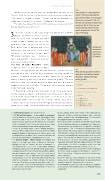
Medieval miniature represent- ing King Solomon
3:6
Who are the apostles? Farmers who plant the seed and water the plant, while God brings about growth.
CHAPTER 2
g. [2:16] Wis 9:13; Is 40:13; Rom 11:34.
CHAPTER 3
a. [3:2] Heb 5:12–14.
b. [3:3] Jas 3:13–16.
c. [3:4] 1:12.
d. [3:6] Acts 18:1–11, 24–28.
e. [3:9] Eph 2:20–22; 1 Pt 2:5.


