


Page 47 - Demo
P. 47
MATTHEW
The Privilege of Discipleship.* 16e “But blessed are your eyes, because they see, and your ears, because they hear. 17Amen, I say to you, many prophets and righteous people longed to see what you see but did not see it, and to hear what you hear but did not hear it.
The Explanation of the Parable of the Sower.* 18f “Hear then the parable of the sower. 19The seed sown on the path is the one who hears the word of the kingdom without understanding it, and the evil one comes and steals away what was sown in his heart. 20The seed sown on rocky ground is the one who hears the word and receives it at once with joy. 21But he has no root and lasts only for a time. When some tribulation or persecution comes because of the word, he immediately falls away. 22The seed sown among thorns is the one who hears the word, but then worldly anxiety and the lure of riches choke the word and it bears no fruit. 23But the seed sown on rich soil is the one who hears the word and understands it, who indeed bears fruit and yields a hundred or sixty or thirtyfold.”
The Parable of the Weeds Among the Wheat. 24He proposed another parable to them.* “The kingdom of heaven may be likened to a man who sowed good seed in his field. 25While everyone was asleep his enemy came and sowed weeds* all through the wheat, and then went off. 26When the crop grew and bore fruit, the weeds appeared as well. 27The slaves of the householder came to him and said, ‘Master, did you not sow good seed in your field? Where have the weeds come from?’ 28He answered, ‘An enemy has done this.’ His slaves said to him, ‘Do you want us to go and pull them up?’ 29He replied, ‘No, if you pull up the weeds you might uproot the wheat along with them. 30Let them grow together until harvest;* then at harvest time I will say to the harvesters, “First collect the weeds and tie them in bundles for burning; but gather the wheat into my barn.”’”g
The Parable of the Mustard Seed.* 31h He proposed another parable to them. “The kingdom of heaven is like a mustard seed that a person
13:8
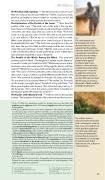
The sower spreads seed
far and wide, but not all
the seeds take root. Jesus explains that this parable is about the word of God, which is poured out in abundance, but which does not always take root in us. While this parable can be applied
to believers and to non- believers—those who have received the word and those who have not—it can also
be applied to each person. Are there places or times in our lives where we have been like the rocky soil, resisting the growth of God’s word, the working of God’s grace?
The reality is that not everyone receives the word of God—not everyone comes to faith. Jesus cites Isaiah 6:9-10, which describes people who close their eyes, refusing to see, hear, and understand because they do not wish to be converted. It is not enough to hear the word of God. Unless we act on it, it does not come to life in us.
35
*[13:16–17] Unlike the unbelieving crowds, the disciples have seen that which the prophets and the righteous of the Old Testament longed to see without having their longing ful lled.
[13:18–23] See Mk 4:14–20; Lk 8:11–15. In this explanation of the parable the emphasis is on the various types of soil on which the seed falls, i.e., on the dispositions with which the preaching of Jesus is received. The second and third types particularly are explained in such a way as to support the view held by many scholars that the explanation derives not from Jesus but from early Christian re ection upon apostasy from the faith that was the consequence of persecution and worldliness, respectively. Others, however, hold that the explanation may come basically from Jesus even though it was developed in the light of later Christian experience. The four types of persons envisaged are (1) those who never accept the word of the kingdom (Mt 13:19); (2) those who believe for a while but fall away because of persecution (Mt 13:20–21); (3) those who believe, but in whom the word is choked by worldly anxiety and the seduction of riches (Mt 13:22); (4) those who respond to the word and produce fruit abundantly (Mt 13:23).
*
*
* *
*
[13:24–30] This parable is peculiar to Matthew. The comparison in Mt 13:24 does not mean that the kingdom of heaven may be likened simply to the person in question but to the situation narrated in the whole story. The refusal of the householder to allow his slaves to separate the wheat from the weeds while they are still growing is a warning to the disciples not to attempt to anticipate the nal judgment of God by a de nitive exclusion of sinners from the kingdom. In its present stage it is composed of the good and the bad. The judgment of God alone will eliminate the sinful. Until then there must be patience and the preaching of repentance.
[13:25] Weeds: darnel, a poisonous weed that in its rst stage of growth resembles wheat. [13:30] Harvest: a common biblical metaphor for the time of God’s judgment; cf. Jer 51:33; Jl 4:13; Hos 6:11.
[13:31–33] See Mk 4:30–32; Lk 13:18–21. The parables of the mustard seed and the yeast illustrate the same point: the amazing contrast between the small beginnings of the kingdom and its marvelous expansion.
a. [13:1–15] Mk 4:1–12; Lk 8:4–10.
b. [13:12] 25:29; Mk 4:25; Lk 8:18; 19:26.
c. [13:13] Jn 9:39.
d. [13:14–15] Is 6:9–10; Jn 12:40; Acts 28:26–27; Rom 11:8.
e. [13:16–17] Lk 10:23–24; 1 Pt 1:10–12. f. [13:18–23] Mk 4:13–20; Lk 8:11–15.
g. [13:30] 3:12.
h. [13:31–32] Mk 4:30–32; Lk 13:18–19.


