


Page 62 - Demo
P. 62
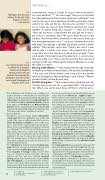
19:12 Marriage is from God, and celibacy “for the sake of the kingdom of Heaven” is also blessed.
19:13 Jesus tells his disciples to look to children for an example, because God’s kingdom belongs to those who are like them. We remember the Beatitudes: “How blessed the poor in spirit: the kingdom of heaven is theirs” (5:3).
MATTHEW
and tested him,* saying, “Is it lawful for a man to divorce his wife for any cause whatever?” 4* b He said in reply, “Have you not read that from the beginning the Creator ‘made them male and female’ 5c and said, ‘For this reason a man shall leave his father and mother and be joined to his wife, and the two shall become one flesh’? 6So they are no longer two, but one flesh. Therefore, what God has joined together, no human being must separate.” 7* d They said to him, “Then why did Moses command that the man give the woman a bill of divorce and dismiss [her]?” 8He said to them, “Because of the hardness of your hearts Moses allowed you to divorce your wives, but from the beginning it was not so. 9e I say to you,* whoever divorces his wife (unless the marriage is unlawful) and marries another commits adultery.” 10[His] disciples said to him, “If that is the case of a man with his wife, it is better not to marry.” 11He answered, “Not all can accept [this] word,* but only those to whom that is granted. 12Some are incapable of marriage because they were born so; some, because they were made so by others; some, because they have renounced marriage* for the sake of the kingdom of heaven. Whoever can accept this ought to accept it.”
Blessing of the Children.* 13f Then children were brought to him that he might lay his hands on them and pray. The disciples rebuked them, 14g but Jesus said, “Let the children come to me, and do not prevent them; for the kingdom of heaven belongs to such as these.” 15After he placed his hands on them, he went away.
The Rich Young Man.* 16h Now someone approached him and said, “Teacher, what good must I do to gain eternal life?”* 17He answered him, “Why do you ask me about the good? There is only One who is
* [19:4–6] Matthew recasts his Marcan source, omitting Jesus’ question about Moses’ command (Mk 10:3) and having him recall at once two Genesis texts that show the will and purpose of the Creator in making human beings male and female (Gn 1:27), namely, that a man may be joined to his wife in marriage in the intimacy of one esh (Gn 2:24). What God has thus joined must not be separated by any human being. (The NAB translation of the Hebrew bāśār of Gn 2:24 as “body” rather than “ esh” obscures the reference of Matthew to that text.)
* [19:7] See Dt 24:1–4.
* [19:9] Moses’ concession to human sinfulness (the hardness
of your hearts, Mt 19:8) is repudiated by Jesus, and the orig- inal will of the Creator is rea rmed against that concession. (Unless the marriage is unlawful): see note on Mt 5:31–32. There is some evidence suggesting that Jesus’ absolute pro- hibition of divorce was paralleled in the Qumran community (see 11QTemple 57:17–19; CD 4:12b–5:14). Matthew removes Mark’s setting of this verse as spoken to the disciples alone “in the house” (Mk 10:10) and also his extension of the divorce prohibition to the case of a woman’s divorcing her husband (Mk 10:12), probably because in Palestine, unlike the places where Roman and Greek law prevailed, the woman was not allowed to initiate the divorce.
* [19:11] [This] word: probably the disciples’ “it is better not to marry” (Mt 19:10). Jesus agrees but says that celibacy is not for all but only for those to whom that is granted by God.
* [19:12] Incapable of marriage: literally, “eunuchs.” Three classes are mentioned, eunuchs from birth, eunuchs by castration, and those who have voluntarily renounced marriage (literally, “have made themselves eunuchs”) for the sake of the kingdom, i.e., to devote themselves entirely to its service. Some scholars take the last class to be those who have been divorced by their spouses and have refused to enter another marriage. But it is more likely that it is rather those who
have chosen never to marry, since that suits better the optional
nature of the decision: whoever can. . .ought to accept it.
* [19:13–15] This account is understood by some as intended to justify the practice of infant baptism. That interpretation is based principally on the command not to prevent the children from coming, since that word sometimes has a baptismal
connotation in the New Testament; see Acts 8:36.
*[19:16–30] Cf. Mk 10:17–31. This story does not set up a “two-tier” morality, that of those who seek (only) eternal life (Mt 19:16) and that of those who wish to be perfect (Mt 19:21). It speaks rather of the obstacle that riches constitute for the following of Jesus and of the impossibility, humanly speaking, for one who has many possessions (Mt 19:22) to enter the kingdom (Mt 19:24). Actual renunciation of riches is not demanded of all; Matthew counts the rich Joseph of Arimathea as a disciple of Jesus (Mt 27:57). But only the poor in spirit (Mt 5:3) can enter the kingdom and, as here, such poverty may entail the sacri ce of one’s possessions. The Twelve, who have given up everything (Mt 19:27) to follow Jesus, will have as their reward a share in Jesus’ (the Son of Man’s) judging the twelve tribes of Israel (Mt 19:28), and all who have similarly sacri ced family or property for his sake will inherit eternal
life (Mt 19:29).
* [19:16] Gain eternal life: this is equivalent to “entering into life”
(Mt19:17)and“beingsaved”(Mt19:25);thelifeisthatofthenew age after the nal judgment (see Mt 25:46). It probably is also equivalent here to “entering the kingdom of heaven” (Mt 19:23) or “the kingdom of God” (Mt 19:24), but see notes on Mt 3:2; 4:17; 18:1 for the wider reference of the kingdom in Matthew.
* [19:17] By Matthew’s reformulation of the Marcan question and reply (Mk 10:17–18) Jesus’ repudiation of the term “good” for himself has been softened. Yet the Marcan assertion that “no one is good but God alone” stands, with only unimportant verbal modi cation.
50
b. [19:4] Gn 1:27.
c. [19:5] Gn 2:24; 1 Cor 6:16; Eph 5:31. d. [19:7] Dt 24:1–4.
e. [19:9] 5:32; Lk 16:18; 1 Cor 7:10–11.
f. [19:13–15] Mk 10:13–16; Lk 18:15–17. g. [19:14] 18:3; Acts 8:36.
h. [19:16–30] Mk 10:17–31; Lk 18:18–30.


