


Page 63 - Demo
P. 63
MATTHEW
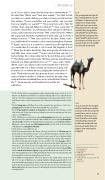
good.* If you wish to enter into life, keep the commandments.” 18* i He asked him, “Which ones?” And Jesus replied, “ ‘You shall not kill; you shall not commit adultery; you shall not steal; you shall not bear false witness; 19honor your father and your mother’; and ‘you shall love your neighbor as yourself.’” 20* The young man said to him, “All of these I have observed. What do I still lack?” 21j Jesus said to him, “If you wish to be perfect,* go, sell what you have and give to [the] poor, and you will have treasure in heaven. Then come, follow me.” 22When the young man heard this statement, he went away sad, for he had many possessions. 23* Then Jesus said to his disciples, “Amen, I say to you, it will be hard for one who is rich to enter the kingdom of heaven. 24k Again I say to you, it is easier for a camel to pass through the eye of a needle than for one who is rich to enter the kingdom of God.” 25* When the disciples heard this, they were greatly astonished and said, “Who then can be saved?” 26l Jesus looked at them and said, “For human beings this is impossible, but for God all things are possible.” 27m Then Peter said to him in reply, “We have given up everything and followed you. What will there be for us?” 28* n Jesus said to them, “Amen, I say to you that you who have followed me, in the new
age, when the Son of Man is seated on his throne of glory, will yourselves sit on twelve thrones, judging the twelve tribes of Israel. 29And everyone who has given up houses or brothers or sisters or father or mother or children or lands for the sake of my name will receive a hundred times more, and will inherit eternal life. 30* o But many who are first will be last, and the last
will be first.
19:16
The young man has kept all the commandments, but he still wants to do more, to go deeper in his relationship
with God. Jesus sees in him the potential to be a disciple and tells the young man to sell what he has and follow him. But the young man has “great wealth,” and as much as he wants to follow Jesus, he cannot let go of it. His wealth has become an obstacle.
19:23
Jesus astonishes his disciples with his teaching on wealth, because in the ancient world poverty was seen as a curse, wealth as a blessing. Jesus turns that idea on his head, showing how poverty can be blessed, and wealth can become a burden that can keep us from entering the kingdom.
i. [19:18–19] Ex 20:12–16; Dt 5:16–20 / Lv 19:18; Rom 13:9.
j. [19:21] 5:48; 6:20. k. [19:24] 7:14.
l. [19:26] Gn 18:14; Jb 42:2; Lk 1:37. m.[19:27] 4:20, 22.
n. [19:28] 25:31; Dn 7:9, 22; Lk 22:30; Rev
3:21; 20:4.
o. [19:30] 20:16.
51
* [19:18–19] The rst ve commandments cited are from the Decalogue (see Ex 20:12–16; Dt 5:16–20). Matthew omits Mark’s “you shall not defraud” (Mk 10:19; see Dt 24:14) and adds Lv 19:18. This combination of commandments of the Decalogue with Lv 19:18 is partially the same as Paul’s enumeration of the demands of Christian morality in Rom 13:9.
* [19:20] Young man: in Matthew alone of the synoptics the questioner is said to be a young man; thus the Marcan “from my youth” (Mk 10:20) is omitted.
* [19:21] If you wish to be perfect: to be perfect is demanded of all Christians; see Mt 5:48. In the case of this man, it involves selling his possessions and giving to the poor; only so can he follow Jesus.
* [19:23–24] Riches are an obstacle to entering the kingdom that cannot be overcome by human power. The comparison with the impossibility of a camel’s passing through the eye of a needle should not be mitigated by such suppositions as that the eye of a nee- dle means a low or narrow gate. The kingdom of God: as in Mt 12:28; 21:31, 43 instead of Matthew’s usual kingdom of heaven.
* [19:25–26] See note on Mk 10:23–27.
* [19:28] This saying, directed to the Twelve, is from Q; see Lk 22:29–30. The new age: the
Greek word here translated “new age” occurs in the New Testament only here and in Ti 3:5. Literally, it means “rebirth” or “regeneration,” and is used in Titus of spiritual rebirth through baptism. Here it means the “rebirth” e ected by the coming of the kingdom. Since that coming has various stages (see notes on Mt 3:2; 4:17), the new age could be taken as referring to the time after the resurrection when the Twelve will govern the true Israel, i.e., the church of Jesus. (For “judge” in the sense of “govern,” cf. Jgs 12:8, 9, 11; 15:20; 16:31; Ps 2:10). But since it is connected here with the time when the Son of Man will be seated on his throne of glory, language that Matthew uses in Mt 25:31 for the time of nal judgment, it is more likely that what the Twelve are promised is that they will be joined with Jesus then in judging the people of Israel.
* [19:30] Di erent interpretations have been given to this saying, which comes from Mk 10:31. In view of Matthew’s associating it with the following parable (Mt 20:1–15) and substantially repeating it (in reverse order) at the end of that parable (Mt 20:16), it may be that his meaning is that all who respond to the call of Jesus, at whatever time ( rst or last), will be the same in respect to inheriting the bene ts of the kingdom, which is the gift of God.


