


Page 66 - Demo
P. 66
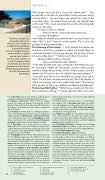
21:12 The money-changers and dove-sellers whom Jesus drives out of the Temple are probably there legitimately, to provide the needed resources for pilgrims to carry out the sacri ces of Temple worship. Jesus’ action is, however, richly symbolic, as he cites the prophets Isaiah and Jeremiah, who foretold a puri cation of God’s house. Instead of buying and selling, Jesus lls the Temple area with healing.
MATTHEW
6The disciples went and did as Jesus had ordered them. 7* They brought the ass and the colt and laid their cloaks over them, and he sat upon them. 8* c The very large crowd spread their cloaks on the road, while others cut branches from the trees and strewed them on the road. 9d The crowds preceding him and those following kept crying out and saying:
“Hosanna* to the Son of David;
blessed is he who comes in the name of the Lord;
hosanna in the highest.”
10And when he entered Jerusalem the whole city was shaken* and asked, “Who is this?” 11And the crowds replied, “This is Jesus the prophet,* from Nazareth in Galilee.”
The Cleansing of the Temple.* 12e Jesus entered the temple area and drove out all those engaged in selling and buying there. He overturned the tables of the money changers and the seats of those who were selling doves.* f 13g And he said to them, “It is written:
‘My house shall be a house of prayer,’*
but you are making it a den of thieves.”
14h The blind and the lame* approached him in the temple area, and he cured them. 15When the chief priests and the scribes saw the wondrous things* he was doing, and the children crying out in the temple area, “Hosanna to the Son of David,” they were indignant 16* i and said to him, “Do you hear what they are saying?” Jesus said to them, “Yes; and have you never read the text, ‘Out of the mouths of infants and nurslings you have brought forth praise’?” 17And leaving them, he went out of the city to Bethany, and there he spent the night. The Cursing of the Fig Tree.* 18j When he was going back to the city in the morning, he was hungry. 19k Seeing a fig tree by the road, he went
* [21:7] Upon them: upon the two animals; an awkward picture resulting from Matthew’s misunderstanding of the prophecy.
* [21:8] Spread... on the road: cf. 2 Kgs 9:13. There is a similarity between the cutting and strewing of the branches and the festivities of Tabernacles (Lv 23:39–40); see also 2 Mc 10:5–8 where the celebration of the rededication of the temple is compared to that of Tabernacles.
* [21:9] Hosanna: the Hebrew means “(O LORD) grant salvation”; see Ps 118:25, but that invocation had become an acclamation of jubilation and welcome. Blessed is he. . .in the name of the Lord: see Ps 118:26 and the note on Jn 12:13. In the highest: probably only an intensi cation of the acclamation, although Hosanna in the highest could be taken as a prayer, “May God save (him).”
* [21:10] Was shaken: in the gospels this verb is peculiar to Matthew where it is used also of the earthquake at the time of the cruci xion (Mt 27:51) and of the terror of the guards of Jesus’ tomb at the appearance of the angel (Mt 28:4). For Matthew’s use of the cognate noun, see note on Mt 8:24.
* [21:11] The prophet: see Mt 16:14 (“one of the prophets”) and 21:46.
* [21:12–17] Matthew changes the order of (Mk 11:11, 12, 15) and places the cleansing of the temple on the same day as the entry into Jerusalem, immediately after it. The activities going on in the temple area were not secular but connected with the temple worship. Thus Jesus’ attack on those so engaged and his charge that they were making God’s house of prayer a den of thieves (Mt 21:12–13) constituted a claim to authority over the religious practices of Israel and were a challenge to the priestly authorities. Mt 21:14–17 are peculiar to Matthew. Jesus’ healings and his countenancing the children’s cries of praise rouse the indignation of the chief priests and the scribes (Mt 21:15). These two groups appear in the infancy narrative (Mt 2:4) and have been mentioned in the rst and third passion predictions (Mt 16:21; 20:18). Now, as
the passion approaches, they come on the scene again, exhibiting
their hostility to Jesus.
* [21:12] These activities were carried on in the court of the Gentiles,
the outermost court of the temple area. Animals for sacri ce were sold; the doves were for those who could not a ord a more expensive o ering; see Lv 5:7. Tables of the money changers: only the coinage of Tyre could be used for the purchases; other money had to be exchanged for that.
* [21:13] ‘My house...prayer’: cf. Is 56:7. Matthew omits the nal words of the quotation, “for all peoples” (“all nations”), possibly because for him the worship of the God of Israel by all nations belongs to the time after the resurrection; see Mt 28:19. A den of thieves: the phrase is taken from Jer 7:11.
* [21:14] The blind and the lame: according to 2 Sm 5:8 LXX the blind and the lame were forbidden to enter “the house of the Lord,” the temple. These are the last of Jesus’ healings in Matthew.
* [21:15] The wondrous things: the healings.
* [21:16] ‘Out of the mouths... praise’: cf. Ps 8:3 LXX.
* [21:18–22] In Mark the e ect of Jesus’ cursing the g tree is
not immediate; see Mk 11:14, 20. By making it so, Matthew has heightened the miracle. Jesus’ act seems arbitrary and ill- tempered, but it is a prophetic action similar to those of Old Testament prophets that vividly symbolize some part of their preaching; see, e.g., Ez 12:1–20. It is a sign of the judgment that is to come upon the Israel that with all its apparent piety lacks the fruit of good deeds (Mt 3:10) and will soon bear the punishment of its fruitlessness (Mt 21:43). Some scholars propose that this story is the development in tradition of a parable of Jesus about the destiny of a fruitless tree, such as Lk 13:6–9. Jesus’ answer to the question of the amazed disciples (Mt 21:20) makes the miracle an example of the power of prayer made with unwavering faith (Mt 21:21–22).
a. [21:1–11] Mk 11:1–11; Lk 19:28–38; Jn 12:12–15.
b. [21:5] Is 62:11; Zec 9:9.
c. [21:8] 2 Kgs 9:13. 54 d. [21:9] Ps 118:25–26.
e. [21:12–17] Mk 11:15–19; Lk 19:45–48; Jn 2:14–22.
f. [21:12] Lv 5:7.
g. [21:13] Is 56:7; Jer 7:11. h. [21:14] 2 Sm 5:8 LXX.
i. [21:16] Ps 8:2 LXX; Wis 10:21.
j. [21:18–22] Mk 11:12–14, 20–24. k. [21:19] Jer 8:13; Lk 13:6–9.
....


