


Page 67 - Demo
P. 67
MATTHEW
over to it, but found nothing on
it except leaves. And he said to
it, “May no fruit ever come from
you again.” And immediately
the fig tree withered. 20When
the disciples saw this, they
were amazed and said, “How
was it that the fig tree withered
immediately?” 21* l Jesus said to
them in reply, “Amen, I say to
you, if you have faith and do
not waver, not only will you
do what has been done to the
fig tree, but even if you say to
this mountain, ‘Be lifted up and
thrown into the sea,’ it will be done. 22m Whatever you ask for in prayer with faith, you will receive.”
The Authority of Jesus Questioned.* 23n When he had come into the temple area, the chief priests and the elders of the people approached him as he was teaching and said, “By what authority are you doing these things?* And who gave you this authority?”o 24Jesus said to them in reply, “I shall ask you one question,* and if you answer it for me, then I shall tell you by what authority I do these things. 25Where was John’s baptism from? Was it of heavenly or of human origin?” They discussed this among themselves and said, “If we say ‘Of heavenly origin,’ he will say to us, ‘Then why did you not believe him?’ 26* p But if we say, ‘Of human origin,’ we fear the crowd, for they all regard John as a prophet.” 27So they said to Jesus in reply, “We do not know.” He himself said to them, “Neither shall I tell you by what authority I do these things.* The Parable of the Two Sons.* 28“What is your opinion? A man had two sons. He came to the first and said, ‘Son, go out and work in the vineyard today.’ 29He said in reply, ‘I will not,’ but afterwards he changed his mind and went. 30The man came to the other son and gave the same order. He said in reply, ‘Yes, sir,’ but did not go. 31* Which of the two did his father’s will?”They answered,“The first.”Jesus said to them, “Amen, I say to you, tax collectors and prostitutes are entering the kingdom of God before you. 32* q When John came to you in the
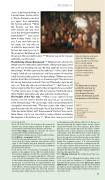
John the Baptist, depicted above by Jan Brueghel, was a prophet sent by God. He is closely linked
to Jesus. Both of them challenged the established religious authorities,
yet were respected by ordinary people.
21:18
The g tree was a common symbol for Israel (see, for example, Jeremiah 8:13). Jesus hungers for these people, for their faith, but the tree produces no fruit for him.
Chapter 21
l. [21:21] 17:20; Lk 17:6.
m. [21:22] 7:7; 1 Jn 3:22.
n. [21:23–27] Mk 11:27–33; Lk 20:1–8.
o. [21:23] Jn 2:18.
p. [21:26] 14:5.
q. [21:32] Lk 7:29–30.
* [21:21] See Mt 17:20.
* [21:23–27] Cf. Mk 11:27–33. This is the rst of ve controversies
between Jesus and the religious authorities of Judaism in Mt
21:23–22:46, presented in the form of questions and answers.
* [21:23] These things: probably his entry into the city, his
cleansing of the temple, and his healings there.
* [21:24] To reply by counterquestion was common in rabbinical debate.
* [21:26] We fear. . .as a prophet: cf. Mt 14:5.
* [21:27] Since through embarrassment on the one hand and fear
on the other the religious authorities claim ignorance of the origin of John’s baptism, they show themselves incapable of speaking with authority; hence Jesus refuses to discuss with them the grounds of his authority.
* [21:28–32] The series of controversies is interrupted by three parables on the judgment of Israel (Mt 21:28–22:14) of which this, peculiar to Matthew, is the rst. The second (Mt 21:33–46) comes from Mark (12:1–12), and the third (Mt 22:1–14) from Q; see Lk 14:15–24. This interruption of the controversies is similar to that in Mark, although Mark has only one parable between the rst and second controversy. As regards Matthew’s rst parable, Mt 21:28–30 if taken by themselves could point simply to the di erence between saying and doing, a theme of much importance in this gospel (cf. Mt 7:21; 12:50); that may have been the parable’s original reference. However, it is given a more
speci c application by the addition of Mt 21:31–32. The two sons represent, respectively, the religious leaders and the religious outcasts who followed John’s call to repentance. By the answer they give to Jesus’ question (Mt 21:31) the leaders condemn themselves. There is much confusion in the textual tradition of the parable. Of the three di erent forms of the text given by important textual witnesses, one has the leaders answer that the son who agreed to go but did not was the one who did the father’s will. Although some scholars accept that as the original reading, their arguments in favor of it seem unconvincing. The choice probably lies only between a reading that puts the son who agrees and then disobeys before the son who at rst refuses and then obeys, and the reading followed in the present translation. The witnesses to the latter reading are slightly better than those that support the other.
* [21:31] Entering.before you: this probably means “they enter; you do not.”
* [21:32] Cf. Lk 7:29–30. Although the thought is similar to that of the Lucan text, the formulation is so di erent that it is improbable that the saying comes from Q. Came to you.way of righteousness: several meanings are possible: that John himself was righteous, that he taught righteousness to others, or that he had an important place in God’s plan of salvation. For the last, see note on Mt 3:14–15.
55


