


Page 69 - Demo
P. 69
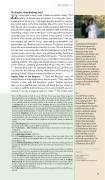
MATTHEW
The Parable of the Wedding Feast.*
1a Jesus again in reply spoke to them in parables, saying, 2“The
kingdom of heaven may be likened to a king who gave a 22
wedding feast* for his son. 3* He dispatched his servants to summon the invited guests to the feast, but they refused to come. 4A second time he sent other servants, saying, ‘Tell those invited: “Behold, I have prepared my banquet, my calves and fattened cattle are killed, and everything is ready; come to the feast.”’ 5Some ignored the invitation and went away, one to his farm, another to his business. 6b The rest laid hold of his servants, mistreated them, and killed them. 7* The king was enraged and sent his troops, destroyed those murderers, and burned their city. 8Then he said to his servants, ‘The feast is ready, but those who were invited were not worthy to come. 9Go out, therefore, into the main roads and invite to the feast whomever you find.’ 10The servants went out into the streets and gathered all they found, bad and good alike,* and the hall was filled with guests. 11* But when the king came in to meet the guests he saw a man there not dressed in a wedding garment. 12He said to him, ‘My friend, how is it that you came in here without a wedding garment?’ But he was reduced to silence. 13* c Then the king said to his attendants, ‘Bind his hands and feet, and cast him into the darkness outside, where there will be wailing and grinding of teeth.’ 14Many are invited, but few are chosen.”
Paying Taxes to the Emperor.* 15d Then the Pharisees* went off and plotted how they might entrap him in speech. 16They sent their disciples to him, with the Herodians,* saying, “Teacher, we know that you are a truthful man and that you teach the way of God in accordance with the truth. And you are not concerned with anyone’s opinion, for you do not regard a person’s status. 17* Tell us, then, what
22:2
In speaking of the kingdom of God, Jesus again uses
the image is of a wedding banquet, a time of joy, celebration, abundance, and union (see Matthew 9:14). When those who are rst invited fail to come, the king lls the banquet hall with anyone and everyone. But one man has come without a wedding garment, probably a symbol for baptism (compare Galatians 3:27). We may not come to the banquet unless we put on the new life of faith and loving service.
22:17
Jesus lived in a country
that was in the control of an occupying power—the Roman Empire. Many of
his contemporaries favored violent resistance to this power—and even among his disciples there were those who were waiting
for a Messiah who would deliver them by military might. To pay taxes to the Emperor was seen as an act of collaboration. But Jesus’ brilliant response reminds them that they, too, are caught up inextricably in the world around them. The important thing is to give God what is due to God.
Chapter 22
a. [22:1–14] Lk 14:15–24.
b. [22:6] 21:35.
c. [22:13] 8:12; 25:30.
d. [22:15–22] Mk 12:13–17; Lk 20:20–26.
57
* [22:1–14] This parable is from Q; see Lk 14:15–24. It has been given many allegorical traits by Matthew, e.g., the burning of the city of the guests who refused the invitation (Mt 22:7), which corresponds to the destruction of Jerusalem by the Romans in A.D. 70. It has similarities with the preceding parable of the tenants: the sending of two groups of servants (Mt 22:3, 4), the murder of the servants (Mt 22:6), the punishment of the murderers (Mt 22:7), and the entrance of a new group into a privileged situation of which the others had proved themselves unworthy (Mt 22:8–10). The parable ends with a section that is peculiar to Matthew (Mt 22:11–14), which some take as a distinct parable. Matthew presents the kingdom in its double aspect, already present and something that can be entered here and now (Mt 22:1–10), and something that will be possessed only by those present members who can stand the scrutiny of the nal judgment (Mt 22:11–14). The parable is not only a statement of God’s judgment on Israel but a warning to Matthew’s church.
* [22:2] Wedding feast: the Old Testament’s portrayal of nal salvation under the image of a banquet (Is 25:6) is taken up also in Mt 8:11; cf. Lk 13:15.
* [22:3–4] Servants. . .other servants: probably Christian missionaries in both instances; cf. Mt 23:34.
* [22:7] See note on Mt 22:1–14.
* [22:10] Bad and good alike: cf. Mt 13:47.
* [22:11] A wedding garment: the repentance, change of heart and mind, that is the
condition for entrance into the kingdom (Mt 3:2; 4:17) must be continued in a life of good
deeds (Mt 7:21–23).
* [22:13] Wailing and grinding of teeth: the Christian who lacks the wedding garment of
good deeds will su er the same fate as those Jews who have rejected Jesus; see note on
Mt 8:11–12.
* [22:15–22] The series of controversies between Jesus and the representatives of Judaism
(see note on Mt 21:23–27) is resumed. As in the rst (Mt 21:23–27), here and in the following
disputes Matthew follows his Marcan source with few modi cations.
* [22:15] The Pharisees: while Matthew retains the Marcan union of Pharisees and Herodians in this account, he clearly emphasizes the Pharisees’ part. They alone are mentioned here, and the Herodians are joined with them only in a prepositional phrase of Mt 22:16. Entrap him in speech: the question that they will pose is intended to force Jesus to take either a position contrary to that held by the majority of the people or one that will bring him into
con ict with the Roman authorities.
* [22:16] Herodians: see note on Mk 3:6. They would favor payment of the tax; the Pharisees
did not.


